
What Makes Great Vodka
Many people think vodka is supposed to be flavorless and odorless — just clean alcohol. That's actually the old TTB definition, and it leads to a sea of interchangeable brands. Great craft vodka is different. It has character, subtlety, and a connection to its ingredients. Here's how we make it.
Step 1: Grain Selection
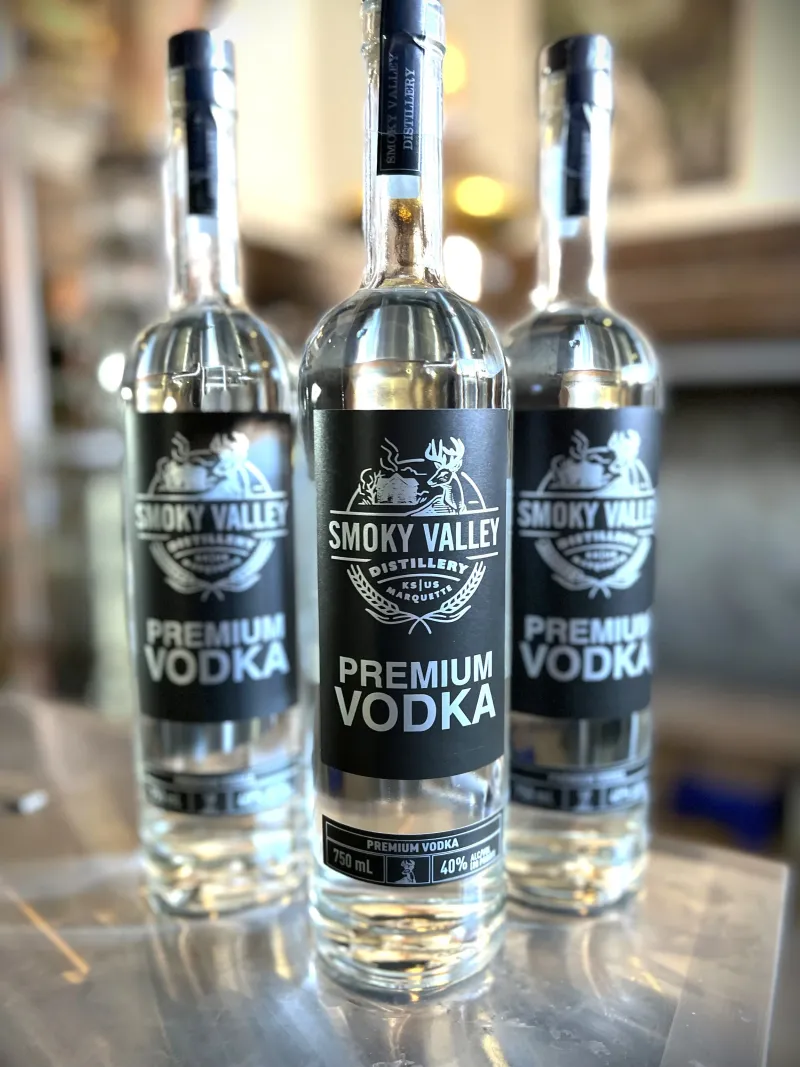
Most commercial vodka is made from whatever grain is cheapest at the time. We take a different approach. Our Premium Vodka is made from 100% corn — sourced from Kansas farms — which gives it a naturally sweet, clean character that grain-neutral spirits simply can't match.
Corn produces a softer, slightly sweeter vodka compared to wheat (which is drier and crisper) or rye (which adds a peppery edge). The grain choice matters because even after distillation, trace flavor compounds from the original grain carry through into the final spirit. For the full comparison against the other traditional base — including why it costs more — see corn vodka vs. potato vodka.
Step 2: Mashing
The corn is milled and cooked with hot water in our mash tun. This converts the starches in the grain into simple sugars that yeast can ferment. The temperature and timing of the mash are carefully controlled — too hot and you denature the enzymes; too cool and the conversion is incomplete.
Our water comes from the Kiowa Aquifer, a deep underground water source that produces exceptionally clean, mineral-balanced water. Water quality is one of the most underrated factors in spirits production, and ours is naturally ideal for distilling.
Step 3: Fermentation
Yeast is added to the cooled mash, and fermentation begins. Over the next several days, the yeast converts sugars into alcohol and carbon dioxide. The fermentation environment — temperature, yeast strain, and timing — influences the flavor compounds that will carry into the still.
We monitor fermentation closely, because a clean ferment is essential for clean vodka. Off-flavors created during fermentation are much harder to remove during distillation than most people realize.
Step 4: Distillation
The fermented wash is pumped into our still and heated. Alcohol vaporizes at a lower temperature than water, so the vapors rise, are collected, and condensed back into liquid. The distiller's job is to make precise cuts — separating the undesirable heads and tails from the clean, flavorful hearts.
For vodka, we distill to a high proof to achieve a clean, refined spirit. But we don't chase an impossibly high proof that strips away all character. We want our vodka to be clean and smooth while still retaining the subtle sweetness that comes from quality Kansas corn.
Step 5: Filtering
After distillation, the vodka is filtered to remove any remaining impurities. The type and extent of filtration varies by distiller — some use charcoal, some use carbon, and some use multiple passes through different media.
Our goal in filtration is polish, not transformation. We want to smooth out any rough edges while preserving the subtle grain character that makes our vodka interesting.
Step 6: Proofing and Bottling
The high-proof spirit is slowly brought down to bottling strength by adding water — again, from the Kiowa Aquifer. This step is done gradually because rapid proofing can shock the spirit and create harshness.
The final vodka is bottled at 80 proof (40% ABV), labeled, and sealed at our distillery in Marquette, Kansas.
Our Flavored Vodkas
Our base vodka becomes the foundation for our flavored expressions. Each is made by infusing or macerating real ingredients — never artificial flavors:
- Wild Plum Vodka — wild plums for a sweet, fruity character
- Smoked Jalapeno Vodka — smoked jalapenos for heat and smokiness
- Lingonberry Vodka — tart Scandinavian lingonberries
- Pickle Vodka — real pickles for the ultimate Bloody Mary base
Each starts with the same quality corn vodka, but the infusion process creates dramatically different drinking experiences. Check out our vodka cocktail recipes for inspiration.
Worth knowing: "flavored" and "infused" describe the same shelf, but only one of them is a federal label class. Flavored vodka vs. infused vodka covers what the regulations actually require and where sugar turns a flavored vodka into a liqueur.
Serve It the Way It's Meant to Be
A vodka mule belongs in an ice-cold copper mug — it keeps the drink colder and the ginger sharper. Our copper mule mug, engraved with the Smoky Valley crest, is available in our online shop. It ships from our family-run distillery in the small town of Marquette, Kansas, where Stan, Michele, and their son Shane make everything in small batches. Buy one and you're supporting real people and real craft — not a factory brand.
Taste the Difference
Mass-produced vodka and craft vodka are fundamentally different products. To understand why, you need to taste them side by side. Visit our tasting room and try all five of our vodkas — you'll never look at vodka the same way again.