
Kansas Whiskey
Our whiskey lineup features two bold expressions. The Kernza Whiskey is crafted with a perennial wheat grain developed right here in Kansas — making it one of the most unique whiskeys you'll find anywhere. Our Rye Whiskey delivers the traditionally bold spice of rye with a sweet, smooth finish.
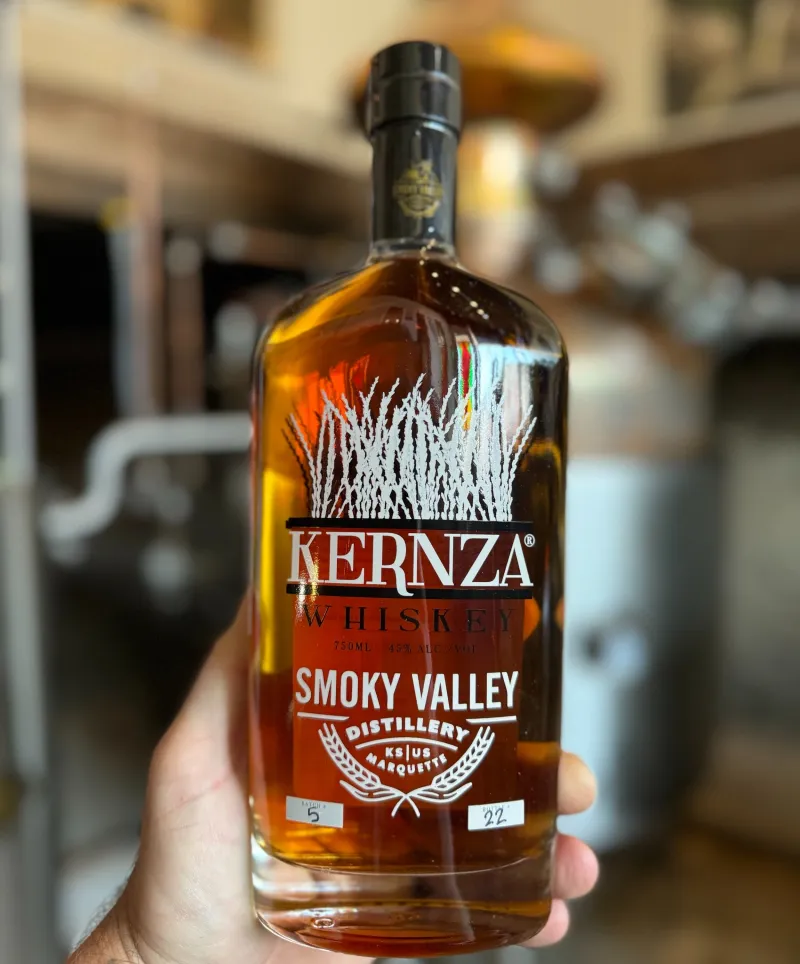
Whiskey · 45% ABV
Kernza Whiskey
Crafted with Kernza — a perennial wheat developed in Kansas. A truly singular flavor unlike any other whiskey.
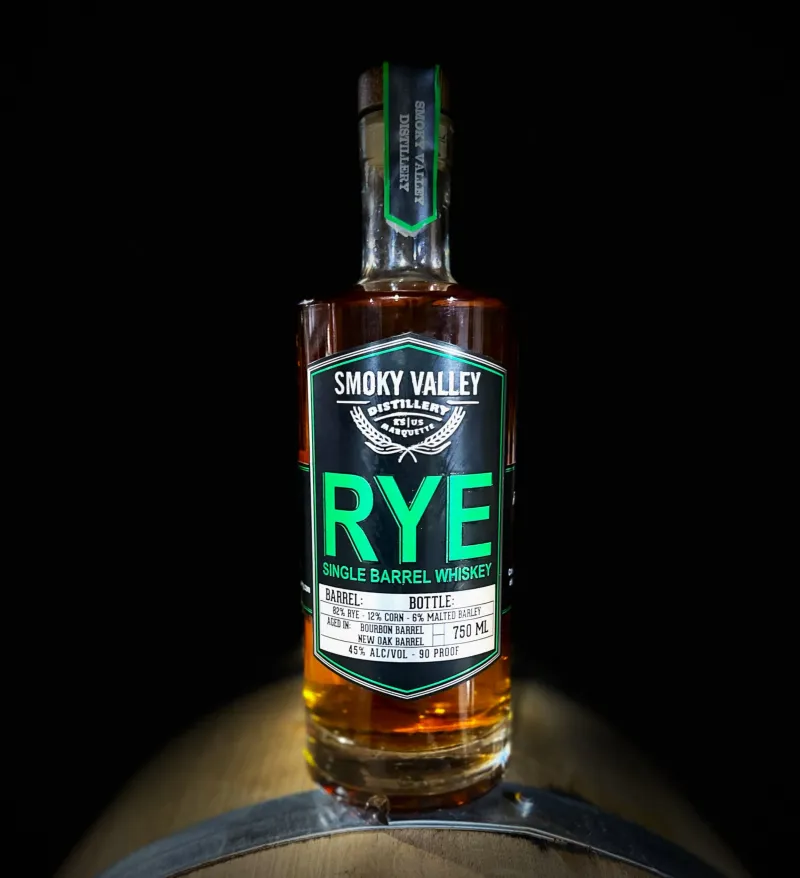
Whiskey · 45% ABV
Rye Whiskey
Bold rye spice with sweet butterscotch and subtle coffee notes. Our head distiller's drink of choice.
Our whiskey and our vodka start from the same grain and the same water. See what actually separates vodka from whiskey — it comes down to distillation proof and oak. New to sipping whiskey neat? Start with our guide to how to taste whiskey, including the order we pour our own flight. And if you want to know why our rye reads so differently from our bourbons, it comes down to the mash bill. And if you've ever wondered what the 45% alc/vol on our labels actually means, here's what proof in whiskey is — and the four points between the still and the bottle where it gets set. Once a bottle is home, our guide to how to store whiskey covers what keeps it tasting the way it did in the tasting room. Noticed that some bottles say whisky instead? Here's why the spelling changes — and why we use the e. For the rest of the front and back label, our guide to how to read a whiskey label sorts the words the government checks from the ones it doesn't. And for what to pour it into, our whiskey glassware guide covers the two shapes that matter and the ones you can skip. For the full category map — bourbon, rye, corn, American single malt, blended, and where Tennessee fits — see our guide to the types of American whiskey. And the strictest phrase on any American whiskey label gets its own page: what bottled in bond means — all six federal conditions, and why so few craft bottles carry it. For where the vanilla and caramel actually come from, what barrel char is covers the four char levels and the one American whiskey the law forbids from touching charred oak. And for the comparison most visitors arrive with, bourbon vs. Scotch reads 27 CFR 5.143 against the Scotch Whisky Regulations 2009 — new oak against used casks, corn against malted barley, and why peat is nowhere in either rulebook. One more thing the barrel does is give whiskey back to the air: what the angel's share is covers how much evaporates out of a barrel each year, why humidity decides whether the proof climbs or falls, and why none of it is taxed. And before any of that happens, the spirit has to come off a still: pot still vs. column still explains why ours is a 250-gallon copper pot, how the federal proof limits quietly decide which machine a distillery uses, and what each one does to the grain. And one step earlier still, in the fermenter: what sour mash whiskey is covers what backset actually does to a mash, the pH numbers behind it, why it never makes a whiskey taste sour, and why the phrase appears nowhere in federal law.
Discover Kernza Whiskey
We're one of the only distilleries in the world using Kernza perennial wheat. Come taste what makes it special.