
The Short Answer
Proof is twice the alcohol by volume. That's it.
A whiskey bottled at 45% alcohol by volume is 90 proof. A vodka at 40% is 80 proof. A barrel proof bourbon at 61.5% is 123 proof. Same measurement, expressed two ways.
This isn't a rule of thumb — it's the federal definition. 27 CFR 5.1 defines proof as "the ethyl alcohol content of a liquid at 60 degrees Fahrenheit, stated as twice the percentage of ethyl alcohol by volume." The temperature matters because alcohol expands and contracts with heat, so the measurement is pinned to 60°F to keep everyone honest.
What's worth knowing is that proof isn't one number in a whiskey's life. It's measured at four separate points between the grain and the bottle, and three of those points are capped by law. That's the part the label doesn't tell you.
Where the Word Comes From
Spirits have been taxed by strength for a very long time, which meant somebody had to be able to check it.
In 16th and 17th century England, one method was to soak gunpowder in the spirit and hold a flame to it. Too much water and it wouldn't light. If it burned, that was proof the liquor was strong enough for the higher tax bracket. The old British scale that came out of this practice put 100 proof at roughly 57% alcohol by volume — Britannica's account walks through how the test worked and how it got standardized.
The United States kept the word and threw out the awkward number. Here, 100 proof means 50% alcohol by volume, and everything else follows from doubling. Most of the rest of the world dropped proof entirely and just labels ABV.
What the Label Is Required to Say
Every bottle of spirits sold in the US has to state its alcohol content as a percentage of alcohol by volume. Proof is optional.
Under 27 CFR 5.65, the percentage statement is mandatory, and degrees of proof "may be stated on a label as long as it appears in the same field of vision as the mandatory statement of alcohol content as a percentage of alcohol by volume." So "45% alc/vol" always appears. "90 proof" appears when the distiller chooses to print it.
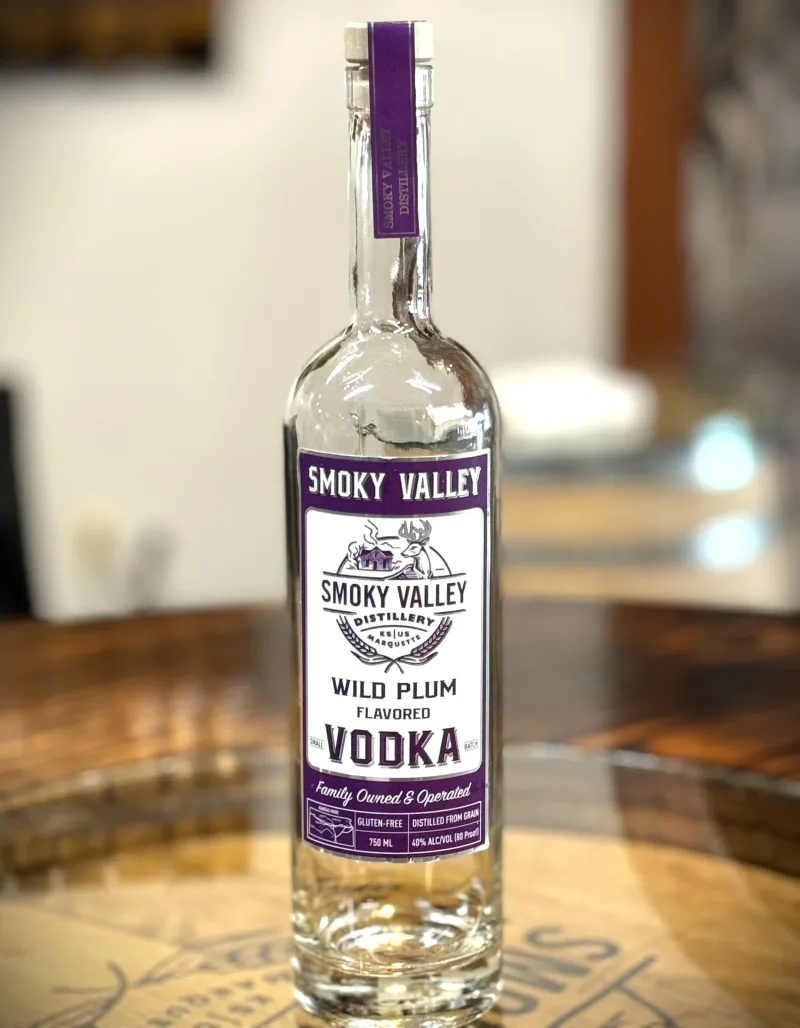
We print both. Look at the bottom of the front label on a bottle of our Wild Plum Vodka and it reads 40% ALC/VOL (80 Proof) — the required number, with the optional one in parentheses beside it, exactly where the regulation says it has to sit.
If you only ever see one of the two numbers, you can always get the other in your head. Double it, or halve it.
The Four Proofs in a Whiskey's Life
Here's where proof stops being trivia and starts being production. A whiskey's strength is set, capped, and adjusted at four distinct stages.
| Stage | What it is | The federal limit |
|---|---|---|
| Distillation proof | The strength coming off the still | Less than 190 proof for any whisky; 160 or less for bourbon, rye, wheat, and malt whiskey |
| Barrel entry proof | The strength going into the barrel | 125 or less for those same categories |
| Bottling proof | The strength in the bottle | Not less than 80 for anything called whisky |
| Barrel proof | What came out of the barrel, undiluted | No cap — this is a choice, not a requirement |
Those limits come from the standards of identity at 27 CFR 5.143, the same regulation that sets the mash bill rules for each category. That regulation spells it whisky, without the e, which is a quirk worth knowing — see whiskey vs. whisky for why federal law uses one spelling and nearly every American label uses the other.
The 160 proof distillation cap is the one that shapes flavor most. Distill higher and you strip out more of the grain character along with the impurities — that's exactly what makes vodka vodka, which is distilled at or above 190 proof. Whiskey is legally required to stop short of that so something of the grain survives into the barrel. We wrote about that dividing line in vodka vs. whiskey.
The 125 barrel entry cap matters for a different reason. Alcohol and water pull different compounds out of charred oak. Enter the barrel too hot and the extraction skews. Enter lower and you get more of the sweeter, rounder wood notes — at the cost of yield, since you're filling barrels with more water.
Between those stages, distillers add water. Cutting a spirit from still strength down to barrel entry proof, and again from barrel proof down to bottling proof, is called proofing down. Ours is done with the same sandstone-filtered water from the Kiowa Aquifer that we mash with, which is covered in how bourbon is made.
Proof Numbers Worth Recognizing
80 proof (40% ABV) — the legal floor for whiskey, and the standard strength for most vodka.
86 to 100 proof — where the large majority of American whiskey lands. There's room in here for a distiller to pick a number that suits the spirit.
100 proof exactly — required for anything labeled bottled in bond. Under 27 CFR 5.88, a bonded whiskey must be the product of one distilling season at one distillery, aged at least four years in a federally supervised warehouse, and reduced with pure water to exactly 50% alcohol by volume. The proof is only one of several conditions, but it's the one printed on the front; what bottled in bond means covers the rest.
Barrel proof / cask strength — no water added after the barrel. Because the barrel breathes, some barrels come out higher than they went in and some come out lower, so the number moves between releases. Small barrels like the ten-gallon ones we use exchange more with the wood per gallon, which is part of small barrel aging.
Does Higher Proof Mean Better Whiskey?
No. It means more concentrated.
Alcohol is a solvent and a carrier. A higher proof pour brings more of the aroma compounds the barrel gave up, so it reads as bigger, oakier, and more intense — and it also brings more ethanol burn, which numbs your palate and can bury the details you were trying to taste. Lower proof gives you a softer, more approachable pour with less of the barrel's weight behind it.
Neither is a quality grade. The question is whether a whiskey is balanced at the proof it was bottled at, and a distiller who picked 90 proof on purpose has usually tasted it at four other strengths first.
This is also why adding a few drops of water to a strong pour genuinely changes what you smell — it isn't just weakening it. There's real chemistry behind that, and we go through the research in how to taste whiskey, along with the pour size and glass shape that make a side-by-side comparison worth doing.
The Proofs Across Our Shelf
Our lineup keeps things simple, which makes it a decent reference set.
- Vodkas — 40% alc/vol, 80 proof. Premium Vodka, Wild Plum, Smoked Jalapeno, Lingonberry, and Pickle Vodka all sit at the standard vodka strength.
- Bourbons — 45% alc/vol, 90 proof. Straight Bourbon, Smoked Straight Bourbon, our best-selling wheated Bud & Dewey's, and the High Wheat Single Barrel.
- Whiskeys — 45% alc/vol, 90 proof. Kernza Whiskey and our Rye Single Barrel, named Best of Kansas at the 2025 Heartland Whiskey Competition.
Five points of ABV separate our vodka shelf from our whiskey shelf. That gap is smaller than most people guess, and it's a useful reminder that proof tells you about strength and nothing at all about what the spirit is. The full range is on the bourbon and whiskey pages.
Proof and How Much You're Actually Drinking
One practical use for the number: sizing a pour.
The NIAAA counts 1.5 fl oz of 80-proof spirits as one standard drink. At 90 proof, that same 1.5 oz is about 1.1 standard drinks. At 120 proof it's roughly 1.5 — half again as much alcohol in an identical-looking glass.
That math is the reason a tasting flight uses small pours. Ours run about half an ounce each, which lets you get through six spirits and still drive home.
Come Check the Numbers Yourself
The fastest way to understand what proof does is to taste the same style at two different strengths and notice how much the burn changes what you can pick up.
A tasting and tour in Marquette is $10 per person, runs 30 to 45 minutes, and is available Thursday through Saturday by appointment. We pour the lineup in a deliberate order and explain what each spirit was proofed to and why, standing in front of the still it came off. If you'd rather set up the comparison at home, our bottles are stocked at retail locations across Kansas.