
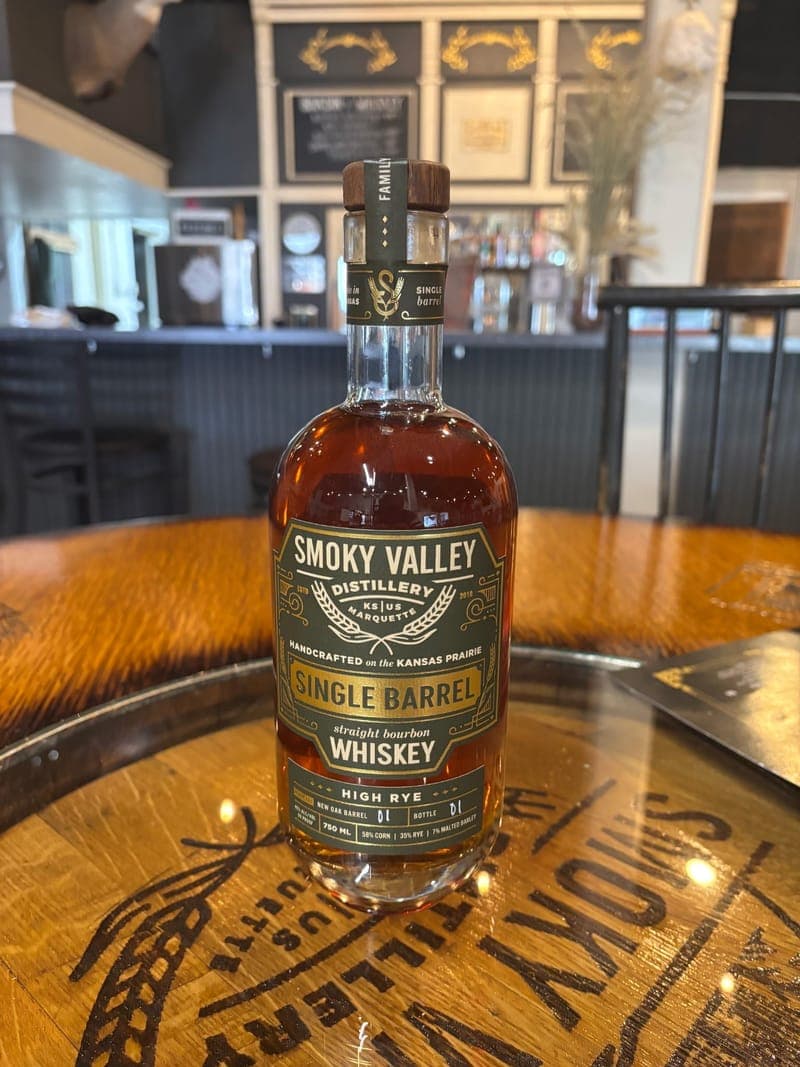
The Art and Science of Making Bourbon
Bourbon is one of the most regulated spirits in the world, yet within those regulations there's enormous room for creativity. Every decision a distiller makes — from the grain selection to the barrel size to the aging time — shapes the final flavor. Here's how we turn raw Kansas grain into handcrafted bourbon at Smoky Valley Distillery.
Step 1: Selecting the Grain Bill
Every bourbon starts with grain. Federal law requires at least 51% corn, and most distillers use between 60% and 80%. The remaining grains are where the artistry begins.
A traditional mash bill uses rye as the secondary grain, which adds spice and complexity. That's what you'll taste in our Straight Bourbon. A wheated mash bill swaps rye for wheat, producing a softer, sweeter spirit like our best-selling Bud & Dewey's. Malted barley rounds out the bill, providing the enzymes needed to convert starches into fermentable sugars.
We source our grains from Kansas farmers, and our water comes from the Kiowa Aquifer — naturally filtered and mineral-rich, perfect for making whiskey.
Step 2: Mashing
The grains are ground into a coarse meal, then cooked with hot water in a mash tun. This process — called mashing — converts the starches in the grain into simple sugars. The corn goes in first at the highest temperature, followed by the rye or wheat, and finally the malted barley at a lower temperature to activate its enzymes.
The result is a thick, sweet porridge-like liquid called the mash. The smell at this stage is incredible — warm, sweet, and deeply grainy.
Step 3: Fermentation
The mash is transferred to fermentation tanks and yeast is added. Over the next three to five days, the yeast consumes the sugars and produces alcohol and carbon dioxide. The liquid at this stage — called the "distiller's beer" or wash — is essentially a low-proof, unhopped beer sitting around 8-10% alcohol.
Yeast selection is critical. Different yeast strains produce different flavor compounds during fermentation. The esters, congeners, and other compounds formed here carry through distillation and into the final spirit.
Step 4: Distillation
The fermented wash is pumped into a still, where it's heated to separate the alcohol from the water and solids. Alcohol vaporizes at a lower temperature than water, so the vapors rise through the still, are collected, and condensed back into liquid.
By law, bourbon must be distilled to no more than 160 proof (80% ABV). Most distillers aim for somewhere between 130 and 150 proof. Distilling at a lower proof preserves more of the grain's character and flavor — something craft distillers prioritize over maximum yield.
During distillation, the distiller makes critical "cuts" — separating the heads (harsh early vapors), hearts (the clean, flavorful center), and tails (heavier, oily compounds). Only the hearts make it into the barrel.
Step 5: Barrel Aging
This is where bourbon truly becomes bourbon. The clear spirit — called "white dog" or new make — must enter new charred oak barrels at no more than 125 proof. No other major whiskey category requires new barrels, and this is what gives bourbon its distinctive caramel color, vanilla sweetness, and oak complexity.
The charring process caramelizes the sugars in the oak wood, creating a layer of carbon that acts as a natural filter. As the bourbon ages, it expands into the wood during warm months and contracts during cold months, drawing out flavors like vanilla, caramel, toffee, and baking spices. How deep that burn goes is its own decision — our guide to what barrel char is covers the four char levels, the caramelized red layer beneath the black, and why a charred barrel does not make whiskey taste smoky.
We use smaller barrels at Smoky Valley, which means more surface-area-to-volume contact with the wood. This accelerates the aging process and produces a richly flavored spirit in less time. Our Smoked Straight Bourbon takes this a step further with barrels made from smoked oak.
Step 6: Bottling
Once the bourbon has reached the desired maturity, it's proofed down with water to bottling strength — a minimum of 80 proof (40% ABV). Our bourbons are bottled at 90 proof (45% ABV), which preserves more flavor and body.
The bourbon is then filtered (if desired), bottled, labeled, and sealed by hand at our distillery in Marquette, Kansas.
Taste the Process
The best way to understand how bourbon is made is to watch it happen. Our guided tours walk you through every step of the process, from the grain bins to the still to the aging barrels — followed by a tasting of all three of our bourbons.
Book a tour at Smoky Valley Distillery and see firsthand how Kansas grain becomes world-class bourbon. Coming from out of town? Preston House sleeps 11 and is within walking distance of the distillery.