
Why Barrel Size Matters
When most people think about bourbon aging, they think about time — how many years the spirit spent in a barrel. But there's another variable that's just as important: the size of the barrel. At Smoky Valley Distillery, we use smaller barrels than the industry standard, and the difference in flavor is significant.
The Science of Surface Area
The standard bourbon barrel — called a #3 char 53-gallon barrel — has been the industry norm for over a century. It was designed for efficiency: large enough to hold a meaningful volume, small enough for one person to roll around a rickhouse.
But from a flavor perspective, the 53-gallon barrel is a compromise. Here's why.
The flavors in bourbon — vanilla, caramel, toffee, baking spices, oak tannins — all come from the wood. The spirit extracts these compounds from the charred interior of the barrel. The more wood surface area the spirit touches relative to its volume, the faster and more intensely it picks up those flavors.
The Math
As barrel size decreases, the ratio of surface area to volume increases:
| Barrel Size | Surface-to-Volume Ratio | Relative Wood Contact |
|---|---|---|
| 53 gallons (standard) | 1x | Baseline |
| 30 gallons | ~1.4x | 40% more |
| 15 gallons | ~1.8x | 80% more |
| 5 gallons | ~2.5x | 150% more |
A 5-gallon barrel has roughly 2.5 times the wood contact per gallon of spirit compared to a standard barrel. That's why a bourbon aged 2 years in a small barrel can develop flavor complexity that rivals a 4-6 year bourbon in a full-size barrel.
How Wood Contact Shapes Flavor
Charred Layer
When a barrel is charred, the intense heat caramelizes the wood sugars and creates a layer of activated carbon. This carbon layer acts as a natural filter, removing harsh compounds from the spirit while contributing caramel and smoky notes.
In a smaller barrel, the spirit passes through this charred layer more frequently as it expands and contracts with temperature changes. More passes mean more filtering and more caramel extraction.
How thick that layer is in the first place comes down to how long the cooper held the flame inside the barrel. What is barrel char walks through the #1 to #4 char levels and the red layer of caramelized wood sugars that sits underneath the carbon.
Vanilla and Oak Lactones
The compounds responsible for bourbon's vanilla character — vanillin and oak lactones — are embedded in the wood's cellular structure. Extraction happens gradually as the spirit penetrates the wood. More surface contact means more extraction, which is why small-barrel bourbons often have an intensely vanilla-forward character.
Tannins
Oak tannins provide structure and complexity to bourbon. In small barrels, tannin extraction is accelerated, which can be a double-edged sword — too much tannin creates astringency. That's why the distiller's skill in monitoring barrel aging is critical. We taste our barrels regularly and pull them when the flavor is at its peak.
Our Approach to Barrel Aging
At Smoky Valley Distillery, we use smaller barrels strategically across our bourbon and whiskey lineup:
- Straight Bourbon — rich caramel and vanilla from accelerated wood contact
- Bud & Dewey's — the soft wheat character amplified by deep oak sweetness
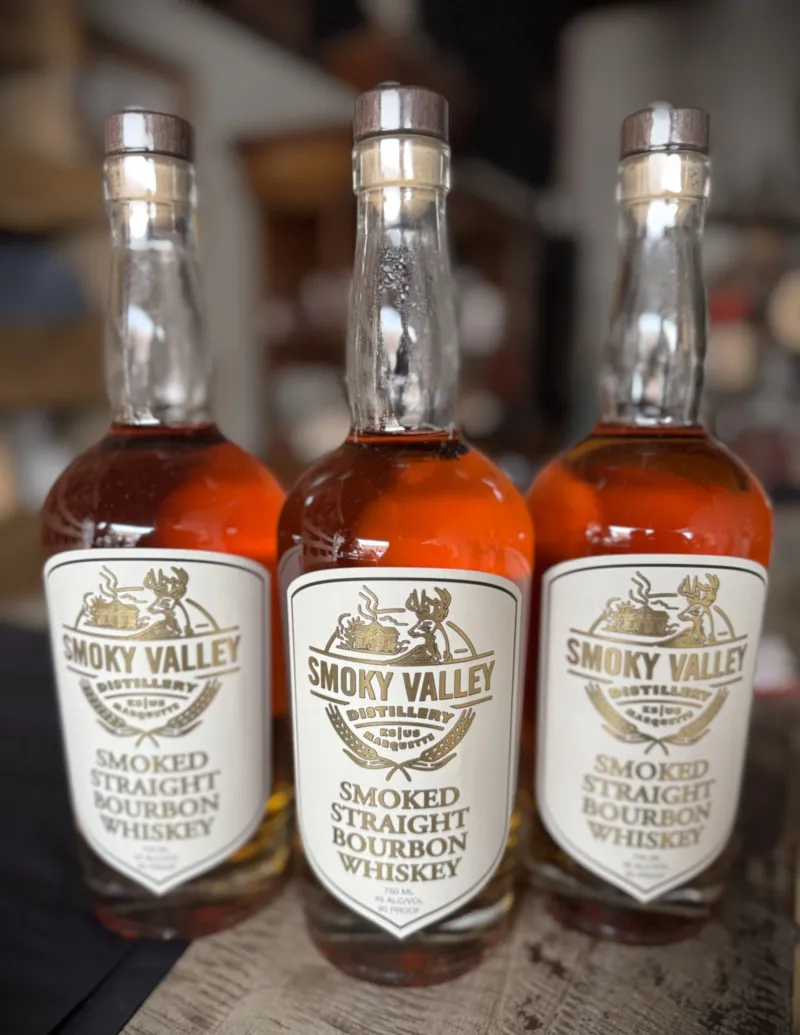
- Smoked Straight Bourbon — smoked oak barrels that add a layer of campfire complexity to the wood-driven flavors
- Kernza Whiskey — earthy grain character balanced by controlled oak influence
- Rye Whiskey — rye's natural spice complemented by vanilla and oak spice from the wood
Each spirit interacts with the wood differently because each starts with a different grain bill and flavor profile. The barrel doesn't just add flavor — it transforms and integrates the existing flavors.
Small Barrel vs. Large Barrel: Not Better, Different
It's worth noting that small barrel aging isn't objectively "better" than traditional aging. Very long aging in large barrels produces a depth and mellowness that small barrels can't easily replicate. The extended, gentle extraction creates layered complexity that develops over many years.
What small barrels do exceptionally well is produce a richly flavored, wood-forward spirit in less time. For a craft distillery like ours, that means we can offer barrel-aged spirits with genuine depth and character without requiring a decade of patience and warehouse space.
See Our Barrels Up Close
Our distillery tours include a walk through the barrel aging area where you can see (and smell) bourbon aging in real time. You'll learn how we select barrels, how we monitor the aging process, and how we decide when a barrel is ready.
After the tour, taste the results in our lineup of barrel-aged spirits. The difference that barrel size makes will be obvious in the glass. Book your tour today.