
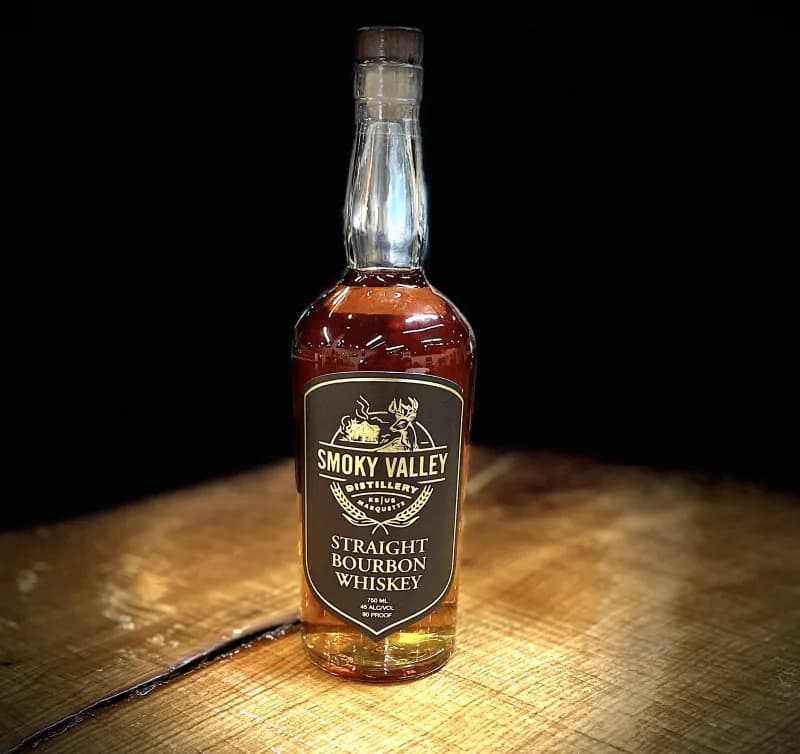
Most of the words on a whiskey label are marketing. A few are regulated. Exactly one of them is a promise the federal government supervises from the still to the bottle, and it is the one that sounds the most like bureaucratic filler: bottled in bond.
We get asked about it across the tasting room counter more than almost any other label term, usually in the form of "is that the good stuff?" The honest answer is that it is the verified stuff, which is a different and more interesting claim. Here is every condition behind the phrase, where the "bond" actually is, and what the designation does not promise.
The Short Answer
Under 27 CFR 5.88, a domestic spirit may say bond, bonded, bottled in bond, or aged in bond only if it is:
- All the same kind of spirit, distilled from the same class of materials
- Distilled in one distilling season, by one distiller, at one distillery
- Stored at least four years in wooden containers, in contact with the wood
- Unaltered from its original condition — nothing added or taken away except filtration, chill proofing, or other physical treatment
- Reduced in proof by pure water only, down to 50% alcohol by volume
- Bottled at exactly 50% ABV — 100 proof, no range
Domestic bottles must also carry the real name or trade name of the distillery and its federal plant number. That last line is the part that makes the whole thing enforceable: the label names who is accountable.
Where the "Bond" Actually Is
The bond is a place, not a pledge.
Federal excise tax on spirits is not charged when whiskey is made. It is charged when the whiskey leaves. 26 U.S.C. § 5006 puts it plainly: "the tax on distilled spirits shall be determined when the spirits are withdrawn from bond." Until that moment, a barrel sits on bonded premises — government-supervised space inside a distilled spirits plant — and no tax has been determined on it.
Before 1897, bottling generally happened after the spirits came out of bond. A distiller paid the tax, moved the barrels, and whatever happened next was between the whiskey and whoever handled it. The 1897 law's entire innovation was moving the bottling line inside the bonded warehouse, under a federal storekeeper's eye, so the government could certify what went into the glass.
That is why the phrase reads the way it does. It is not "bottled under bond." It is bottled in bond — physically, in the warehouse, before the tax man closed the book on it.
The Law That Started It: March 3, 1897
The statute is the Act of March 3, 1897, 29 Stat. 626, titled "An Act To allow the bottling of distilled spirits in bond." It is routinely described as one of the first consumer protection laws in American history, and the timing supports that — it predates the Pure Food and Drug Act of 1906 by nine years.
The problem it solved was adulteration. Whiskey moved in barrels, and the people between the distiller and the drinker were not always careful or honest about what they added on the way. Bourbon historian Michael Veach documents the fight behind the act: straight-whiskey distillers including Colonel E.H. Taylor, Jr. pushed for it, and the rectifiers — firms that bought bulk spirit and blended it — opposed it as a government endorsement of their competitors. Both sides were right about what the law would do. President Grover Cleveland signed it among the last acts of his presidency, and the whiskey world still marks the date.
What "Same Distilling Season" Rules Out
This is the condition most people have never heard of, and it does more work than the four-year rule.
A distilling season is a defined half of the calendar. 27 CFR 5.1 sets it out: January 1 through June 30 is the spring distilling season, July 1 through December 31 is the fall distilling season. A bonded bottling has to come from one of them.
That single sentence eliminates most of the flexibility a blender relies on. You cannot top up a spring batch with fall production of the same year. You cannot marry two vintages. You cannot buy a few barrels from a neighbor to fill out a run. One season, one distiller, one distillery — and the plant number on the label is how anyone can check.
For a working distillery, this is the condition that bites. It means setting aside a specific body of spirit, from a specific six-month window, and leaving it alone for four years while knowing you can never add to it.
Bottled in Bond Is Not Only for Whiskey
The regulation says "distilled spirits," not "whiskey." In practice nearly every bonded bottle on a shelf is bourbon or rye, because the four-year wood requirement maps cleanly onto how whiskey is already made and works against spirits that are not aged at all.
But 5.88 explicitly contemplates bonded vodka and gin, stored in paraffin-lined wooden containers — the lining keeps the spirit from picking up wood character it is not supposed to have. Imported spirits can use the term too, if they meet the same conditions and name the country under whose laws they were bottled.
So a bonded vodka is legal. It is just a strange thing to want, since four years of storage buys a clear spirit nothing a buyer can taste.
What Bonded Does Not Guarantee
This is where the "is it the good stuff?" question deserves a straight answer.
Read the six conditions again and notice everything that is missing. Bottled in bond says nothing about:
- The grain. Any mash bill, any class of materials. A bonded whiskey tells you nothing about corn, rye, or wheat — that is the mash bill, and it is not regulated by this designation.
- The barrel. "Wooden containers" with wood contact. No size, no char level, no requirement that the oak be new. Bourbon's own rules handle the charred-new-oak part; bond does not add to them.
- The warehouse. No temperature, no humidity, no rickhouse position — all of which move a whiskey considerably over four years.
- Quality. Nothing in the regulation evaluates how the whiskey tastes. A badly made spirit, aged four years in one season by one distiller and bottled at exactly 100 proof, is bonded.
Compare it to straight, the other designation that actually means something: straight requires two years in charred new oak and no added coloring, flavoring, or blending materials. Bonded doubles the time, fixes the proof, and adds the provenance rules. It is stricter on origin. It is silent on flavor. For the full tour of which label words carry weight and which are decorative, see how to read a whiskey label — and for where bonded fits among the federal categories, types of American whiskey.
The Green Stamp That Isn't There Anymore
If you have handled an old bonded bottle, you may have seen a green paper strip draped over the cap. That was the federal tax strip, and for decades it was the visual shorthand for bonded whiskey — green for bonded, a different color for everything else, with the distillation and bottling years printed right on it.
The strips are gone. The statute requiring stamps on containers of distilled spirits, 26 U.S.C. § 5205, was repealed by Pub. L. 98–369, § 454(a), on July 18, 1984, with the repeal effective July 1, 1985. Modern bonded bottles carry the claim in printed text instead — which means the only verification available to a buyer today is the one the regulation requires: the distillery name and the plant number.
Tasting a Bonded Whiskey at 100 Proof
One hundred proof is not hot, but it is meaningfully stronger than the 80 to 90 proof most whiskey arrives at, and it rewards a little technique.
Pour less than you think you want. At 50% ABV the alcohol vapor coming off the surface will flatten your nose quickly if you crowd the glass, so nose it from a few inches above the rim first and work down. Then add water — a few drops, not a splash — and nose it again. Bonded whiskey is specifically a spirit that was proofed down with pure water and nothing else, so adding a little more at the table is continuing the distiller's own work rather than diluting a recipe.
A glass with a narrowed opening concentrates aroma and lets you control that vapor; a wide-mouthed rocks glass lets it dissipate, which is what you want once ice and a cocktail are involved. Our whiskey glassware guide covers both shapes, and how to taste whiskey walks through the order we pour our own flight.
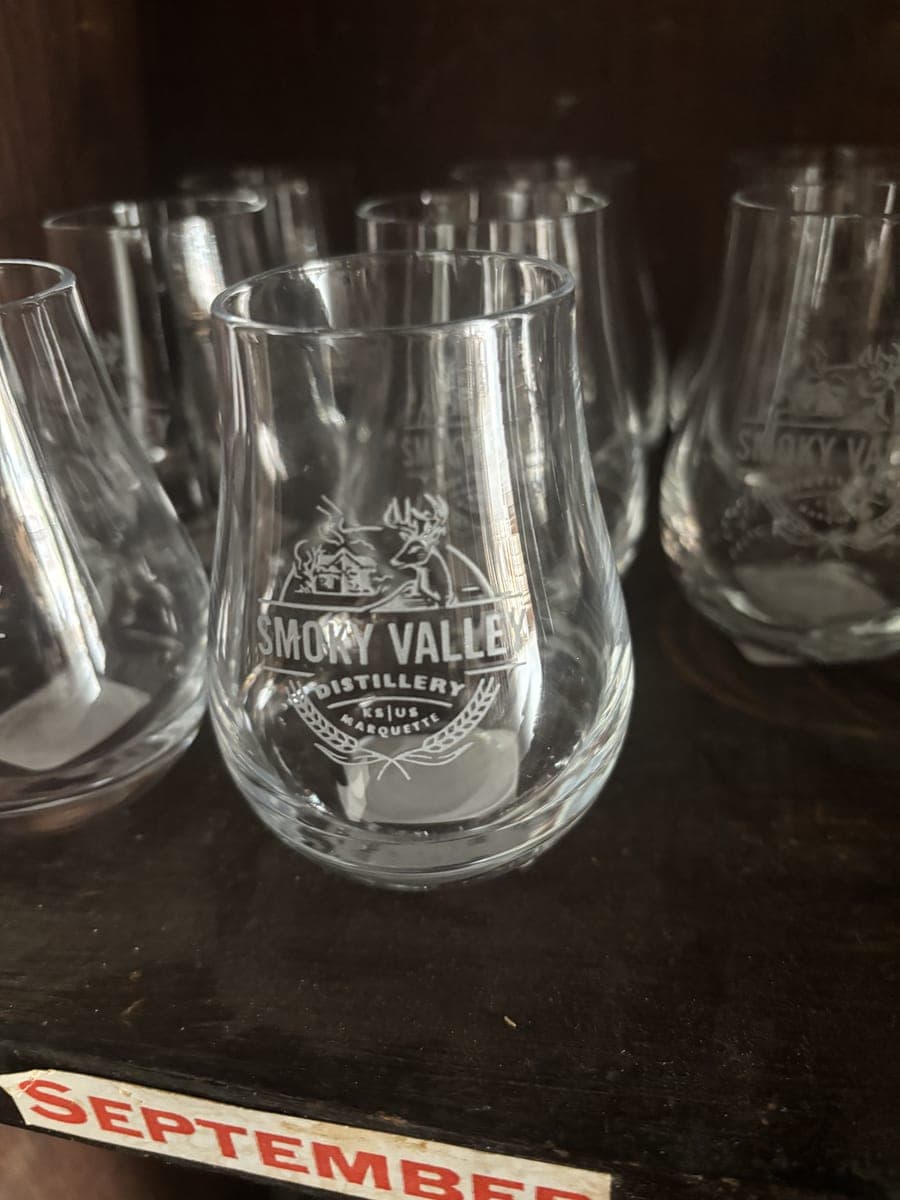
Logo Tasting Glass
$16.95A tulip-shaped nosing glass etched with the Smoky Valley Distillery crest — shaped to concentrate aroma for tasting our bourbon and whiskey neat.
View in the shop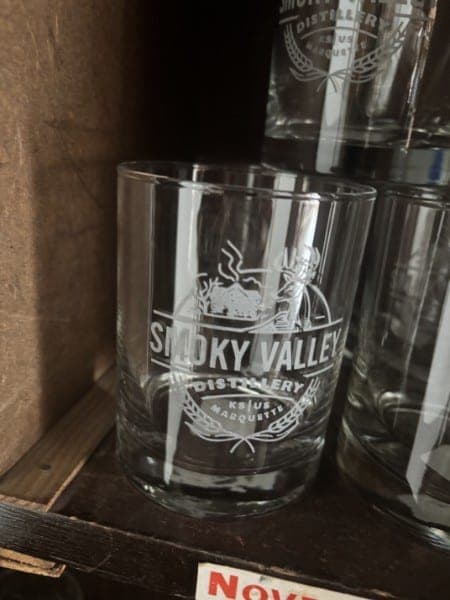
Old Fashioned Glass
$19.95A heavy-bottomed rocks glass etched with our crest — built for an Old Fashioned, a bourbon on the rocks, or a neat pour.
View in the shopWhy "Bottled in Bond" Isn't on Our Labels
We will not pretend otherwise: nothing we bottle today says bottled in bond, and we would rather explain why than let the phrase sit on a page implying it does.
Three of the six conditions are already true of everything we make. Every drop is distilled in one building in Marquette, on one 250-gallon pot still, by us — so the one-distiller, one-distillery, same-kind-of-spirit requirements are not where the difficulty lies. We also proof down with sandstone-filtered Kiowa Aquifer water and nothing else.
The two that stop us are the clock and the number. Our Straight Bourbon is released at two to four years, which satisfies straight but not the four-year bonded minimum across the board. And most of our bourbon and whiskey goes into the bottle at 45% ABV — 90 proof — because that is where we think it tastes best coming out of our 10-gallon barrels. Bonded is exactly 50%, with no tolerance, so we would have to change a proof we chose on purpose.
That is the real reason the craft shelf is thin on bonded bottles, and it is not a judgment on small distilleries. It is six conditions that happen to be easiest for an old, large distillery with deep warehouse inventory, and hardest for a young one that bottles where it likes.
The Short Version
Bottled in bond means one kind of spirit, from one distilling season, one distiller, and one distillery, aged at least four years in wood, cut with nothing but pure water, bottled at exactly 100 proof, and labeled with the distillery's name and federal plant number. It is the most thoroughly policed phrase in American spirits labeling, and it has been on the books since March 3, 1897.
It guarantees provenance and process. It does not guarantee you will like it. Those are two different questions, and the second one is answered at the counter.
Our whiskey and bourbon lineups are all distilled and barreled here in Marquette, and we are glad to walk through exactly what our labels do and do not claim. A tasting and tour is $10 per person, runs 30 to 45 minutes, and is available Thursday through Saturday by appointment.