
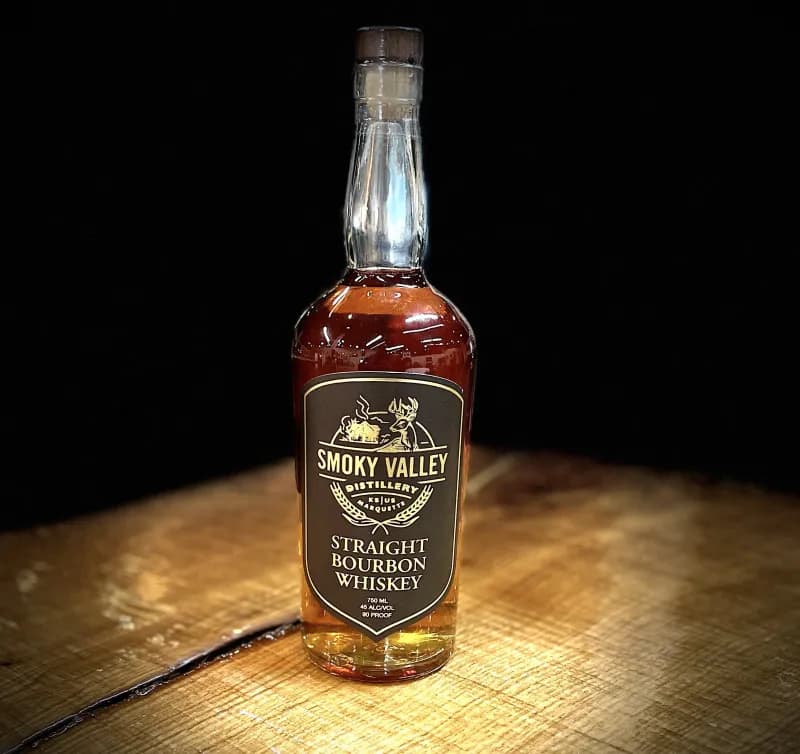
Every bottle of bourbon on a shelf started with somebody setting a barrel on fire.
That sounds like a marketing line, and it is not. Before any spirit goes in, a cooper stands a new oak barrel over a flame, lets it burn inside for somewhere between fifteen and fifty-five seconds, and then puts the fire out. What is left is a black, cracked, carbonized surface — barrel char — and nearly everything people describe as bourbon flavor comes out of it.
We get asked about this from the other direction most of the time. Somebody tastes caramel and vanilla in a glass of our Straight Bourbon and wants to know what we added. The answer is water. The rest came out of a burned barrel.
The Short Answer
Barrel char is a layer of blackened wood created by burning the inside of a new oak barrel with open flame. It does three separate jobs:
- It filters. The innermost surface becomes activated carbon — charcoal — which strips harsh and sulfurous compounds out of the spirit as it moves in and out of the wood.
- It flavors. The heat caramelizes wood sugars in the band just beneath the black layer and breaks the oak's structural polymers down into aromatic compounds the spirit can dissolve.
- It colors. New whiskey off the still is clear. Every shade in an aged bottle was extracted from charred wood, which is why 27 CFR 5.143 can forbid added coloring in straight whiskey and still expect it to be brown.
For bourbon, rye, wheat, and malt whiskey, this is not a stylistic choice. The same regulation requires those spirits be stored in charred new oak at 125 proof or less. A distiller who skips the char is not making bourbon.
The Four Char Levels
Cooperages grade char by burn time. The longer the flame stays inside the barrel, the thicker the carbon layer and the deeper the heat drives into the stave. The convention published across the cooperage trade runs like this:
| Char level | Burn time | Common name |
|---|---|---|
| #1 | ~15 seconds | Light |
| #2 | ~30 seconds | Medium |
| #3 | ~35 seconds | Heavy |
| #4 | ~55 seconds | Alligator char |
Those numbers come from cooperage specifications rather than from any regulation — the law says charred, not how much. Midwest Barrel Co. publishes the same four tiers and times that most barrel brokers and cooperages do, and #3 has been the long-running default for standard bourbon production.
The fourth level gets its name from what it looks like. Burn oak for nearly a minute and the surface does not just blacken, it blisters and cracks into a shiny, scaled pattern that genuinely resembles alligator hide. It is the most dramatic-looking char and the one most often mistaken for a quality grade. It is not one — it is a parameter, like mash bill or barrel size.
The Layer You Cannot See
Here is the part that explains why char level matters more than appearance alone would suggest.
Under the black carbon is a band of wood that got hot but never caught — the red layer, sometimes called the caramelized layer. Heat pushed through the stave and cooked the oak's sugars without burning them. That band, not the charcoal, is the flavor reservoir. Furfural and its relatives read as caramel and toasted almond; 5-hydroxymethylfurfural reads as toffee.
A hotter, longer char drives heat deeper and leaves a thicker red layer, which means more extractable material for the spirit to find. That is the actual mechanism behind char level: you are not choosing how black the inside of the barrel looks, you are choosing how much caramelized wood sits behind it.
Where the Vanilla Comes From
Oak is built from three structural polymers, and heat takes each one apart differently. The chemistry of that breakdown is well documented:
- Lignin degrades into vanillin and related phenols. This is the vanilla, and it is not a flavoring — it is wood, thermally dismantled.
- Hemicellulose degrades into furfural and its family, which carry caramel and toasted-almond character.
- The oak itself contributes lactones that read as coconut and sweet wood, independent of the burn.
So when somebody says a bourbon is vanilla-forward, they are describing lignin. When they say caramel, hemicellulose. The grain in the mash bill decides what those notes get layered onto — pepper from rye, honey from wheat — but a large share of what is in the glass is the barrel talking. We took the grain side of that apart in what is a mash bill; this is the other half of the same sentence.
Char Is Not Smoke
This is the misunderstanding worth correcting, and we are in an unusually good position to correct it, because we make a whiskey that actually is smoked.
Barrel char involves fire, so people reasonably assume it produces smoky whiskey. It does not. The barrel is burned and then the fire is extinguished before anything goes in. There is no smoke in the barrel for the spirit to absorb. What the whiskey finds is solid wood with caramelized sugars and broken-down lignin in it, and what it dissolves out of that wood tastes like vanilla and caramel, not like a campfire. A heavy char can tilt the vanilla darker and add a dry, almost spicy edge — but that is a long way from smoke.
Real smoke in whiskey comes from somewhere else entirely: peat-dried malt, as in Scotch, or smoke applied separately from the aging. Our Smoked Straight Bourbon is the second kind. It is hand-smoked with hickory at bottling — after the barrel, not from it. Set it beside our unsmoked Straight Bourbon and the difference is the whole lesson in two glasses: both spent their aging in charred new oak, and only one of them tastes smoky.
Toasting Is a Different Thing
Charring and toasting are both heat, applied with different intentions.
Charring is fast and hot, with open flame, and it deliberately carbonizes the surface. Toasting uses lower heat for longer and stops before the wood blackens — it builds the caramelized layer without the charcoal layer on top. That is why wine barrels are typically toasted: winemakers want the sweet-wood aromatics without a carbon filter pulling character out of the wine.
Some whiskey barrels get both, toasted first and then charred, so the stave carries a deep caramelized band under a conventional char. Toast-level specifications are a real lever in finishing barrels for exactly that reason.
The One Whiskey That Cannot Be Charred
There is a genuine exception in the federal standards, and it is a useful one to know, because it proves char is doing something specific rather than something generic.
Corn whiskey is defined the other way around. Under 27 CFR 5.143 it must not be stored in charred new oak at all — if it is aged, it has to go into used or uncharred new oak, and barrel storage is only required when the label makes an age claim. Straight corn whiskey carries the same restriction with a two-year minimum. Every other named American type in that section requires charred new oak.
The reason is categorical. Corn whiskey, at 80% corn or more, is meant to show the grain. Put it in a #3-char new barrel and the wood would bury it. The law protecting that category protects it from char. We walk through all of these categories and their barrel rules in types of American whiskey.
What Char Does in a 10-Gallon Barrel
Char level and barrel size are two knobs on the same machine, and we turn one of them hard.
We age in 10-gallon barrels rather than the industry-standard 53-gallon. That puts far more charred surface against every gallon of spirit, so whatever the char is contributing arrives faster and louder. Two years in our barrels produces the depth you would expect from four and a half to five years in a full-size barrel — the full trade-off is in the art of small barrel aging.
What that means practically is that the char is not a background detail in our whiskey. It is one of the loudest voices in the glass. A spirit that moves in and out of a 10-gallon barrel's charred layer through every Kansas temperature swing passes through that carbon layer and that red layer far more often per gallon than one sitting in a 53-gallon barrel in a Kentucky rickhouse. That is the deliberate part of distilling at our scale, and it starts with a barrel somebody set on fire. The rest of the sequence — grain, water, still, cuts — is in how bourbon is made.
Tasting Char in the Glass
You can find char in a pour if you know what to look for.
Start with color, but hold it lightly — depth of color tells you about wood contact and char, and nothing at all about quality. Then nose for the two families separately. Vanilla and coconut sit high and sweet; caramel, toffee, and toasted nut sit lower and rounder. On the palate, char's signature is the dry, faintly ashy grip at the very back of the finish, after the sweetness has gone. That is the carbon layer, and once you have identified it you will find it in every charred-oak whiskey you drink.
A glass with a narrowed opening helps considerably here, because the vanillin and lactone aromatics are the volatile ones and a tulip shape concentrates them instead of letting them off the surface. A wide rocks glass does the opposite, which is what you want when ice and a cocktail are in play. Our whiskey glassware guide covers both, and how to taste whiskey walks the order we pour our own flight.
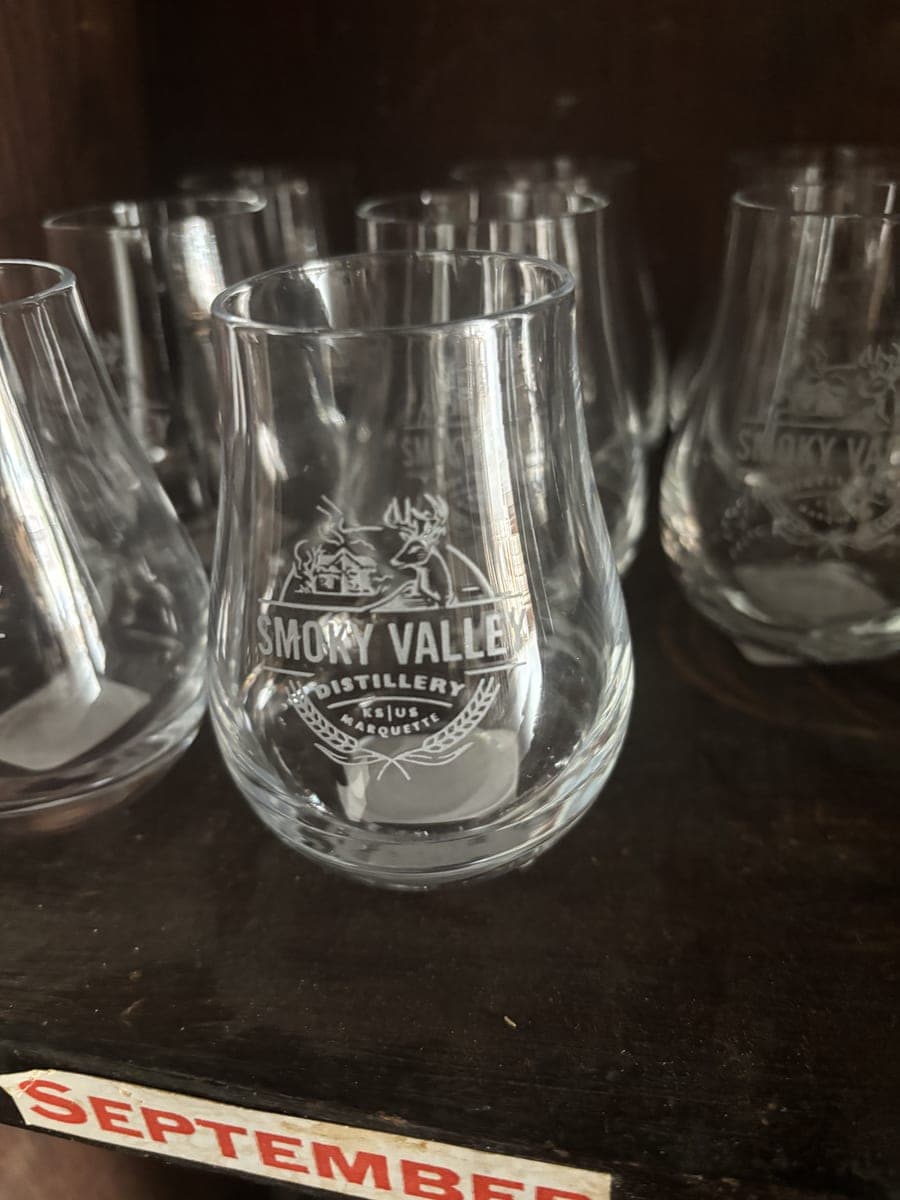
Logo Tasting Glass
$16.95A tulip-shaped nosing glass etched with the Smoky Valley Distillery crest — shaped to concentrate aroma for tasting our bourbon and whiskey neat.
View in the shop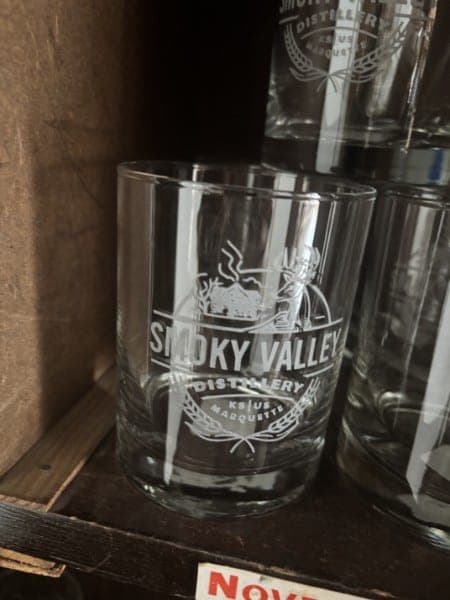
Old Fashioned Glass
$19.95A heavy-bottomed rocks glass etched with our crest — built for an Old Fashioned, a bourbon on the rocks, or a neat pour.
View in the shopThe Short Version
Barrel char is a controlled fire set inside a new oak barrel before the whiskey goes in. It leaves a layer of activated carbon that filters the spirit and a band of caramelized wood sugars beneath it — the red layer — that supplies vanilla, caramel, and toffee. Cooperages grade it #1 through #4 by burn time, roughly 15 to 55 seconds, with #4 called alligator char for how the surface cracks. Federal law requires charred new oak for bourbon, rye, wheat, and malt whiskey, and forbids it for corn whiskey.
And it does not make whiskey smoky. The fire goes out before the spirit goes in.
Our bourbon and whiskey all come out of charred new oak in 10-gallon barrels here in Marquette, and a side-by-side of the smoked and unsmoked bourbons is the fastest way to hear the difference between char and smoke. A tasting and tour is $10 per person, runs 30 to 45 minutes, and is available Thursday through Saturday by appointment.