
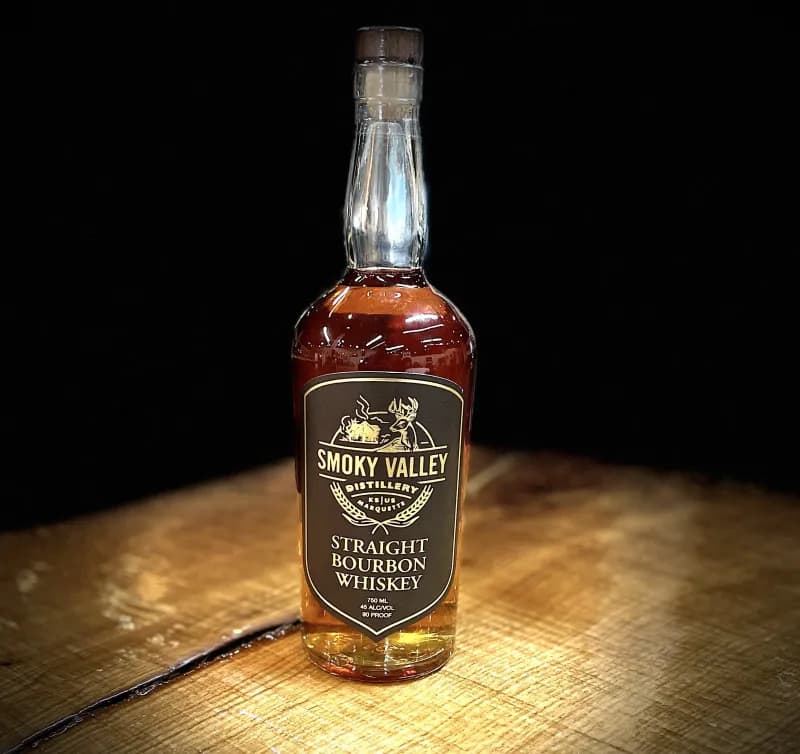
Somebody asks this at the counter nearly every weekend, and it usually arrives in the shape of a confession: I've always been a Scotch drinker. Then they look at a shelf of Kansas bourbon and want to know how far from home they are.
The honest answer is farther than they think on paper, and closer than they think in the glass. Bourbon and Scotch are the two best-known whiskeys in the world, and almost everything that separates them traces back to a single decision about the barrel. Here's what each rulebook requires, what the barrel does, and what the difference actually tastes like.
Two Rulebooks, Written Two Different Ways
Bourbon is defined by American federal regulation. The standards of identity at 27 CFR 5.143 require a fermented mash of at least 51% corn, distillation at 160 proof or less, storage in charred new oak barrels entered at 125 proof or less, bottling at 80 proof or more, and production in the United States. No coloring, flavoring, or blending materials may be added. Two years in that barrel earns the word straight.
Scotch is defined by British regulation. Regulation 3 of the Scotch Whisky Regulations 2009 requires that the whisky be:
- Distilled at a distillery in Scotland from water and malted barley, with only whole grains of other cereals permitted
- Mashed, converted, and fermented at that same distillery, using only added yeast
- Distilled to less than 94.8% ABV, so that it retains the aroma and taste of its raw materials
- Matured only in Scotland, in an excise warehouse or other permitted place
- Matured only in oak casks of no more than 700 liters
- Matured for not less than three years
- Bottled at a minimum of 40% ABV
- Free of anything added except water, plain caramel coloring, or both
Now read the two lists against each other. Bourbon's rules are almost entirely about the recipe: how much corn, how high off the still, which barrel, what strength. Scotch's rules are heavily about place: made in Scotland, fermented at the distillery, matured in Scotland, for three years, in a Scottish warehouse. One category polices what you put in. The other polices where you do it and for how long.
| Bourbon | Scotch | |
|---|---|---|
| Defined by | US federal law (27 CFR 5.143) | UK law (Scotch Whisky Regulations 2009) |
| Where it can be made | Anywhere in the United States | Scotland only — distilled and matured there |
| Grain | At least 51% corn | Malted barley; other whole-grain cereals permitted |
| Maximum distillation strength | 160 proof (80% ABV) | Under 94.8% ABV |
| Cask | Charred new oak, entered at 125 proof or less | Oak, 700 liters or less — new not required |
| Minimum maturation | None (2 years for straight) | 3 years |
| Minimum bottling strength | 80 proof (40% ABV) | 40% ABV |
| Caramel coloring | Prohibited | Permitted (plain caramel only) |
| Spelling on the label | whiskey, usually | whisky, always |
That last row is a convention rather than a rule about the liquid, and we unpack it in whiskey vs. whisky.
The Barrel Does Most of the Separating
If you only remember one line from this page, make it this one: bourbon has to use a barrel nobody has used before, and Scotch doesn't.
A new charred oak barrel is loaded. Toasting and charring break down the lignin and hemicellulose in the wood into vanillin, caramelized wood sugars, and oak lactones, which is where bourbon's vanilla, caramel, and coconut notes come from — the chemistry is laid out in the Journal of the Institute of Brewing work on barrel-derived flavor compounds. Our page on what barrel char is walks through the four char levels and the red layer underneath.
Here's the part that surprises people: bourbon's new-barrel requirement is the reason Scotch has cheap casks. An American distiller can legally use a barrel exactly once for bourbon. After that it is still a perfectly good oak cask with most of its structure intact and some of its sweetness spent, and for more than a century a large share of those barrels have been shipped to Scotland, Ireland, and Canada to be filled again. Scotch's rules permit any oak cask under 700 liters, so ex-bourbon and ex-sherry wood is the industry norm rather than a compromise.
The flavor consequence is direct. A first-fill barrel gives up a great deal in two years. A second- or third-fill cask gives up much less, much more slowly — which is exactly why Scotch needs three years as a legal floor and routinely sits for ten or twelve, while a bourbon can be finished and excellent long before that. The whisky in a refill cask has room to taste like its grain, its still, and the air of the warehouse it slept in, because the wood isn't shouting over it.
Our own barrels go the other direction as far as it's possible to go. We fill 10-gallon charred new oak instead of the industry-standard 53-gallon size, which puts dramatically more wood surface against every gallon of spirit. Two years in one of ours lands where four and a half to five years lands in a full-size barrel — the full reasoning is in small-barrel aging. A Scotch distiller slows the wood down with a used cask and a decade. We speed it up with a small new one. Same variable, opposite ends of the dial.
Grain, Still, and Proof
Grain. Bourbon is a corn spirit by law — 51% minimum, and most mash bills run higher, with rye or wheat and a little malted barley filling the rest. What a mash bill is covers how that recipe reads. Single malt Scotch is 100% malted barley and nothing else. Scotland's grain whiskies, which make up most of the volume in a blended Scotch, may use wheat or corn — but the malt side of the industry, the side Americans usually mean when they say Scotch, is a barley spirit end to end.
Still. Single Malt Scotch Whisky must be distilled in pot stills at a single distillery. Single Grain Scotch generally comes off continuous column stills. Bourbon's regulation says nothing about still type at all; American distillers use whichever they like, and the big Kentucky houses run columns. We run a copper pot still inside the old COOP building, which puts us on the same equipment as a single malt and the opposite cask from one. That combination — pot still, new charred oak, small barrel — is the whole character of our Straight Bourbon in one sentence.
Proof. The distillation ceilings tell you what each category is protecting. Bourbon's 160-proof cap is the tighter of the two, and it exists to keep grain flavor in the spirit. Scotch's limit of just under 94.8% ABV is much higher, close to neutral, and it is there for the grain-whisky component of blends; a malt distillery typically comes off its pot still far below that. What proof means explains why the number on the bottle and the number off the still are two different questions.
Peat Is Not in the Rulebook
The single most common assumption about Scotch is that it's smoky. Look back at that list of eight requirements: peat is not in it. Regulation 3 covers place, grain, strength, cask, time, and additions, and never mentions smoke.
Smoke in Scotch comes from drying malted barley over a peat fire before it's ever mashed, which is a regional malting tradition concentrated in a handful of distilleries. Most Speyside and Lowland malts carry no peat at all. If you have decided you dislike Scotch on the basis of one heavily peated Islay bottle, you have sampled a corner of the category rather than the category.
That matters here because we get the mirror-image question constantly. Our Smoked Straight Bourbon is hand-smoked with hickory at bottling — after the barrel — which is a completely different mechanism from smoke that arrived in the grain before fermentation. What smoked bourbon actually is lays out all four places smoke can enter a whiskey and why federal law keeps it out of bourbon itself.
The Asymmetry Nobody Mentions
One more thing worth knowing, because it says something about how these two categories see each other.
American law does not just define bourbon. It also defines Scotch — and it does it by pointing. In the table of foreign distinctive products inside 27 CFR 5.143, Scotch whisky is described as whisky that is a distinctive product of Scotland, manufactured in Scotland in compliance with the laws of the United Kingdom. Irish and Canadian whisky appear the same way. The United States writes bourbon's recipe out in full and then, for Scotch, defers entirely to Scotland's own rulebook.
The reverse protection exists too, which is why bourbon is bourbon in Edinburgh and not just in Kentucky. Congress declared bourbon a distinctive product of the United States in 1964, and the restriction has lived in the standards of identity ever since — the story is in does bourbon have to be made in Kentucky. Both categories are geographic indications. Only one of them also specifies its grain bill.
What You Can Actually Taste
Strip away the law and pour them next to each other, and the differences are easy to find.
Bourbon leads with the wood. Vanilla, caramel, baking spice, toasted grain, and a sweetness that comes from corn and caramelized oak rather than anything added. A high-rye mash bill brings black pepper; a wheated one brings honey and bread, and the high rye vs. wheated spectrum covers the range. The finish is warm and usually sweet.
Scotch leads with everything that isn't wood. Malt — think cereal, biscuit, dried fruit — plus whatever the cask held before, which in a sherry-matured malt means raisin and nut, and in an ex-bourbon cask means a lighter, grassier, honeyed profile. A peated malt adds ash, iodine, and campfire. The finish tends drier and longer, with less sugar underneath it.
Two things people name as differences that aren't:
- Age. Scotch carries age statements more often because three years is a legal minimum and ten is a commercial norm, not because older is better in the abstract. A 12-year Scotch in a refill cask and a 2-year bourbon in a 10-gallon new barrel can have taken in comparable amounts of oak. How to read a whiskey label covers what an age statement does and doesn't guarantee.
- Smoothness. Both categories bottom out at 40% ABV, and both run well above it. Heat in a glass is mostly a proof question, not a nationality question.
Tasting Them Side by Side
Run the comparison yourself; it takes ten minutes.
- Match the proof as closely as you can. Our Straight Bourbon at 45% ABV against a 43% single malt is a fair fight. Against a 40% blend, expect the strength gap to show up as heat before anything interesting does.
- Nose the Scotch first. It's generally the more delicate of the two, and a bourbon's vanilla will flatten it if the bourbon goes first.
- Hunt for wood in the bourbon and grain in the Scotch. That's the barrel decision showing up in your glass, and it's the fastest way to feel the whole difference at once.
- Note the finish separately from the palate. Bourbon usually fades sweet; malt Scotch usually fades dry.
- Add a few drops of water to each and go back through. Water opens both, and it opens the bourbon more, because there's more extracted oak in there to open.
Our full method for tasting whiskey runs through the steps properly, and a tulip-shaped nosing glass makes the malt-versus-wood contrast far easier to catch than a tumbler does:
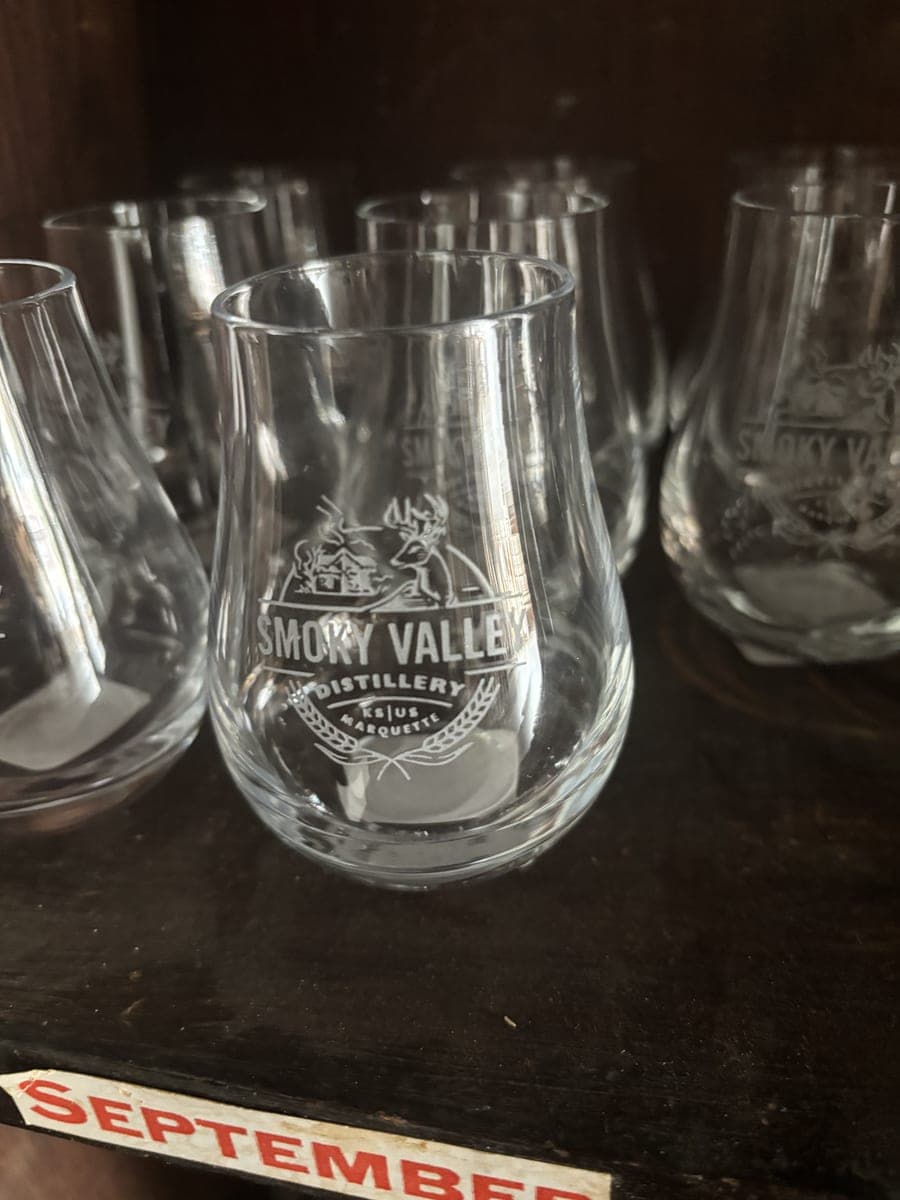
Logo Tasting Glass
$16.95A tulip-shaped nosing glass etched with the Smoky Valley Distillery crest — shaped to concentrate aroma for tasting our bourbon and whiskey neat.
View in the shop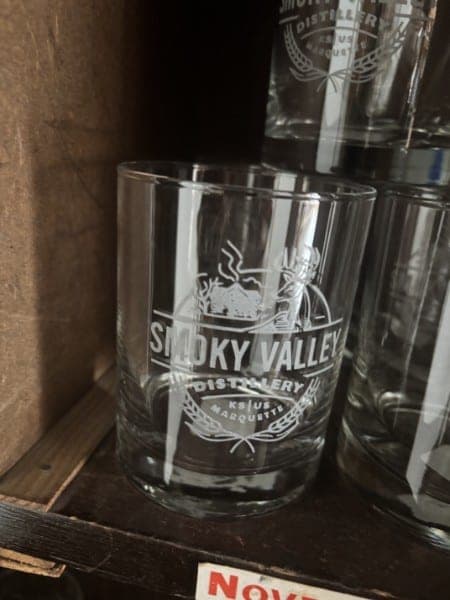
Old Fashioned Glass
$19.95A heavy-bottomed rocks glass etched with our crest — built for an Old Fashioned, a bourbon on the rocks, or a neat pour.
View in the shopWhich One Should You Buy?
Choose bourbon if you like vanilla, caramel, and sweetness in a whiskey; if you want the grain recipe to be part of the story; or if you'd rather not spend twelve years' worth of money to taste a finished spirit. Bourbon also gives you more variables to play with — corn, rye, wheat, malt, char level, barrel size — across every state in the country.
Choose Scotch if you want malt and cask history instead of fresh oak, if you enjoy the dried-fruit and nut side of sherry maturation, or if peat smoke is a flavor you actively seek. Scotland's five legal categories, from single malt to blended grain, are a map worth exploring on their own terms.
If you're a Scotch drinker standing in our tasting room, start with the two bottles closest to your palate. Our Rye Single Barrel Whiskey — 82% rye, 45% ABV, Best of Kansas at the 2025 Heartland Whiskey Competition — is the driest and most assertive thing we make, which is the right landing spot if you came in off an Islay malt. And our Kernza Whiskey is made from a perennial wheat grown in Moundridge, Kansas, by one of only two distilleries in the world working with the grain — a whiskey built around a single cereal in a way a single malt drinker will recognize immediately. What Kernza is explains the grain.
The best way to settle it is to taste the American side of the comparison where it's made. A tasting and tour runs $10 per person, 30 to 45 minutes, Thursday through Saturday by appointment, and covers the full whiskey and bourbon lineup. If you already know what you're after, where to buy lists our Marquette tasting room and 16 retail partners across Kansas.