
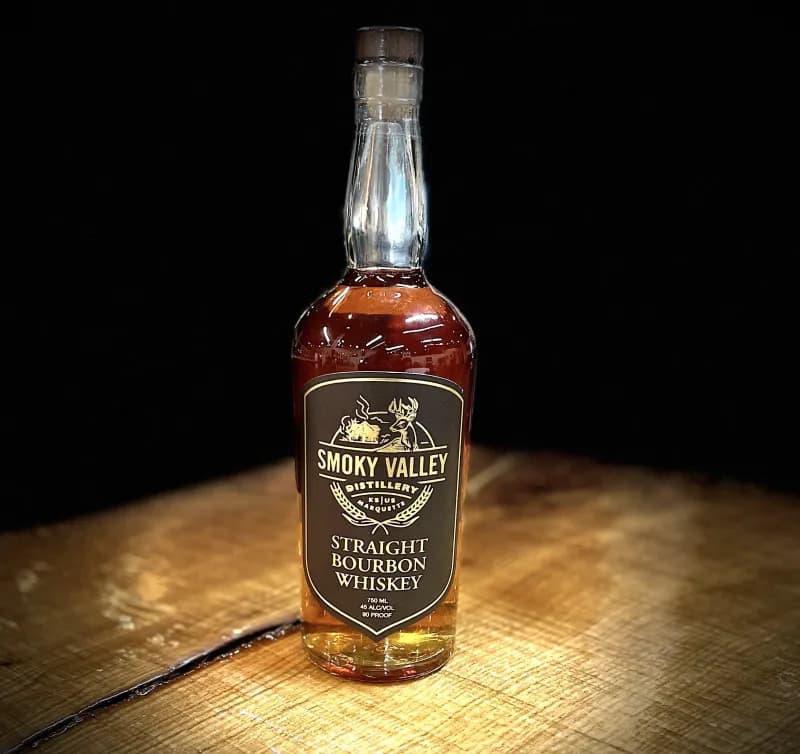
The question comes up at the counter most weeks, usually from somebody holding a bottle they bought somewhere else. Sour mash is printed right on the label, in a typeface that makes it look official. What does it mean? And does it make the whiskey taste sour?
It means one specific thing, it is far more common than the labels suggest, and no — it does not make anything taste sour. Here is the whole of it.
The Short Answer
Sour mash is a fermentation technique. Before the yeast goes into a fresh batch of mash, the distiller stirs in a measured portion of the acidic liquid left over from the previous distillation. That liquid is called backset, and the acid it carries pulls the pH of the new batch down.
That is the entire technique. It happens at the fermentation step, days before the spirit reaches the still and years before it reaches a bottle. It has nothing to do with the barrel, nothing to do with charcoal filtering, and nothing to do with the state of Tennessee.
A whiskey fermented without backset is a sweet mash whiskey. Both are legitimate. Most American whiskey on a shelf is the first kind, whether or not the label says so.
What Backset Actually Is
When a run finishes, what sits in the bottom of the still is spent mash — grain solids and water with the alcohol boiled out of it. Screen or spin the solids out and the liquid that remains is thin stillage. In a whiskey house, that liquid has a working name: backset.
It is hot, it is acidic, and it still holds a good deal of what the yeast did not consume the first time around — minerals, nitrogen, and the organic acids the previous fermentation produced. Rather than send it down the drain, the distiller sends it forward.
The standard return rate is 10 to 30 percent of the new mash volume, according to a 2023 Distillers Grains Technology Council presentation on fermentation optimization by distiller Kevin Brent Smith, which is the clearest public accounting of the practice we know of. The same presentation lists four distinct jobs the backset does:
- pH balance. It adjusts the pH of the fresh mash and then buffers it through fermentation, so the number does not drift as the yeast works.
- Recycled yeast nutrient. What the last fermentation left behind feeds this one.
- Reclaimed heat and water. Hot stillage going back into a mash cooker is heat and water a distillery does not have to buy twice.
- Better wetting of the grain meal. A practical, unglamorous benefit — the meal hydrates more evenly.
Only the first of those has anything to do with flavor. Three of the four are housekeeping, and that is a fair description of what sour mash is: good housekeeping with a dramatic name.
The Numbers Behind the Acid
Three pH figures explain why distillers bother, and they come from the same presentation:
| pH | What happens there |
|---|---|
| 5.6 | The natural pH of a sweet mash — cooked grain and water, nothing added |
| 5.2–5.5 | The range where the alpha-amylase enzymes that convert starch into sugar work best |
| 4.8–5.0 | The range where yeast performance peaks |
A mash left at its natural 5.6 is workable, and plenty of good whiskey has been made there. But it sits above both of the windows a distiller actually wants, and it sits in territory where the yeast has company.
That is the other half of the argument. A mash is a warm tub of sugar water, which is an excellent place to be a lactic or acetic acid bacterium. Yeast tolerates acidity considerably better than most of the organisms competing with it for those sugars, so lowering the pH does not merely suit the yeast — it tilts the whole field toward the organism you want and away from the ones you do not. On a three- to five-day fermentation, that matters.
The Other Souring, Which Nobody Prints on a Label
There is a second way to sour a mash, and it predates stainless steel.
Instead of backset, a distillery cultures lactic acid bacteria — classically Lactobacillus delbrueckii — in the yeast mash on purpose and lets them generate the acid biologically. The same presentation lists the advantages: pH balance going into mashing and fermentation, suppression of contaminant bacteria inside the yeasting system itself, and a controlled contribution to flavor, rather than the uncontrolled souring you get when wild bacteria arrive late in a fermentor on their own terms.
Some houses run backset. Some run a lactic soured yeast mash. Some run both, at different points in the process. All of it travels under the single phrase on the label, which is one more reason that phrase tells a buyer less than it appears to.
It Does Not Make Whiskey Taste Sour
This is the misconception worth killing outright, because the word is doing real damage.
Two things stand between an acidified mash and your glass. The first is the still. Most of the acid stays behind in the pot with the spent grain — that is precisely why there is acid in the backset to begin with. The second is the cuts. Whatever heavier, sharper material does ride across gets separated out when the distiller moves the collection vessel between heads, hearts, and tails, a decision covered in pot still vs. column still.
What survives into the barrel is the hearts. Then it spends years in charred oak, which rewrites the spirit's character far more thoroughly than a fermentation pH ever could.
What sour mash genuinely produces is repeatability. Carrying material forward from one batch into the next is how a distillery gets batch 400 to taste like batch 399. If you have ever wondered how a national brand holds a flavor steady across decades, a large part of the answer is that every batch was fed by the one before it, in a chain going back further than anyone working there.
Sweet Mash, and Who Still Makes It
Skipping the backset is harder, not easier.
A sweet mash starts at 5.6 with no acid safety net, which means sanitation, a healthy and fast yeast pitch, and tight temperature control have to do the work that acidity would otherwise do. Get it wrong and bacteria take a share of your sugar. Get it right and you have a mash whose starting chemistry was not set by the previous run.
Whisky Advocate's account of the two methods puts sour mash as "by far the more prevalent style" among major distillers, with sweet mash more common among smaller producers and pot-still distilleries — and names Wilderness Trail, Kentucky Peerless, Castle & Key, and Hard Truth among the American distilleries working that way on purpose. The case those distillers make is a flavor case: more control over where a fermentation goes, and less inheritance from whatever came before it.
Neither method is a shortcut and neither is a quality claim. They are two different answers to the same question about where a mash should start.
Where the Phrase Came From
The name attached to the technique is Dr. James C. Crow, a Scottish-born distiller who spent roughly two decades running the Old Oscar Pepper Distillery in Woodford County, Kentucky — the ground Woodford Reserve stands on now — until his death in 1856. The Scotch Whisky magazine profile of Crow is a good short account of what he is credited with.
What the record supports clearly is that Crow brought measurement to American whiskey at a time when most of it was made by feel: thermometers, saccharometers, pH monitoring, and written records kept run after run, so that a result could be repeated rather than merely hoped for. The backset process itself dates to the early 1800s, and his name travels with it.
What the record does not settle is whether he invented it. Several accounts hold that souring was already in use and that Crow's real contribution was understanding why it worked and making it systematic. Claims of outright invention trace mostly to later trade writing rather than to contemporary documents. So we will say what seems honest: he is the reason the method spread and the reason it was understood, and the invention question is open.
The Law Never Defined It
Here is the part that surprises people, and it is the practical takeaway.
Unlike straight, bottled in bond, single barrel, or bourbon itself, sour mash has no federal standard of identity. The phrase appears nowhere in 27 CFR 5.143 — not in the definition of whisky, not in the table of types that sets the rules for bourbon and rye and corn whisky, and not in the production, storage, and processing standards attached to them. It is likewise absent from the class-and-type chart in the TTB's own Beverage Alcohol Manual.
So a bottle reading Tennessee Sour Mash Whiskey is making two quite different kinds of statement side by side. Tennessee whiskey has been defined in state law since 2013 and carries real requirements, which we cover in bourbon vs. Tennessee whiskey. Sour mash is a truthful description of a production choice the producer elected to print. Both are honest. Only one is enforceable.
That is worth knowing because the absence cuts both ways: a whiskey can be made by the sour mash method and never mention it, which describes a great deal of what is on the shelf. For the phrases a government actually checks, how to read a whiskey label sorts the regulated words from the decorative ones.
What It Looks Like at Fifteen Gallons
The backset question looks different at our scale than it does in Kentucky, and the reason is arithmetic.
Backset is thin stillage from the run before. A distillery putting one mash bill through a column still around the clock always has a compatible supply of it on hand, warm, by definition. A distillery like ours does not sit in that position automatically: everything we make comes off a single 250-gallon copper pot still in the old COOP building, in batches that go as small as fifteen gallons for Bud & Dewey's, and the run before any given whiskey might have been a different grain bill entirely — or one of five vodkas. The continuous chain that makes sour mashing nearly free at volume is not a given in a batch house.
What we publish instead are the four things that actually tell you what is in a bottle: the mash bill, the distillation proof, the barrel, and the time. Our Straight Bourbon is Kansas corn, rye, and malt, proofed with sandstone-filtered water from the Kiowa Aquifer, aged in 10-gallon charred new oak, and bottled at 45% ABV. Those numbers are checkable, and they are what you can taste. Sour mash is a process control, not a flavor promise, and we would rather hand you the figures that are.
If you want to know how a particular batch of ours was fermented, ask on a tour. That is a conversation with the person who ran it, not a line on a label — and our process is easier to follow standing next to the equipment.
Can You Taste It?
Mostly, no — and anyone offering you a confident blind read on sour versus sweet mash is ahead of the evidence. But the comparison is worth running, because what you learn is which differences in a whiskey are actually big enough to find.
- Pick a whiskey that says sour mash on the label. The Tennessee bottles are the easy ones to find.
- Pick a whiskey whose producer states sweet mash. Wilderness Trail and Kentucky Peerless both publish it in their own materials.
- Match the proof as closely as you can. A ten-proof gap will swamp anything you are trying to isolate; what proof means explains why.
- Nose both before tasting either. Once you have swallowed anything, your palate is working from a different baseline.
- Do not look for sourness. Look at the balance between grain and wood, and at how clean the finish is. Those are the places a fermentation decision could plausibly show up.
Then be honest with yourself about the confound: the two bottles also differ in grain bill, yeast strain, barrel, age, warehouse, and entry proof. Any one of those moves a whiskey further than a mash pH does. That realization is the actual lesson of the exercise, and it is a useful one.
A tulip-shaped nosing glass makes a side-by-side considerably easier to read than a tumbler, because it collects the aroma instead of letting it off the top:
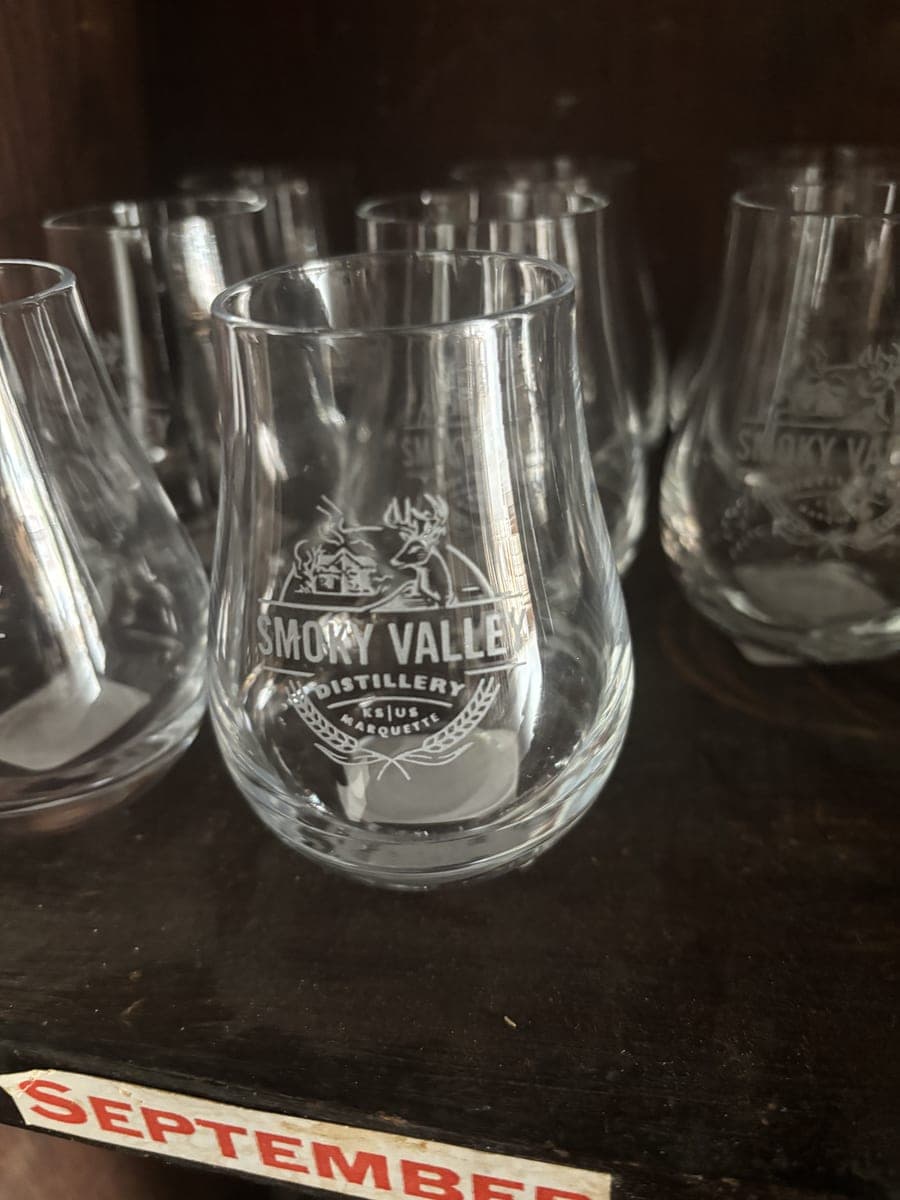
Logo Tasting Glass
$16.95A tulip-shaped nosing glass etched with the Smoky Valley Distillery crest — shaped to concentrate aroma for tasting our bourbon and whiskey neat.
View in the shop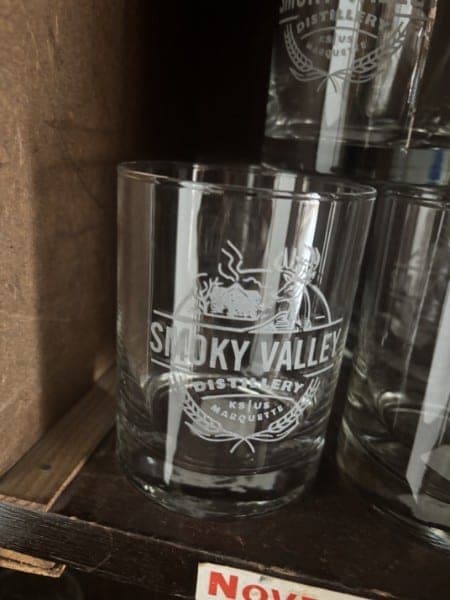
Old Fashioned Glass
$19.95A heavy-bottomed rocks glass etched with our crest — built for an Old Fashioned, a bourbon on the rocks, or a neat pour.
View in the shopThe full method we use for a flight — pour order, water, and what to write down — is in how to taste whiskey. For where sour mash sits among the other production decisions, how bourbon is made walks the sequence from grain to bottle, and the whiskey and bourbon collections show where each of ours ended up.
Better yet, come stand in front of the still. A tasting and tour runs $10 per person, takes 30 to 45 minutes, and happens Thursday through Saturday by appointment at 105 N. Washington in Marquette. Bring the question. We will give you the honest answer, which is usually more interesting than the one on the label.