
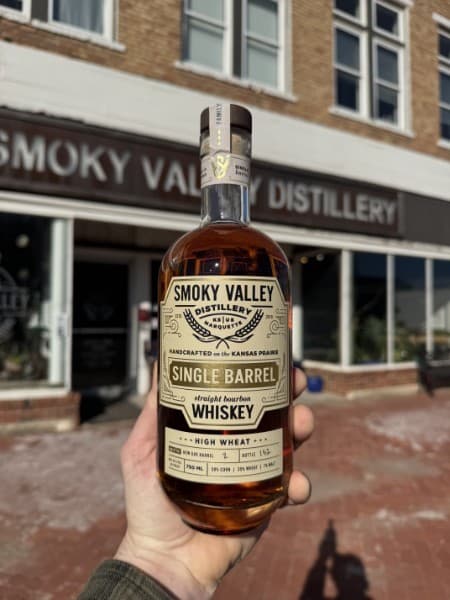
Fill a barrel to the bung. Come back two years later, pull the bung, and there is less whiskey in it than you put in. Nobody opened it. Nothing leaked onto the floor. The missing part left through the wood, as vapor, a molecule at a time, and the trade has called it the angel's share for as long as anyone has been aging spirits in oak.
It is the one part of distilling where the loss is both unavoidable and, in a sense, the point. The same porous wood that lets whiskey escape is the wood that makes it whiskey.
The Short Answer
The angel's share is the portion of a barrel's contents that evaporates out through the oak during aging and is gone before bottling.
Oak looks solid. At the scale that matters here it is not — it is a bundle of cell structures with enough open pathway that both water and ethanol can work their way through a stave and leave as vapor. A barrel breathes. Air moves in and out as the wood swells and contracts with temperature, the spirit soaks into the staves and back out again, and on every cycle a little of it keeps going and does not come back.
Three practical consequences fall out of that, and they are what the rest of this page is about:
- You bottle less than you filled. Always. The gap widens every year the barrel sits.
- The strength changes — up or down, depending on the weather outside the warehouse.
- Nobody is compensated for it. Not the distillery, and not by the tax code either, which simply declines to tax what never made it out of bond.
How Much Actually Disappears
There is no single number, and anyone who gives you one without naming a climate is guessing. Evaporation rate depends on temperature, humidity, airflow, where the barrel sits in a warehouse, and how much wood surface the spirit is touching.
The figures the industry cites most often break down roughly like this:
| Where | Annual loss producers cite |
|---|---|
| Scotland (cool, damp) | ~2% of the barrel's contents |
| Kentucky (hot summers) | ~4% |
| Hot, dry or tropical climates | Substantially higher |
Those are trade figures rather than measured constants — the comparison of Kentucky and Scottish aging conditions that most sources work from attributes the 2% and 4% numbers to producers, not to a study, and they are best read as orders of magnitude.
Two things are worth pulling out of that table. First, compounding: 4% a year is not 40% over a decade, it is applied to a shrinking volume each year — but it is still enough that a long-aged American whiskey can finish with a fraction of what went in. Second, the loss is not linear. The first year is the heaviest, and part of the reason is not evaporation at all, which we will get to.
Scale this far enough and it stops being a bookkeeping detail and becomes a visible feature of the landscape. Ethanol vapor coming off barrel warehouses feeds a fungus, Baudoinia compniacensis, that grows as a black film on buildings, fences, and cars downwind — the "whiskey fungus", first noticed around brandy maturation cellars in Cognac in the 1870s and the subject of live litigation near large Tennessee warehouses today. It is the angel's share made literally visible: the whiskey that left is still out there.
Why Bourbon Gets Stronger and Scotch Gets Weaker
A barrel holds two liquids that evaporate at different speeds, and the air outside decides which one wins.
In dry air, water moves out through the wood faster than ethanol does. The barrel loses volume and the alcohol concentration of what is left goes up. That is why American barrel-proof releases are routinely bottled above the proof they were filled at, and why whiskey from the hot, dry top floor of a rickhouse comes out hotter than whiskey from the cool, damp bottom of the same building.
In cool, damp air — a Scottish warehouse near the coast is the standard example — water loss slows while ethanol keeps leaving. The strength drifts down. Very old Scotch has to be managed around that: it cannot be sold as whisky below 40% ABV, so the clock on a cask is not only about flavor.
This is the single most useful thing to understand about the angel's share, because it explains why two distilleries following identical procedures in different climates cannot produce the same whiskey. It also explains why proof is a moving target between the still and the bottle rather than a number set once — the four points where it actually gets set are in what proof in whiskey means.
The Devil's Cut Is a Different Loss
Empty a barrel completely and it is still heavy, and the inside is still wet. That spirit has not evaporated — it is inside the wood.
The trade calls that the devil's cut: the volume absorbed into the staves and heads, held in the oak rather than lost to the air. It is a real loss against what you filled, but it never leaves the building, and it is the main reason the first year of aging shows the biggest drop on paper. Brand-new oak is dry. It drinks before it gives anything back.
So the honest accounting of a barrel has three parts, not two: what you bottle, what the angels took, and what the wood kept. The wood's share is also the part doing the flavor work — the spirit soaking into the charred layer and the caramelized band beneath it is exactly how vanilla, caramel, and color get into the glass, which is the mechanism we take apart in what barrel char is.
The Angels Do Not Pay Tax
This is the part most people find surprising, and it is settled law rather than folklore.
Federal excise tax on distilled spirits is determined at withdrawal from bond — when the spirits leave the bonded premises — not when they are distilled or when they go into a barrel. And 26 U.S.C. § 5008(a) provides that no tax is collected on spirits "lost or destroyed while in bond." The statute names its exceptions: theft (unless the proprietor can show it happened without connivance, collusion, fraud, or negligence), voluntary destruction not carried out under supervision, and an unexplained shortage of bottled spirits. Ordinary evaporation during aging is none of those.
That is a sensible rule and a necessary one. Tax a distillery on whiskey that physically cannot be prevented from leaving and you have taxed the weather. But it is worth being clear about what it does and does not mean: the Treasury does not bill for the angel's share, and the distillery still eats every cent of the grain, labor, barrel, and warehouse cost that went into it.
The bonded-warehouse language above is the same regime behind the strictest phrase on an American whiskey label, which carries its own four-year-in-bond requirement — what bottled in bond means covers all six federal conditions.
What It Costs, and Who Pays for It
Here is the chain, because it explains a price difference people ask about at our counter.
Whiskey is paid for years before it earns anything. Grain, labor, a new charred barrel, and the floor space to keep it on are all sunk costs the day the barrel is filled, and nothing comes back until the spirit is ready. The angel's share then takes a percentage of the inventory those costs bought — so the per-bottle cost of everything upstream rises every year the barrel sits, on a volume that is getting smaller the whole time.
That is a real part of why an aged whiskey costs more than a vodka distilled, proofed, and sold the same month. We walked through the rest of that economics in vodka vs. whiskey, and the short version is that the clear spirits pay the bills while the brown ones sleep and shrink.
It is also why nobody sensible treats evaporation as an accident. It is a planned input. You fill more than you intend to sell.
What a 10-Gallon Barrel Changes
We age in 10-gallon barrels rather than the industry-standard 53-gallon, and the angel's share is one of the two things that decision changes. The other is speed, and they are the same mechanism.
Evaporation happens across wood. What matters is not how big the barrel is but how much wood surface each gallon of spirit is pressed against — and that ratio climbs sharply as barrels get smaller. On the surface-to-volume figures in our guide to small barrel aging, a 15-gallon barrel carries about 1.8 times the wood contact per gallon of a 53-gallon barrel and a 5-gallon carries about 2.5 times, which puts a 10-gallon barrel in the neighborhood of double. Twice the wood per gallon extracting flavor twice as fast is also twice the wood per gallon for the spirit to escape through.
We do not publish a loss percentage for our own barrels, and we would be skeptical of anyone our size who did — the inventory is small enough that one hot summer or one barrel in the wrong spot moves the number more than the method does. What we can say is the direction, and it is not ambiguous. Two years in a 10-gallon barrel in central Kansas, where a July afternoon and a January night are sixty-plus degrees apart and the air is dry for much of the year, gives up proportionally more than two years in a Kentucky rickhouse would — and delivers the depth you would otherwise wait four and a half to five years for.
That is the trade we have chosen. It is the reason our single barrel releases exist as single barrels in the first place: at this scale, each barrel genuinely tastes like itself, because each one lost a slightly different amount of a slightly different thing. The difference between that and a batched approach is in single barrel vs. small batch.
Finding It in the Glass
The angel's share is not an abstraction you have to take on faith. It leaves two signatures in a pour.
The first is concentration. A barrel that has given up volume has not given up its dissolved wood compounds — vanillin, lactones, tannins, and caramelized sugars stay behind in less liquid. That is part of why a small-barrel or long-aged whiskey reads as denser and more syrupy on the palate, independent of proof.
The second is the proof itself, and this is where it becomes practical. If a whiskey arrived in the bottle hotter than it was filled, water is a tool rather than a compromise. A few drops will drop the ethanol's volatility enough to let the aromatics underneath it come forward, and the difference is immediate — most people find a barrel-strength pour opens up more between zero and five drops of water than it does over the following half hour of sitting.
A glass with a bowl and a narrowed opening is what makes that audible, because it holds the aromatics over the surface instead of letting them off. A wide rocks glass is the right choice for ice and cocktails and the wrong one for assessing a hot pour. Our whiskey glassware guide covers both shapes, and how to taste whiskey walks the order and the water step we use on our own flight.
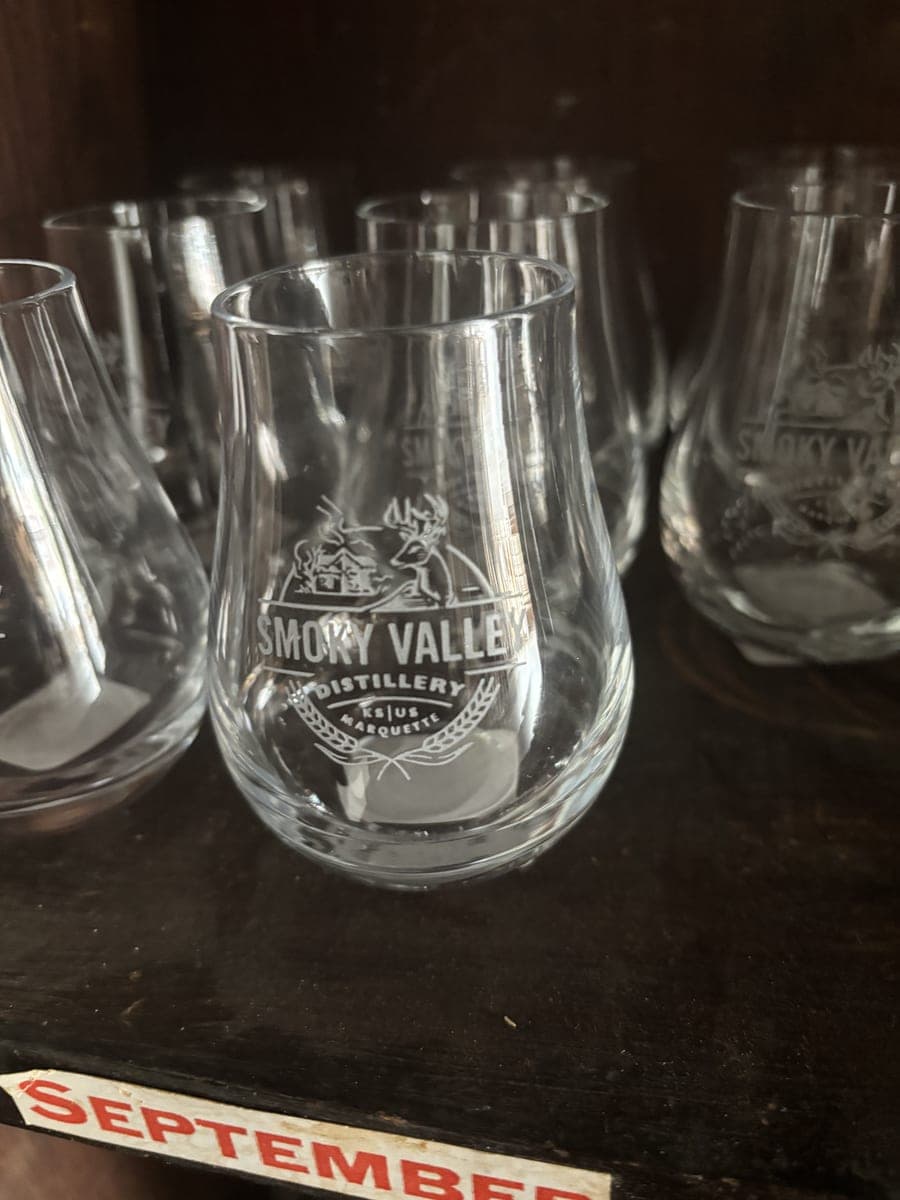
Logo Tasting Glass
$16.95A tulip-shaped nosing glass etched with the Smoky Valley Distillery crest — shaped to concentrate aroma for tasting our bourbon and whiskey neat.
View in the shop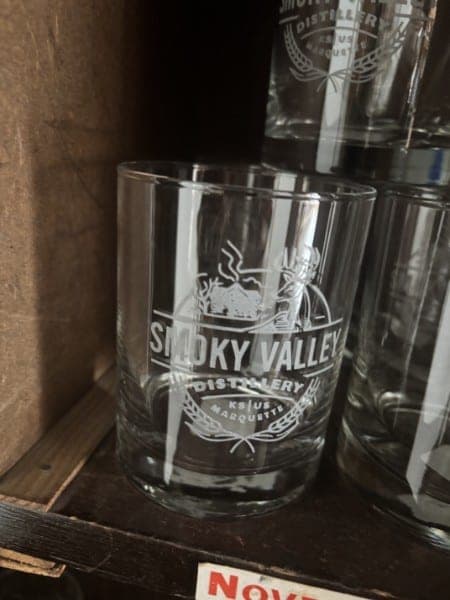
Old Fashioned Glass
$19.95A heavy-bottomed rocks glass etched with our crest — built for an Old Fashioned, a bourbon on the rocks, or a neat pour.
View in the shopThe Short Version
The angel's share is the whiskey that evaporates out through the barrel's wood during aging and is gone before bottling. Producers cite roughly 2% a year in Scotland and roughly 4% a year in Kentucky, with the first year heaviest and hot climates considerably worse. Humidity decides the strength: dry air takes the water and pushes proof up, damp air takes the ethanol and pulls it down. The spirit soaked into the staves is a separate loss, the devil's cut, and it is also the part doing the flavor work. And under 26 U.S.C. § 5008(a), none of it is taxed — tax attaches when whiskey leaves bond, and this whiskey never does.
Every bottle of our bourbon and whiskey is what survived two or more Kansas years in a 10-gallon barrel. On a tasting and tour — $10 per person, 30 to 45 minutes, Thursday through Saturday by appointment — you can stand in the barrel room and smell exactly where the missing part went.