
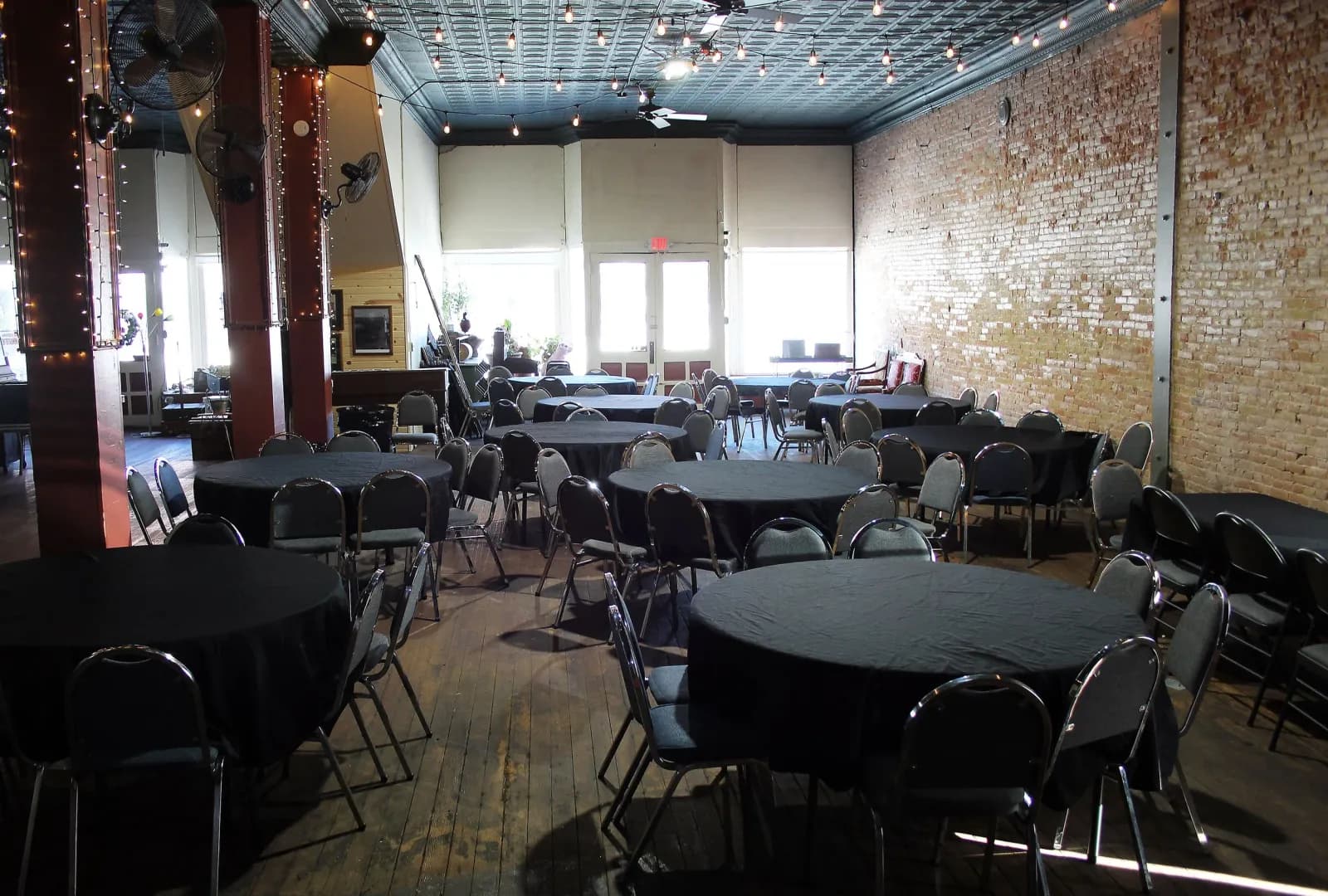
A distillery is a genuinely good place to get married, and it is also not a barn, not a hotel ballroom, and not a park shelter. The building comes with a working business attached to it, which changes a few things in your favor and a few things you need to ask about directly.
We host weddings in a 1919 COOP building in Marquette, Kansas, so this list is partly self-interested. It is also the list we wish couples arrived with. Most of the awkward conversations we have had with couples happened because something was assumed on a tour in April and discovered in September. The questions below are the ones that prevent that, at our place or anyone else's.
Each one has the reason it matters and then our own answer, so you can see what a straight answer looks like and compare.
The Space
1. What is the seated capacity, as opposed to the standing capacity?
Venues quote whichever number is larger. A room that holds 150 standing might seat 90 at round tables with a dance floor. Ask for both figures and ask whether the seated number already accounts for a dance floor, a head table, a buffet line, and a DJ.
Ours: the main tasting room seats 60. The venue room seats up to 140. Both have full-service bars.
2. Can the ceremony and the reception both happen here?
This decides whether your day involves a flip, a shuttle, or neither. If there is one room, somebody has to reset it while your guests are somewhere — ask where, and ask who does the resetting.
Ours: yes, and because there are two rooms under one roof, we can seat the ceremony in one and have guests enjoy cocktails there while the other is set for dinner. Nobody drives between the vows and the party.
3. What is the rain plan, and is it the same room?
Plenty of venues sell an outdoor ceremony with an indoor "backup" that is really the reception room with the tables pushed aside. That may be fine. You should just know before the forecast tells you.
Ours: everything happens inside, so weather changes your photos and not your schedule.
4. Where do guests park, and how far is the walk?
Ask about the surface, the lighting, and the distance. It matters more than people expect for older guests and for anyone in heels.
Ours: parking is on site.
Alcohol — The Part That Is Actually Different
This is the section that separates a distillery from every other venue type, and it is where assumptions cost the most money. Read all four.
5. Which alcohol license does the venue hold?
This is not pedantry. In Kansas, what a venue is permitted to do with alcohol depends on its license class, and the classes are meaningfully different. The Kansas Department of Revenue's Alcoholic Beverage Control lists separate on-premise classes — drinking establishment, caterer, public venue, Class A and Class B club — each authorizing a different arrangement, with temporary permits handled separately again. A venue that holds a caterer license is operating under different rules than one serving on its own licensed premises.
Ask which one applies, and then ask the next question, because the license sets the ceiling and the venue's own policy sits underneath it.
Ours: beverage service runs through our own licensed bars.
6. Can we bring our own alcohol?
Assume no at any licensed venue until someone tells you otherwise in writing. This is the single most common surprise in distillery and brewery weddings, because couples arrive from barn-venue research where BYOB is normal and self-catered bars are the default.
Ours: no, and it is the only thing on this entire list we ask you not to bring. Catering, cake, decor — all yours. Alcohol goes through our bars.
7. How is the bar billed, and is there a minimum?
There are several honest ways to run a bar — per drink on a running tab, per drink on consumption with a cap, per person per hour, or a package. Each produces a very different final invoice for the same wedding. Ask which structure applies, whether there is a spend minimum, and what happens if you do not reach it.
Ours: we talk this through during the inquiry, because the right answer depends on your guest count and how long you want the bar open. We would rather quote your actual event than publish a number that is wrong for most people.
8. Who is actually serving, and who carries the liability?
At a licensed venue, trained staff employed or supervised by the licensee serve the drinks. That is a feature — it means a professional is monitoring the room and you are not asking your cousin to cut somebody off at 10 p.m.
Ours: our staff, on our license, at our bars.
Food
9. Can we bring an outside caterer, or is there an approved list?
"Exclusive catering" is common at hotels and it is usually the largest single line on the bill. Ask whether outside catering is allowed, whether there is a required list, and whether a fee applies for bringing your own.
Ours: outside catering is welcome, you are not locked into a menu, and we are glad to recommend caterers who already know the building.
10. Can we bring our own cake and our own decor?
Some venues charge a cutting fee. Some prohibit open flame, confetti, or anything attached to the walls. Get the decor restrictions in writing before you buy anything.
Ours: bring your own cake and your own decorations.
11. What does the caterer have to work with?
Ask about the prep space, water access, refrigeration, and where trash goes. Your caterer will ask you this, so get the answer first.
Ours: ask us when you inquire and we will walk your caterer through the space directly — that is a faster conversation between the two of them than through you.
Time
12. How many hours do we have the room, and when does the clock start?
A ten-hour rental that begins when your florist arrives is not a ten-hour wedding. Ask when access begins, when music must stop, and when everything has to be out.
13. Is there time for a rehearsal?
Ask whether the rehearsal is included, whether it has to happen the same week, and whether another event might be in the room.
14. Who sets up and who tears down?
Tables, chairs, and linens are three separate questions. Find out what the venue places, what your caterer places, and what falls to you and your family at midnight.
Ours, for all three: these are date-specific, so they are part of the inquiry conversation rather than a fixed package. Saturdays and peak-season Fridays are typically reserved 6 to 12 months out, while weekdays, Sundays, and winter dates are often open on much shorter notice.
Sound, Stage, and Where You Get Ready
15. Is there a stage and a sound system, or does the band bring everything?
This is a real cost difference for a band and a real quality difference for toasts. Ask what exists, and ask whether the microphone for the toasts is included or rented.
Ours: the venue room has a 15' x 30' stage with speakers and wireless internet. We host live music most weekends, so the room is set up for a band rather than adapted for one.
16. Where does the wedding party get ready, and where do guests sleep?
Most venues have no answer to this and send you to a hotel twenty minutes away. It is worth asking early, because it shapes the whole morning.
Ours: Preston House is our own lodging, it sleeps 11, and it is within walking distance of the distillery. The wedding party gets a full house for the morning and a place to walk back to at the end of the night — no one has to drive after the reception.
17. Is there anything here our guests can do that they could not do elsewhere?
The reason to choose a working distillery is that it is a working distillery. Ask what that makes possible.
Ours: a tasting and tour is a genuinely good rehearsal-day activity for out-of-town guests, and the bar pours spirits we distilled in this building. If you want a signature cocktail, we can build one around a bottle that is ours — our guide to batch cocktails for a crowd covers how those scale for a reception.
Favors and the Small Touches
Couples ask about favors and welcome bags on nearly every tour, so it is worth asking directly rather than hoping.
Ask: what can we buy from you in quantity, and how much lead time do you need?
Ours: our retail shop carries etched glassware and gift sets alongside the full spirits lineup, and etched glasses are the thing couples ask about most often for favors and welcome bags. Tell us quantities and your date when you inquire so we can tell you honestly what we can have on hand — we are a small operation and lead time is the real constraint, not willingness.
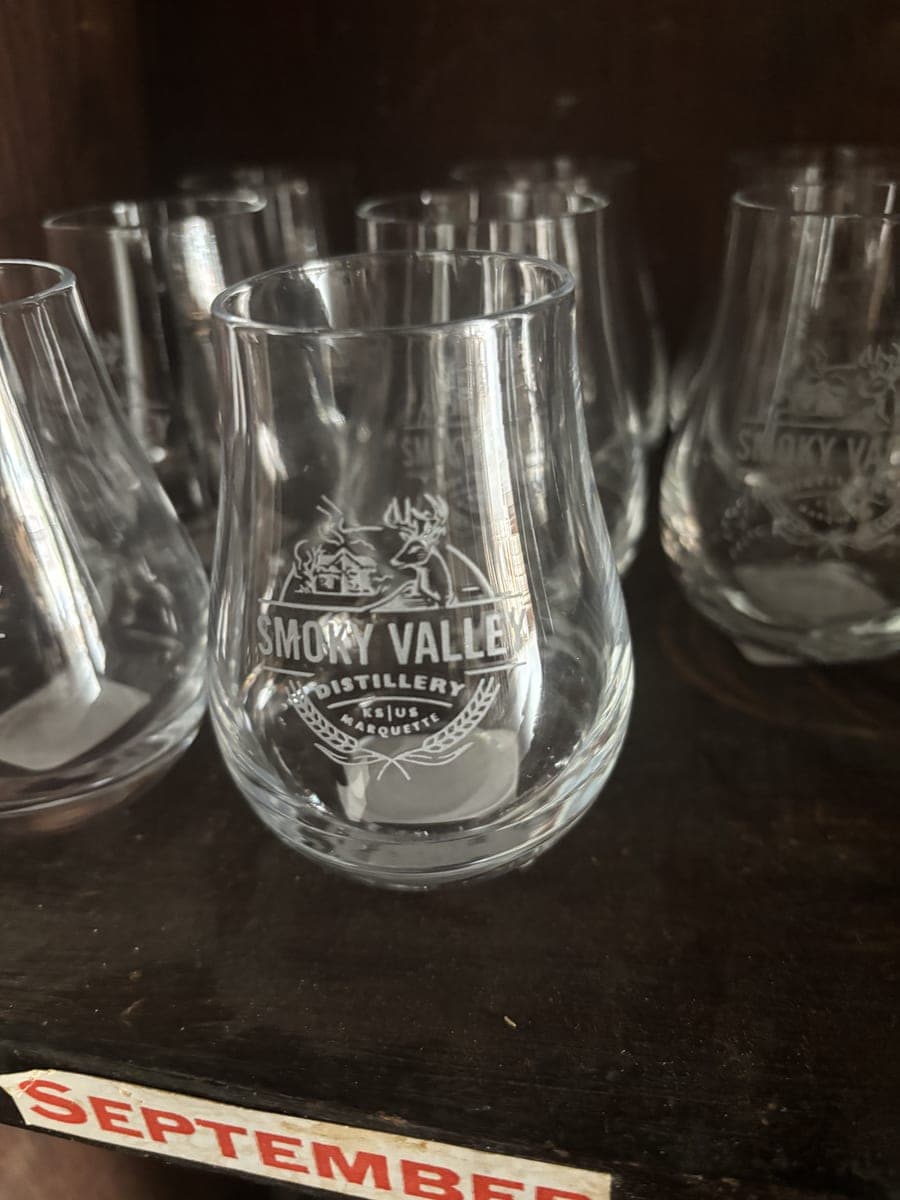
Logo Tasting Glass
$16.95A tulip-shaped nosing glass etched with the Smoky Valley Distillery crest — shaped to concentrate aroma for tasting our bourbon and whiskey neat.
View in the shop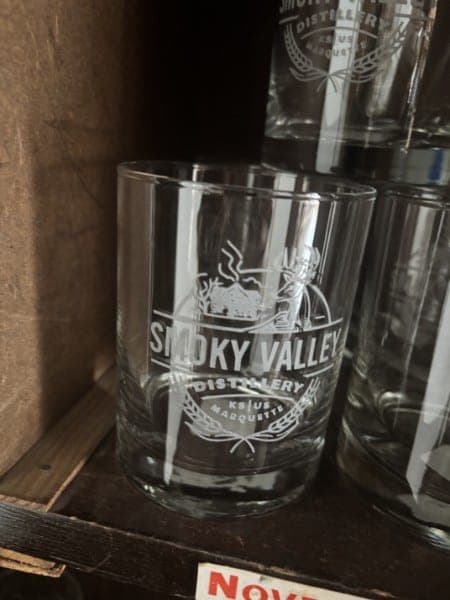
Old Fashioned Glass
$19.95A heavy-bottomed rocks glass etched with our crest — built for an Old Fashioned, a bourbon on the rocks, or a neat pour.
View in the shopThree Answers That Should Worry You
"We will work out the bar details later." Bar structure, minimums, and who serves should be in writing before you sign. This is the largest variable cost of a distillery wedding and the easiest one to be surprised by.
A capacity number that will not break down. If a venue cannot tell you the seated figure with a dance floor in the room, nobody has ever actually seated that many people there.
Vagueness about access time. A room you get at noon for a 4 p.m. ceremony is a different product from one you get the evening before. If the answer is soft, the answer is probably noon.
Ask Us These
We answered all seventeen above, which is the point — you should be able to get that from any venue you tour, and if you cannot, that is information too.
If you are considering us, the fastest path is to send your date and a rough guest count through the venue inquiry form and we will come back with availability and pricing. Smaller celebrations are covered in more detail on our micro weddings page, and if what you are planning is a rehearsal dinner, a shower, or an anniversary rather than the wedding itself, private parties is the better starting point.
Marquette is about 30 minutes from Salina, we are at 105 N. Washington, and we would rather you came and stood in the room than booked it from a photograph.