
What Makes a Spirit "Craft"?
Walk into any well-stocked liquor store and you'll see hundreds of bottles. Some come from massive industrial distilleries that produce millions of gallons a year. Others come from small, family-run operations that produce a few thousand bottles at a time. The difference between them isn't just scale — it's philosophy.
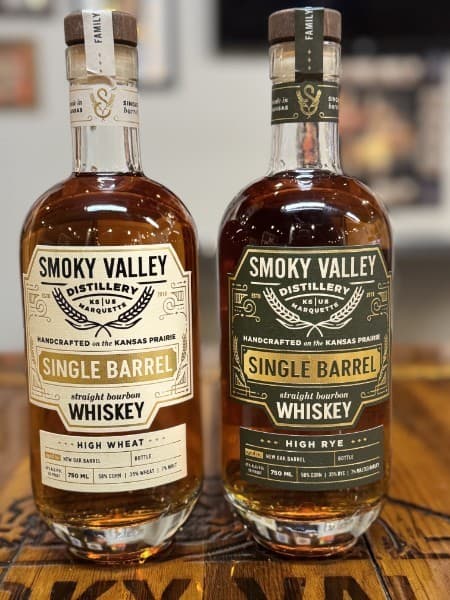
Craft spirits come from small, independent distilleries where the people who own the business are also the people making the product. At Smoky Valley Distillery, that means Stan and Michele Von Strohe and their son Shane are hands-on in every step of the process — from selecting the grain to bottling the final product.
Craft vs. Mass Production
Ingredients
Large distilleries buy grain in massive quantities at the lowest possible cost. The grain is often sourced from commodity markets with no regard for origin or quality — it just needs to be cheap and consistent.
Craft distillers choose their ingredients deliberately. We use Kansas-grown corn and grains because we know where they come from, we know the farmers, and we can taste the difference. Our water comes from the Kiowa Aquifer — naturally filtered and mineral-balanced — not from a municipal tap.
Batch Size
Industrial distillers run continuously, producing thousands of gallons per day through automated systems. Quality control happens through technology and statistics.
We make small batches where every run gets individual attention. Our distiller makes cuts by taste and smell, not by computer algorithm. Every batch is slightly different, and we adjust our process to get the best out of each one.
Experimentation
Large distilleries have shareholders, brand consistency requirements, and supply chains that make experimentation risky. They tend to produce a narrow range of safe, predictable products.
Craft distillers have the freedom to try unusual things. That's how you get a Kernza Whiskey made from a perennial wheat grain that no large distillery would touch. Or a Smoked Jalapeno Vodka that started as an experiment and became a customer favorite. Or a Smoked Straight Bourbon that pushes boundaries with smoked oak barrels.
Transparency
When you visit a craft distillery, you see everything. The equipment, the ingredients, the aging barrels, the people. There are no secrets, no off-limits production floors, no carefully curated visitor centers designed to distract from industrial-scale operations.
Our tours show you exactly how every one of our 10 spirits is made. You can ask any question and get a real answer from the people who do the work.
Why Small-Batch Tastes Different
Small-batch production isn't just a marketing term — it creates genuinely different results.
More Wood Contact
Craft distillers often use smaller barrels, which means a higher ratio of wood surface area to liquid volume. More wood contact means faster extraction of vanilla, caramel, and oak flavors — and a more intensely flavored spirit.
Tighter Cuts
During distillation, the distiller separates the spirit into heads, hearts, and tails. In large operations, these cuts are made by machines at predetermined points. In a craft distillery, the distiller makes cuts by tasting and smelling in real time. This means only the best, cleanest portion of the run makes it into the bottle.
Hands-On Blending
When it's time to bring batches together for bottling, craft distillers taste every barrel and blend by hand. Large producers blend by formula and volume. The difference in the glass is real.
Our Approach to Craft
At Smoky Valley Distillery, "craft" isn't a label — it's how we work. We produce 10 spirits across five vodkas, three bourbons, and two whiskeys. Each one is made from Kansas grain, distilled in our own equipment, aged in our own barrels, and bottled by hand in Marquette, Kansas.
We're not trying to compete with Jim Beam or Tito's on volume. We're making spirits that taste like this place — the grain, the water, the people, and the land.
Experience Craft Spirits Firsthand
The best way to understand what makes craft spirits different is to taste them at the source. Book a tour at Smoky Valley Distillery and see the difference between craft and commodity. Stay at Preston House and turn your visit into a weekend getaway.
Browse our full lineup of spirits or explore cocktail recipes that showcase what small-batch spirits can do.