
Two Stirred Whiskey Drinks That Are Not Interchangeable
Order a Manhattan and an Old Fashioned side by side and the family resemblance is obvious. Both are American whiskey cocktails. Both take bitters. Both are stirred, never shaken. Both predate Prohibition and both survived it. The International Bartenders Association files them together in "The Unforgettables," its list of the classics worth knowing by heart.
Then you taste them, and they have almost nothing in common.
The difference comes down to one decision: what you sweeten the whiskey with. An Old Fashioned uses sugar. A Manhattan uses sweet vermouth. That single swap changes the proof, the texture, the aroma, the glass it belongs in, and the whiskey you should reach for.
| Old Fashioned | Manhattan | |
|---|---|---|
| Base spirit | Bourbon (traditionally) | Rye whiskey (traditionally) |
| Sweetener | Sugar cube or simple syrup | Sweet vermouth, 1 oz |
| Bitters | 2–3 dashes Angostura | 2 dashes Angostura |
| Approx. finished ABV | ~30–33% | ~26–28% |
| Glass | Rocks glass, over ice | Coupe or Nick and Nora, no ice |
| Garnish | Expressed orange peel | Luxardo cherry |
| Shelf-stable at home? | Yes — sugar keeps forever | No — vermouth spoils in weeks |
The Old Fashioned: Whiskey With the Edges Rounded Off
The Old Fashioned is the older idea. It is not really a recipe so much as the original definition of the word "cocktail" — spirit, sugar, bitters, water. When bartenders started adding liqueurs and juices in the late 1800s, drinkers who wanted the original had to ask for it the old-fashioned way. The name stuck.
Because nothing in the glass masks the whiskey, the Old Fashioned is a spirit showcase. Whatever your bourbon tastes like neat is what the drink tastes like, plus a little sweetness and a citrus lift.
What the sugar actually does
Sugar does not just make the drink sweeter. It thickens the texture slightly and blunts the alcohol burn, which lets the barrel flavors — caramel, vanilla, toasted oak — sit forward on the palate instead of getting scorched off. That is why a heavy-oak bourbon shines here and a delicate one can disappear.
The other half of the job belongs to the ice. One large cube melts slowly, so the drink opens up over fifteen or twenty minutes rather than going watery in five. If you take one technique away from this article, make it that one.
Why bourbon is the default
Bourbon must be at least 51% corn, and corn is the sweet grain. Pair that natural sweetness with sugar and you get a drink that is rich but not confused. Our Straight Bourbon is built for this — 45% ABV, aged 2–4 years, with caramel and toasted oak on the nose and enough rye spice in the mash bill to keep the sugar honest. The full build is in our Bourbon Old Fashioned recipe.
If you want it softer, Bud & Dewey's is our wheated bourbon and our best seller. Wheat replaces rye as the flavoring grain, so the spice drops away and you are left with vanilla custard and soft caramel. Use honey syrup instead of a sugar cube and it becomes the most approachable whiskey cocktail we serve.
For something with more theater, Smoked Straight Bourbon makes an Old Fashioned that does not need a smoking gun or a torched plank — the smoke is already in the spirit. We walk through that one in our smoked bourbon cocktails guide.
The Manhattan: Whiskey With Something Added
The Manhattan showed up in New York in the 1870s and it is a fundamentally different piece of engineering. Vermouth is not a sweetener in the way sugar is a sweetener. It is aromatized, fortified wine — wine strengthened with neutral spirit and infused with botanicals like wormwood, gentian, cinchona bark, and citrus peel. It brings sweetness, yes, but it also brings acidity, bitterness, herbal depth, and a whole second aromatic layer that sugar cannot produce.
Why an ounce of vermouth changes everything
Sweet vermouth sits around 16–18% ABV. Put a full ounce of it into 2 oz of whiskey and you have meaningfully lowered the proof of the drink before the ice ever touches it — which is why a Manhattan is served up, without ice, in a small chilled glass. It does not need the ongoing dilution an Old Fashioned needs. It arrives already balanced, and it is meant to be finished before it warms.
That also makes the Manhattan the less forgiving drink. Vermouth is wine, so it oxidizes. An open bottle sitting warm on the back bar for six months will make a flat, faintly sour Manhattan no matter how good the whiskey is. Refrigerate it and use it within a month.
Why rye is the default
Rye whiskey is at least 51% rye grain, and rye is the spicy, dry, peppery one. Set that against the sweetness and herbal weight of the vermouth and the two brace each other. Bourbon's corn sweetness, by contrast, tends to run in the same direction as the vermouth and the drink can go flabby.
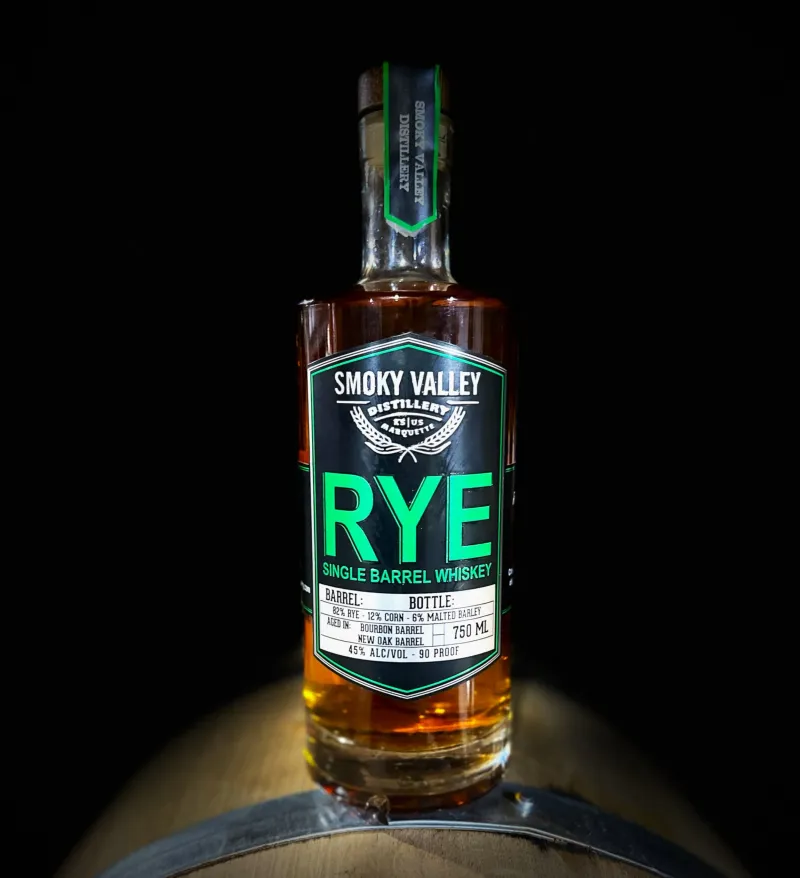
Our Rye Single Barrel Whiskey is an unusually assertive rye for this job — an 82% rye mash bill, well above the 51% legal floor, bottled at 45% ABV. It took Best of Kansas at the 2025 Heartland Whiskey Competition. The nose is black pepper and rye bread, the palate runs to butterscotch and baking spice, and the finish is long and dry — exactly the structure that keeps a Manhattan from collapsing into sweetness. Our full Classic Manhattan recipe has the ratios and the stirring technique.
If you want to understand the grain difference in more detail, we broke it down in bourbon vs. rye whiskey. The short version: the label rules that create these categories come from the federal distilled spirits product categories, and the 51% grain minimum is doing most of the work in both drinks.
Technique: Same Motion, Different Targets
Both drinks are stirred, and for the same reason — there is no citrus, egg, or dairy in either one, so there is nothing that needs aerating. Shaking would only cloud the drink and shatter ice into it. But the goals differ.
Dilution
An Old Fashioned is built in the glass it is served in and keeps diluting while you drink it. You are aiming for a starting point that is slightly under-diluted, because the cube will keep working.
A Manhattan is stirred in a separate mixing glass and strained away from the ice. All of its dilution happens in those 30 seconds, so you have to hit the target exactly. Under-stir and it is hot and unintegrated. Over-stir and it is watery with nowhere to go.
Temperature and glassware
Serve an Old Fashioned in a heavy rocks glass — the mass helps hold the cold, and the wide mouth lets the expressed orange oils reach you. Serve a Manhattan in a coupe or Nick and Nora that has been chilled in the freezer first. A warm glass will undo half a minute of careful stirring in about ten seconds.
Which One Should You Order?
Order an Old Fashioned if you want to taste the whiskey, you like a stronger drink, you are drinking slowly, or you are new to whiskey cocktails. It is the more forgiving of the two and the easier one to make well at home.
Order a Manhattan if you want something more complex than the spirit alone, you like herbal or bitter notes, you want a lower-proof drink, or you are drinking before dinner. A Manhattan is a genuinely great aperitif; an Old Fashioned is not.
Order both if you are trying to learn what rye and bourbon actually do differently. Same bitters, same technique, same glassware family — the drinks isolate the variable better than sipping the two whiskeys neat does.
Taste Them Both Where They Are Made
We pour both of these in the tasting room in Marquette, Kansas, and the fastest way to figure out which camp you are in is to try the spirits neat first. Book a tasting and tour — $10 per person, about 30 to 45 minutes, Thursday through Saturday by appointment — and you can taste the Straight Bourbon and the Rye Single Barrel side by side before you decide which one is going in your glass at home.
If you already know what you want, our bottles are at retail locations across Kansas, and there are more rye builds worth knowing in our classic rye whiskey cocktails guide.