
What "Perfect" Actually Means Here
It is not a boast. In bar language, a "perfect" cocktail is one where the vermouth is split evenly between sweet and dry instead of being all one or the other. Difford's Guide describes the Perfect Manhattan as the medium-dry version of the classic — the same drink, with the sweetness pulled back and the herbal side pushed forward.
That is the whole trick. You are not adding an ingredient so much as replacing half of one. Sweet vermouth carries the caramel, dried fruit, and sugar in a Classic Manhattan. Dry vermouth carries almost none of that, and what it brings instead is white wine acidity, dried herbs, and a faint saline edge. Run them half and half and you get a Manhattan that is noticeably drier, a little more savory, and considerably easier to drink a second one of.
The same word works across the whole vermouth family. A Perfect Martini splits the vermouth the same way; so does a Perfect Rob Roy. Once you know the term, you can order it anywhere.
The Ratio
Our house build is 2 oz rye to 1/2 oz sweet vermouth to 1/2 oz dry vermouth — a 4:1:1. Total vermouth stays at one ounce, which is exactly what the classic uses, so the drink's strength and dilution do not change. Only the character of that ounce does.
For reference, the International Bartenders Association lists the classic Manhattan among its Unforgettables at 50 ml rye whiskey, 20 ml sweet red vermouth, and a dash of Angostura — roughly 2.5:1, all sweet. Difford's Perfect build runs 2 oz whiskey against about 5/12 oz of each vermouth. Between those two you have the range: keep the whiskey at two ounces and put somewhere between 3/4 oz and 1 oz of total vermouth against it, split down the middle.
Two adjustments worth knowing:
- Drier still: 2 oz rye, 1/4 oz sweet, 3/4 oz dry. This is close to a Dry Manhattan with a sweet backstop, and it wants a lemon twist rather than a cherry.
- Softer: 2 oz rye, 3/4 oz sweet, 1/4 oz dry. Useful if you are making the drink for someone who normally orders an Old Fashioned.
Buying Two Vermouths Instead of One
This is the part that stops most people, and it should not. Both bottles are fortified wine, not spirits — federal regulation classes vermouth as a type of aperitif wine that has to sit at not less than 15 percent alcohol by volume. That is enough alcohol to preserve a closed bottle for years and nowhere near enough to protect an open one from oxygen.
So the rule for the dry bottle is the same as the rule for the sweet one: refrigerate it the day you open it, and use it within about a month. Buy both in the 375 ml format if you can find them. A Perfect Manhattan only takes a half ounce of each, so two small bottles will outlast one large one and taste better the whole way through.
For the sweet half, the same bottles we recommend for the classic work here — Carpano Antica Formula if you want richness, Cocchi Vermouth di Torino for bitter orange and cocoa, Dolin Rouge if you find most Manhattans too sweet. We go through which one suits which whiskey in our guide to choosing and storing sweet vermouth.
For the dry half, Dolin Dry is the light, floral, very French option and is the one we reach for most. Noilly Prat Original Dry is heavier and more oxidative, with a nutty, saline quality that gives the drink real weight. Either is a large step up from the dusty bottle in the back of the liquor cabinet. Skip anything labeled "extra dry vermouth" in a plastic-capped fifth — that is a martini-rinse bottle, and in a drink where the vermouth is a sixth of the volume you will taste it.
Why Our Rye Holds Up to the Split
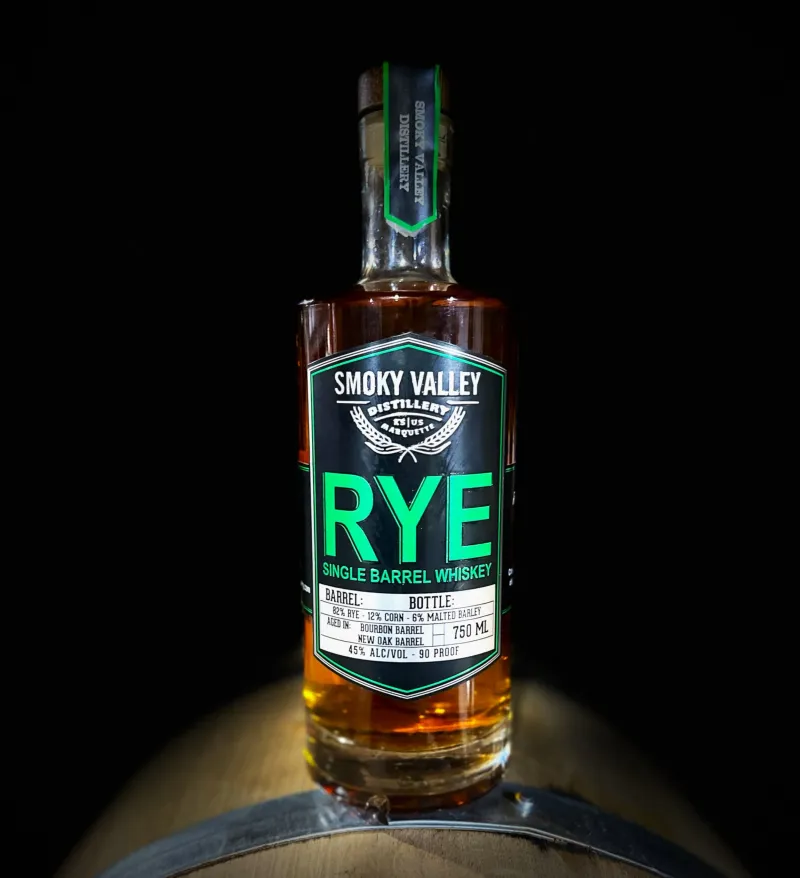
Cutting the sweet vermouth in half takes sugar out of the drink, and sugar is what usually covers for a thin whiskey. A Perfect Manhattan leaves the spirit more exposed than the classic does, which is why we build ours on the Rye Single Barrel Whiskey rather than a bourbon.
The mash bill is 82 percent rye, 12 percent corn, and 6 percent malted barley, bottled at 45 percent ABV. That is a genuinely rye-forward whiskey — black pepper and fresh-baked rye bread on the nose, butterscotch and baking spice on the palate, and a long dry finish. It was named Best of Kansas at the 2025 Heartland Whiskey Competition. Against a half ounce of dry vermouth it has plenty left to say, where a softer wheated bourbon can start to taste hollow once the sugar comes out.
If bourbon is what you have, use Bud & Dewey's and pull the dry vermouth back to 1/4 oz. Wheated bourbon and dry vermouth are both quiet; two quiet ingredients do not make a drink.
Stir It, and Stir It Long Enough
Everything in this glass is spirit and wine. There is no citrus, no dairy, nothing that needs to be aerated, so it gets stirred — 30 seconds in a mixing glass two-thirds full of ice. Shaking would cloud it and leave ice chips floating on top.
Thirty seconds sounds like a long time at the counter. It is not. That window is where the drink picks up the water it needs, and an under-stirred Manhattan tastes hot and disjointed no matter how good the whiskey is. Pour it into a glass that is already cold and it will hold its temperature to the last sip.
The two dashes of Angostura still matter, even with less sugar in the glass. If you want to understand what bitters are actually doing in a stirred drink, we wrote that up in what cocktail bitters are and how to use them.
The Garnish: Lemon Twist, Usually
The classic Manhattan gets a cherry because there is enough sweetness in the glass to meet it. A Perfect Manhattan has less, and a lemon twist suits it better — the oils sharpen the dry vermouth's herbal side and lift the whole drink. Difford's finishes theirs with an expressed orange twist and a cherry, which is also good and a little rounder. Cut a wide strip with a vegetable peeler, squeeze it skin-side down over the surface so the oils spray across the top, wipe the rim, and drop it in.
If you do want the cherry, use a real one. Luxardo or Eli Mason cherries are preserved in marasca syrup and taste like fruit. The neon supermarket kind are dyed and artificially flavored, and they will undo the work the dry vermouth just did.
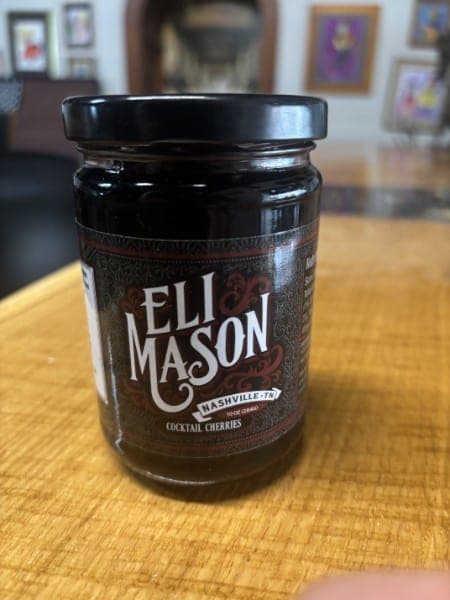
Eli Mason Cocktail Cherries
$19.95Small-batch cocktail cherries from Eli Mason — the finishing touch for a Manhattan, an Old Fashioned, or a pour of Bud & Dewey's on the rocks.
View in the shop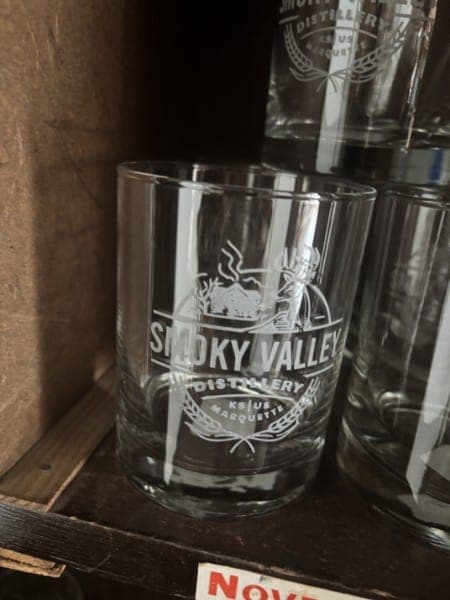
Old Fashioned Glass
$19.95A heavy-bottomed rocks glass etched with our crest — built for an Old Fashioned, a bourbon on the rocks, or a neat pour.
View in the shopWhen to Pour a Perfect Instead of a Classic
Three situations, in our experience behind the tasting room bar:
- Before dinner. The lower sugar makes it a far better aperitif. A classic Manhattan is a nightcap; a perfect one opens an evening.
- Warm weather. Sweetness reads heavier when it is 95 degrees out, which in central Kansas is most of July.
- For someone who says they do not like Manhattans. Nine times out of ten what they do not like is either a sweet, oxidized vermouth or the sugar. This fixes both.
If you are still deciding which stirred whiskey drink is yours, our comparison of the Manhattan and the Old Fashioned lays out how the two differ in build and in the glass.
Troubleshooting
It tastes flat and stewed. One of the vermouths is oxidized. Pour a small amount of each on its own and taste them — the culprit is obvious immediately.
It tastes thin. Too much dry vermouth, or not enough stirring. Go back to 1/2 and 1/2 and give it the full 30 seconds.
It tastes hot. Under-diluted. Use more ice in the mixing glass, not less — a full glass of ice melts more slowly and chills faster than a few cubes rattling around.
It tastes like a Martini. You used dry vermouth for both halves. It happens.
One Drink, Same Strength
Cutting the sugar does not cut the alcohol. Two ounces of 90-proof rye is a little over one and a half standard drinks on its own, using the NIAAA measure of 1.5 fl oz of 80-proof spirits as one standard drink. A Perfect Manhattan is easier to drink than a classic, which is worth knowing before you make a second.
Take It Further
The Perfect Manhattan is one of several drinks our rye was built for — see Classic Rye Whiskey Cocktails for a Sazerac and Whiskey Sour on the same bottle, or browse all our cocktail recipes.
Better yet, taste the rye neat before you mix with it. We pour Thursday through Saturday in Marquette, Kansas — details on our tastings and tours page — and our bottles are stocked at retail locations across Kansas.