
The Ingredient That Used to Define the Word
The first known printed definition of "cocktail" ran in a Hudson, New York newspaper called The Balance and Columbian Repository on May 13, 1806. A reader had written in asking what the word meant. The editor answered that a cocktail is "a stimulating liquor, composed of spirits of any kind, sugar, water and bitters."
Four ingredients. Spirits, sugar, water, bitters. That's the whole definition — and it's why World Cocktail Day falls on May 13 every year.
Notice what's on that list. Bitters weren't a garnish or an optional flourish in 1806. Without them, what you had was a sling, not a cocktail. Two centuries later, bitters are the one ingredient in that definition most people can't describe — including plenty of folks who order an Old Fashioned every week.
Nearly every drink on this site calls for them. Our Old Fashioned takes 2 to 3 dashes. Our Manhattan takes 2. The Sazerac in our rye lineup takes 3 dashes of Peychaud's plus a dash of Angostura. Even the simple Bourbon and Ginger in our bourbon cocktails gets one. So it's worth knowing what you're reaching for.
What's Actually in the Bottle
Bitters are a concentrated aromatic tincture: high-proof alcohol used as a solvent to pull flavor out of plant material.
The bittering agent is the backbone — barks, roots, and seeds with genuinely bitter compounds in them. Gentian root is the most common, along with things like cinchona bark and wormwood. Around that base sit the aromatics: cinnamon, clove, allspice, citrus peel, anise, cardamom, and whatever else the maker's recipe calls for. The alcohol extracts those compounds and then holds them in suspension indefinitely.
That's also why bitters are strong. Angostura aromatic bitters is bottled at 44.7% alcohol by volume — 89.4 proof, higher than any of our whiskeys. If the number on that label seems out of proportion for something you use a few drops of, that's the point: you need that much alcohol to get the botanicals out of the bark in the first place, and to keep them stable afterward.
They don't make the drink stronger
This trips people up. Two dashes of an 89-proof product sounds significant next to two ounces of 90-proof whiskey. It isn't. A dash is a fraction of a teaspoon. The alcohol contribution rounds to nothing.
Why they're sold as groceries, not liquor
Here's the regulatory quirk. Bitters are treated by federal regulators as a nonbeverage product — a flavoring, in the same administrative bucket as vanilla extract — rather than as an alcoholic beverage.
The mechanism is a tax drawback. Under 27 CFR Part 17, a manufacturer who uses taxpaid distilled spirits to make a nonbeverage product can claim back most of the federal excise tax that was paid on that alcohol, provided the formula is approved as unfit for beverage use. TTB's Nonbeverage Drawback Alcohol program handles those approvals.
The practical result: an 89-proof bottle sits on a grocery shelf near the Worcestershire sauce, no liquor license required. Nobody is drinking it straight, which is exactly the assumption the classification is built on.
Angostura vs. Peychaud's
If you own one bottle of bitters, it's Angostura. If you own two, the second is Peychaud's. They are not interchangeable, and the difference is easy to taste side by side.
Angostura — the default
Angostura was first made in 1824 by Dr. Johann Siegert, a German army surgeon who had served in the Napoleonic wars and then settled in Angostura, a port town on the Orinoco River in Venezuela, where he was working with Simón Bolívar's forces. He built it as a medicinal tincture for stomach complaints. After his death, his sons moved production to Trinidad in 1875, where it's still made to the original formula.
In the glass it reads as clove and cinnamon first, then a dry, woody, slightly medicinal bitterness underneath. It's the backbone of the Old Fashioned and the classic Manhattan, and it's what most recipes mean when they just say "bitters."
Peychaud's — the New Orleans one
Peychaud's came out of a Creole apothecary in mid-1800s New Orleans, created by Antoine Amédée Peychaud, who mixed his bitters with brandy for customers. It's now made by the Sazerac Company.
It's a different animal: 35% ABV, lighter and sweeter than Angostura, with a pronounced anise-and-cherry character and a bright red color that visibly tints a drink. The Sazerac is built on it. Substitute Angostura and you'll make something perfectly drinkable that is not a Sazerac.
Orange bitters and everything after
Orange bitters is the sensible third bottle — it's citrus-forward rather than spice-forward, and it does good work in a Martini or alongside Angostura in an Old Fashioned. Past that you get into walnut, black walnut, cardamom, chocolate, celery, and a hundred small-producer bottlings. Fun, but not necessary. Three bottles will make essentially every classic.
How Much Is a Dash?
Less standardized than you'd hope.
A "dash" is a real bar measure but not a legally defined one. Out of a standard dasher-top bottle, one firm downward shake lands somewhere around 0.7 to 1 milliliter — call it a fifth of a teaspoon. Bottles with different tops throw different amounts, and a well-used bottle throws differently than a full one.
The practical approach is to stop counting and start tasting. Build the drink, stir it, taste it. If it reads flat or one-note, it wants another dash. If it tastes faintly like potpourri or cough syrup, you went past it.
Where our own recipes land:
| Drink | Bitters | Amount |
|---|---|---|
| Old Fashioned | Angostura | 2–3 dashes |
| Manhattan | Angostura | 2 dashes |
| Sazerac | Peychaud's + Angostura | 3 dashes + 1 dash |
| Bourbon & Ginger | Angostura | 1 dash |
What Bitters Are Doing in the Drink
Bitters are a seasoning. The closest kitchen analogy is salt — you don't taste it as itself, you taste what it does to everything around it.
In an Old Fashioned, sugar and whiskey alone are cloying and a little flat. The bitters put a dry edge underneath the sugar and give the whiskey's oak something to push against. Our Straight Bourbon has plenty of corn sweetness in it, and a couple of dashes keeps that from taking over the glass.
In a Manhattan, the vermouth is already contributing herbal complexity, so the bitters have a narrower job: tying the rye and the vermouth together so they read as one drink instead of two. That's the difference we break down between the Manhattan and the Old Fashioned in more detail.
They also cover for a spirit's rough spots — which is worth saying honestly. With a bold, high-rye whiskey like our Rye Single Barrel, the bitters aren't hiding anything; they're pointing at the baking spice that's already there. With our Smoked Straight Bourbon, the sugar-and-bitters combination is what keeps the smoke in balance rather than letting it swamp the drink.
Buying and Keeping Them
Buying. A 4 oz bottle of Angostura is inexpensive and will outlast most people's cocktail phase. Skip the collector sets until you know what you reach for.
Storing. Upright, capped, at room temperature, out of direct sunlight. They don't need refrigeration and they don't need special handling — the alcohol does the preserving. Bitters won't turn on you the way an open bottle of sweet vermouth will after a few weeks in the fridge.
Aging. They won't spoil, but the brightest aromatics do fade with repeated air exposure over the course of years. If a bottle you've had forever tastes muted, that's what happened. It's still perfectly good; it just isn't as loud.
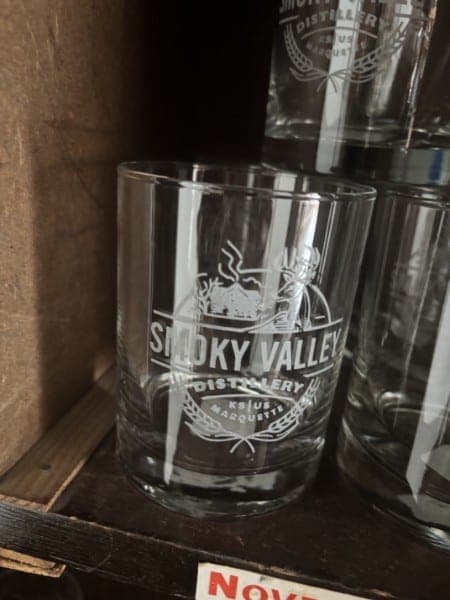
If you're stocking a bar from scratch, our home bar essentials guide lists the rest of the kit bottle by bottle and tool by tool, our guide to bourbon cocktail recipes covers what to do with it, and the merchandise page has the rocks glasses and cocktail cherries we use in the tasting room.
Taste What a Dash Actually Does
The fastest way to understand bitters is to build the same drink twice — once with, once without — and taste them back to back. Most people are surprised by how much the omission flattens things.
We'll do it with you. A tasting and tour in Marquette is $10 per person, runs 30 to 45 minutes, and is available Thursday through Saturday by appointment. Come find out which of our spirits you want to build on, then take a bottle home from the shop or from one of our retail locations across Kansas.