
Most Home Bars Fail by Breadth
People tell us about their bar at home while we are pouring. The story is usually the same: fourteen bottles, eleven of which were bought for one recipe and opened once, and nothing gets made because there is no plan on the shelf. Then somebody else mentions they keep four bottles and make an excellent Manhattan every Friday.
A home bar is not a collection. It is a small set of ingredients chosen so that any two or three of them combine into something you want to drink. Start from the drinks rather than the bottles and the list gets short quickly.
Here is that list, in the order we would buy it.
Four Bottles Cover Most of It
1. A bourbon you would drink neat. This is the workhorse. It has to be good enough to pour by itself and sturdy enough to survive sugar, bitters, and ice. A wheated bourbon is the easiest place to start because the softer grain is more forgiving in an Old Fashioned — ours is Bud & Dewey's at 45% ABV, and it is our best seller for exactly that reason. Bourbon is a legal category, not a style: 27 CFR 5.143 requires at least 51% corn and new charred oak, which is why every bottle labeled bourbon shares a baseline of sweetness and vanilla.
2. A rye. Rye is not a luxury second whiskey, it is a different set of drinks. Anything that wants pepper and a dry finish rather than caramel — a Manhattan, a Sazerac — is a rye drink first and a bourbon drink second. Our Rye Single Barrel runs an 82% rye mash bill and took Best of Kansas at the 2025 Heartland Whiskey Competition. If you only ever make Old Fashioneds, skip this one. If you make Manhattans, buy it before you buy a third bourbon.
3. A clean vodka. Federal law defines vodka as a neutral spirit distilled "without distinctive character, aroma, taste, or color" (27 CFR 5.142), which sounds like an insult and is actually a job description. It is the bottle that lets another ingredient be the drink — tonic, ginger beer, tomato juice, grapefruit. Ours is 100% corn at 40% ABV.
4. One bottle with a personality. The fourth slot is the one that makes your bar yours, and it should be something you cannot buy in any grocery store. For us that is the infused vodka line: Pickle Vodka turns a Bloody Mary into a drink people ask about, Smoked Jalapeno makes a mule with heat in it, and Wild Plum carries the two drinks our tasting room is known for.
Four 750 ml bottles is about fifty drinks. A bottle holds roughly twelve two-ounce pours, and the NIAAA counts 1.5 fl oz of 80-proof spirits as one standard drink, so a stocked shelf lasts a lot longer than the cost suggests.
The Modifiers Matter More Than a Fifth Bottle
This is where most people underinvest. A fifth whiskey adds one flavor. Six modifiers add twenty drinks.
- Sweet vermouth. A Manhattan is one third vermouth by volume, so the bottle is not a minor ingredient. It is also fortified wine, which means it oxidizes after opening — which bottle to buy and how to keep it is a decision worth five minutes.
- Aromatic bitters. One bottle of Angostura covers the Old Fashioned, the Manhattan, the Whiskey Sour, and most highballs. Bitters are what made a cocktail a cocktail in the first printed definition of the word, and a bottle lasts years.
- Simple syrup. Equal parts sugar and hot water, shaken until clear, kept in a jar in the refrigerator. It costs nothing and dissolves instantly, which granulated sugar does not.
- Fresh citrus. Lemons and limes, whole. Bottled juice is cooked and tastes it. This is the single biggest quality gap between a home Whiskey Sour and a bar one.
- Something carbonated. Ginger beer, club soda, or tonic. The long drink is what you make on a weeknight when you do not feel like stirring anything.
- Real cocktail cherries. Not the fluorescent ones. A proper brandied or maraschino-style cherry is a garnish you eat on purpose.
Five Tools, and Why Each One Is There
Bartending had a published standard long before it had gadget kits — Jerry Thomas put out the first American bartender's guide in 1862, and the tools that survived from it are the ones that measure, chill, and separate. Five of them do everything.
- A jigger. The dual-cone type, 1.5 oz on one end and 0.75 oz on the other. Free pouring adds a quarter ounce you do not notice, and a quarter ounce is the difference between a Manhattan and a glass of vermouth.
- A mixing glass and a bar spoon. For everything made only of spirits, sugar, and bitters. Stirring chills and dilutes while keeping the drink clear and dense.
- A shaker. For anything with citrus, dairy, or egg. Shaking aerates as well as chills, which juice needs and a Manhattan does not. A two-piece Boston shaker is cheaper and faster than the three-piece kind, and it does not freeze shut.
- A Hawthorne strainer. The one with the spring. It holds back ice and fruit and fits a shaker tin or a mixing glass.
- A vegetable peeler. A wide strip of orange or lemon peel expressed over the glass is the most underrated two seconds in cocktail making — the oils land on the surface and you smell them before the first sip.
That is the whole list. A small citrus press is a reasonable sixth if you make sours often.
Glassware: Two Shapes Do the Work
A nosing glass — wide bowl, tapered rim — for anything you drink neat, because the taper gathers aroma above the liquid and sends it toward your nose. A heavy rocks glass for ice and stirred drinks, because it takes a large cube and takes stirring. A highball only if you make tall drinks with a mixer. The full reasoning, including the crystal question, is in our whiskey glassware guide.
What We Would Put on Your Shelf
These are the four pieces we pour from and serve with in the tasting room, and the four we sell. Buy the tasting glass first if you are buying one thing.
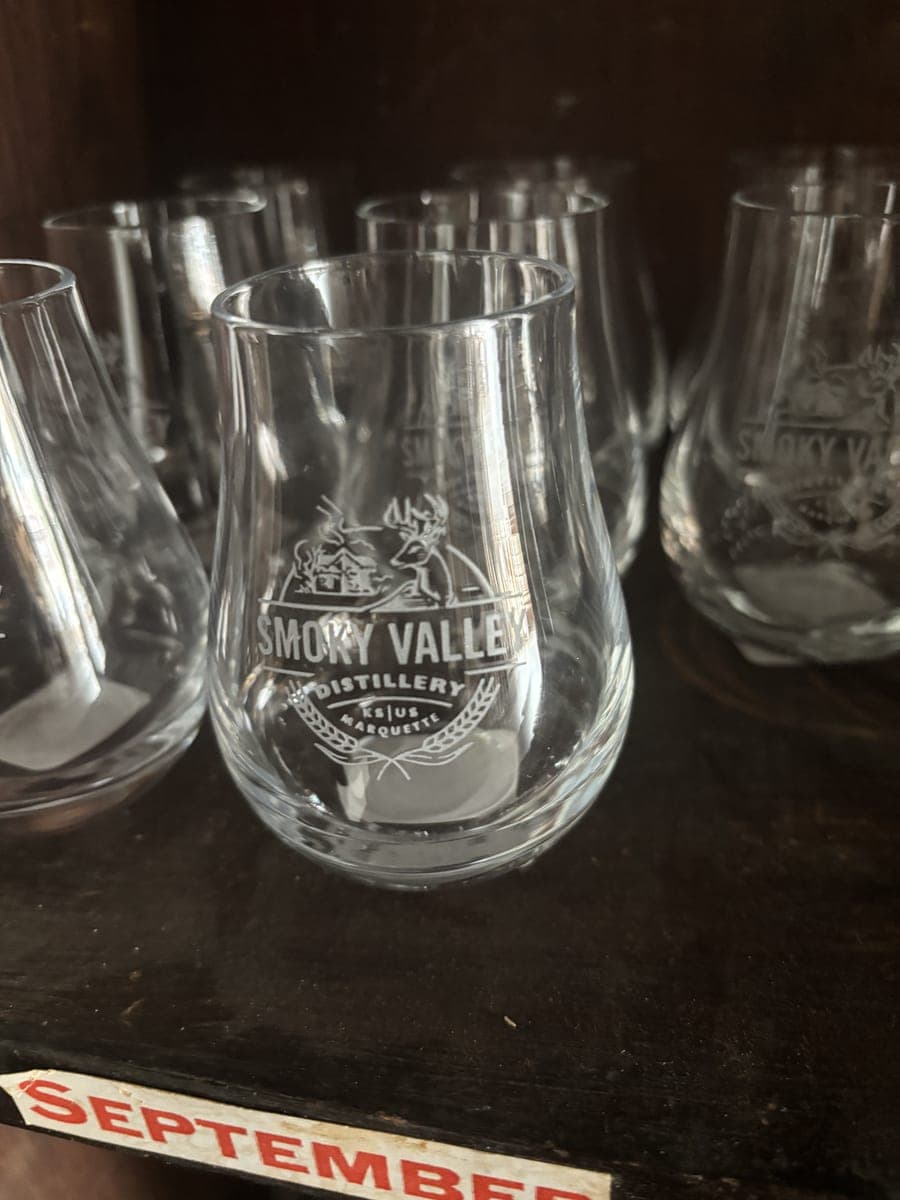
Logo Tasting Glass
$16.95A tulip-shaped nosing glass etched with the Smoky Valley Distillery crest — shaped to concentrate aroma for tasting our bourbon and whiskey neat.
View in the shop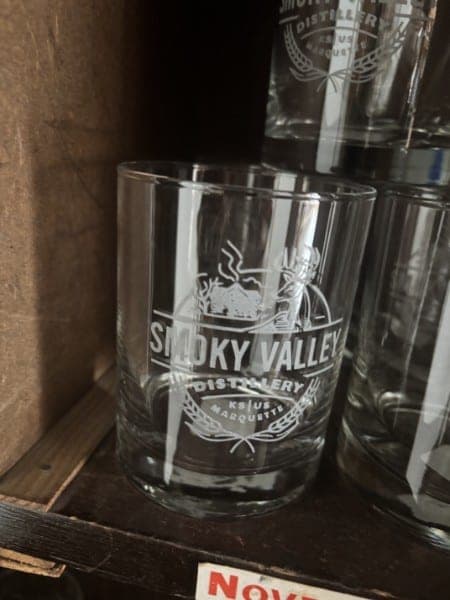
Old Fashioned Glass
$19.95A heavy-bottomed rocks glass etched with our crest — built for an Old Fashioned, a bourbon on the rocks, or a neat pour.
View in the shop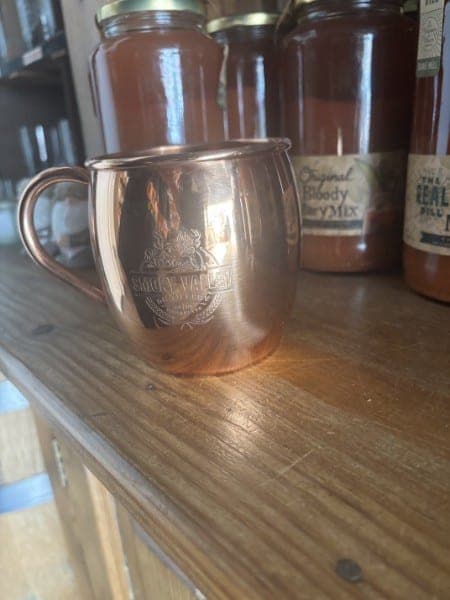
Copper Mule Mug
$19.95A classic copper mug engraved with the Smoky Valley crest — the traditional way to serve a Moscow or Smoky Mule ice-cold.
View in the shop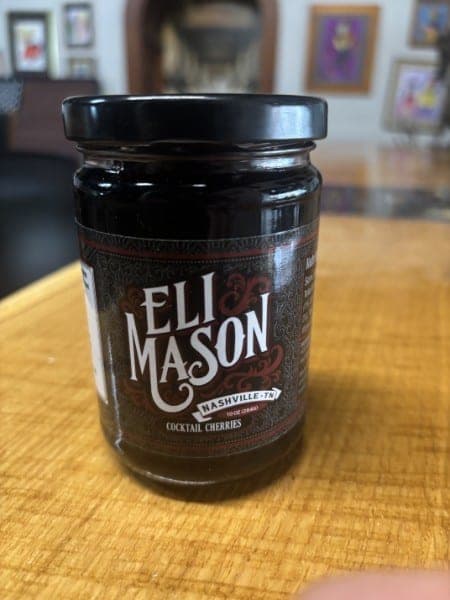
Eli Mason Cocktail Cherries
$19.95Small-batch cocktail cherries from Eli Mason — the finishing touch for a Manhattan, an Old Fashioned, or a pour of Bud & Dewey's on the rocks.
View in the shopAll four ship anywhere in the US, or you can pick them up free at the tasting room Thursday through Saturday. Bottles are the exception — Kansas law does not allow a distillery to ship spirits, so those are bought in person here or at one of our 16 Kansas retail partners. If you are stocking someone else's bar, our Kansas distillery gift ideas guide sorts the whole catalog by what can be mailed and what cannot.
Ice Is Equipment, Not a Detail
One large cube instead of several small ones, every time. The same volume of ice in small pieces has far more surface touching the whiskey, so it melts faster and waters the drink down before you finish it. A silicone mold that makes two-inch cubes costs a few dollars and permanently fixes the most common problem with a drink served at home.
Ice also picks up whatever is in your freezer. Cubes that have been sitting in a tray behind the fish for two months will bring that with them into a clear stirred drink. Make ice the day before you need it, and keep it in a closed bag rather than an open tray.
What to Skip
The twenty-piece gadget set. It pads the count with a muddler you will use twice, tongs, and a corkscrew you already own. Buying the five tools individually costs about the same and they are all better.
Whiskey stones. Most of the chilling power of ice comes from the energy the ice absorbs while melting, and a frozen stone does not melt. They cool a pour slightly and then stop, which is the one thing you did not want.
A decanter. It looks like the finished version of a home bar and it is a step backward: more air contact than the bottle, no label telling you what is in it, and if it is leaded crystal there is a real reason not to store spirits in it at all. Our whiskey storage guide covers that.
A cheap bottle "for mixing." The bourbon in an Old Fashioned is 90% of the drink by volume. Sugar and bitters do not hide anything; they just make a thin whiskey taste like a sweet thin whiskey.
What the Shelf Actually Makes
With four bottles and six modifiers, these are all in reach tonight:
- Old Fashioned — bourbon, sugar, bitters, orange peel
- Manhattan — rye, sweet vermouth, bitters, cherry
- Whiskey Sour — bourbon, lemon, simple syrup
- Bourbon and ginger, and the rest of the simple bourbon highballs
- Moscow Mule and our Smoky Mule — vodka or jalapeno vodka, ginger beer, lime
- Bloody Mary — better with pickle vodka than with pickle juice
- Vodka soda, tonic, Cape Codder, screwdriver, greyhound — all one modifier away
- Kansas Cherry Limeade and the Teardrop — our two wild plum originals
The Sazerac is the one classic that asks for more: absinthe for the rinse and Peychaud's bitters alongside the Angostura. That is the right moment to buy bottle number five.
Keep the Shelf, Not Just the Bottles
Store whiskey and vodka upright, out of direct sun, at room temperature — upright matters because a high-proof spirit lying against the cork will eventually degrade it. Refrigerate vermouth and use it within a month. Bitters and syrup go in the cupboard and the refrigerator respectively. Squeeze citrus the day you pour it.
Then use the bar. A shelf of unopened bottles is a decoration; the point of the list above is that all of it gets used.
If you would rather taste before you stock, our tour and tasting is $10 per person, runs 30 to 45 minutes, and covers the full lineup Thursday through Saturday by appointment. You can try all four of the bottles above side by side, hold both glass shapes, and decide what earns the space at home.