
Three Ingredients, One Ratio
A whiskey sour is whiskey, citrus, and sugar. That is the whole drink, and it is also the oldest template in mixed drinks — the sour is a family, not a recipe. Swap the whiskey for gin and you have a Gin Sour. Swap in tequila and lime and add orange liqueur and you are most of the way to a Margarita. Learn the ratio once and you own a dozen cocktails.
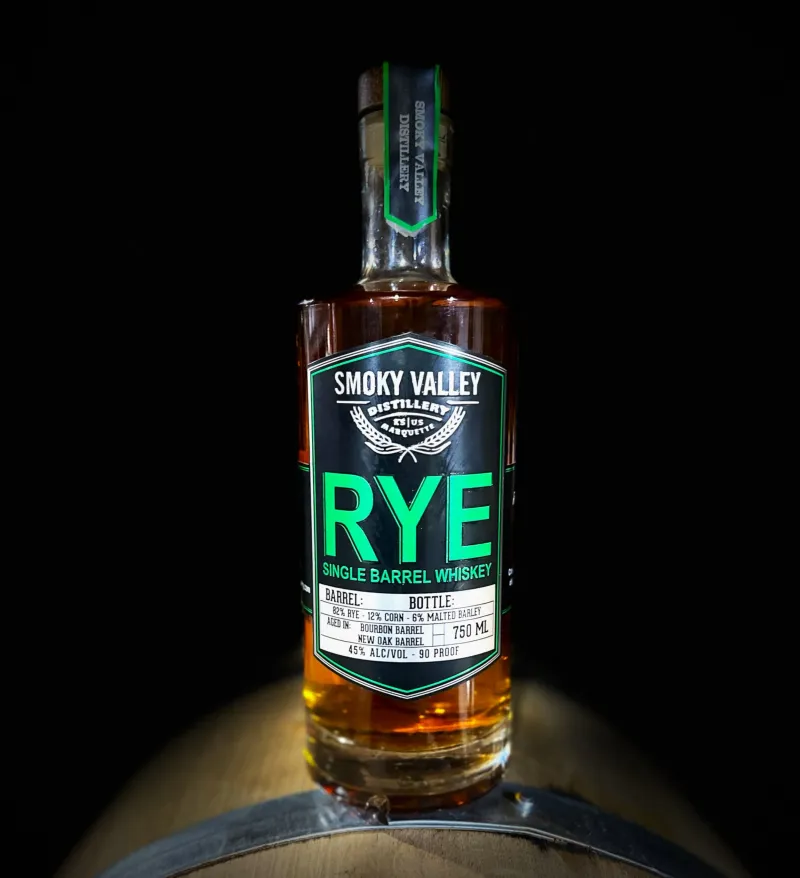
Ours is 2 oz whiskey, 3/4 oz fresh lemon juice, 3/4 oz simple syrup. The International Bartenders Association's official spec is 45 ml bourbon, 25 ml lemon, and 20 ml sugar syrup — in American measures about 1 1/2 oz, a shade over 3/4 oz, and 2/3 oz. That is a smaller drink than ours and a sharper one: relative to the whiskey there is noticeably more citrus, and the lemon outweighs the syrup rather than matching it. Both are good drinks. We pour the bigger, more balanced one because our rye is bottled at 45 percent and can carry it.
What matters more than the decimal places is that the lemon and the sugar are equal to each other and together add up to about three-quarters of the whiskey. Get that relationship right and the drink is balanced at any size.
The Two Dials
Everything else is adjustment, and there are only two things worth adjusting.
Lemon. Three-quarters of an ounce is the house pour and it suits rye. With a sweeter wheated bourbon, go to a full ounce — you will see that version on our bourbon cocktails page, and it is not a contradiction, it is the dial doing its job. More sugar in the whiskey wants more acid against it.
Syrup. Simple syrup is equal parts sugar and water, stirred until clear, kept in the refrigerator for a few weeks. If you prefer a rounder, heavier drink, make rich syrup at two parts sugar to one part water and use half an ounce instead of three-quarters. Same sweetness, less water, more body. We keep both behind the bar.
One thing not to adjust: the whiskey. Two ounces of 90-proof rye in a 3 1/2 oz build lands near 20 percent alcohol by volume once the ice has done its work — strong, but a long way from the 45 percent in the bottle. Cut the whiskey and the citrus takes over and you have lemonade with a rumor of rye in it.
Shake It Harder Than You Think
Shaking does two jobs at once, and most home sours fail because only one of them happened.
The first is chilling and dilution. Ice melts into the drink while you shake, and that water is part of the recipe — a sour shaken with a little ice in a warm shaker comes out strong, sweet, and flat, because it never picked up the quarter-ounce or so of water it needed.
The second is aeration. Citrus drinks want air whipped into them. That is the difference between a sour that tastes bright and one that tastes merely sour, and it is why you stir an Old Fashioned or a Manhattan and shake this.
So: fill the shaker two-thirds with solid, fresh ice — not the half-melted shards at the bottom of the tray, which dilute without chilling — and shake for 12 to 15 seconds with real intent. The tin should frost over and get uncomfortable to hold. That is the signal. Then strain immediately. A shaken drink left standing in the tin keeps diluting and loses the texture you just built.
If your shaker is a two-piece tin that has sealed itself shut, hit the seam with the heel of your hand rather than prying at the lid.
Up or On the Rocks
Both are correct, and the IBA lists both: a cobbler glass for the up version, an old fashioned glass filled with ice for the rocks version.
Over fresh ice is how we pour it in the tasting room. The drink stays cold to the last sip, it keeps opening up as it dilutes, and a rocks glass is more forgiving of a slightly off ratio. Straight up in a chilled coupe is the better-dressed version — colder on arrival, more aromatic, and completely unforgiving. It is also a smaller drink that warms in about eight minutes, so serve it to someone who is paying attention.
Fresh ice in the glass, always. Never the ice you shook with. That ice is already waterlogged and it will turn the back half of the drink into cold lemon water.
The Glass and the Flag
The garnish on the official spec is half an orange slice and a maraschino cherry — the "flag," when the two are pinned together on a pick across the rim. It is not only decoration. Your nose arrives before your mouth does, and orange oil over a lemon-and-rye drink is the reason the first sip reads as rounder than the ingredients suggest. The cherry is there to be eaten last, which is a real part of the drink and not a throwaway.
Use a cherry worth eating. The neon ones in syrup are candy; a proper brandied cocktail cherry tastes like fruit. We stock Eli Mason cherries in the shop for exactly this and for the Manhattan.
For the rocks version you want a heavy, short glass that holds a decent cube.
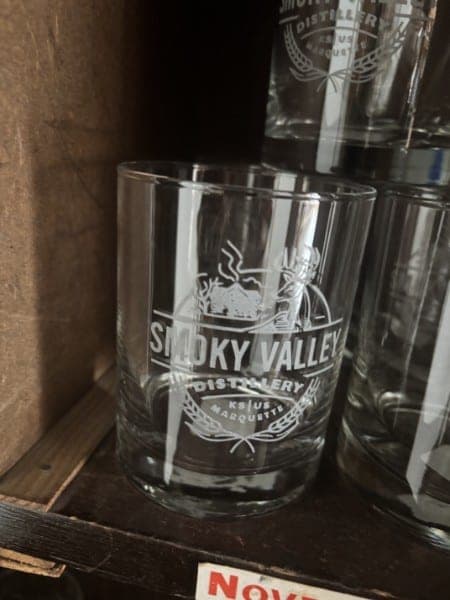
Old Fashioned Glass
$19.95A heavy-bottomed rocks glass etched with our crest — built for an Old Fashioned, a bourbon on the rocks, or a neat pour.
View in the shop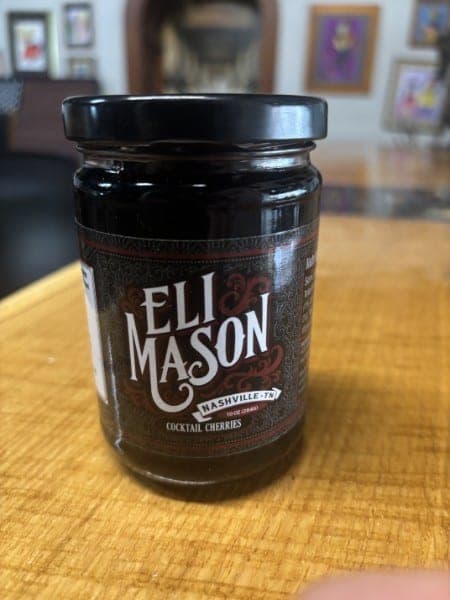
Eli Mason Cocktail Cherries
$19.95Small-batch cocktail cherries from Eli Mason — the finishing touch for a Manhattan, an Old Fashioned, or a pour of Bud & Dewey's on the rocks.
View in the shopIf you want the full reasoning on glass shape across whiskey drinks, we wrote it up in our whiskey glassware guide.
The Egg White Question
A whiskey sour with egg white in it is a Boston Sour. You have almost certainly seen the photographs: an inch of dense white foam, a crosshatch of bitters floating on top.
Here is the honest answer. Egg white adds almost no flavor. What it adds is texture and a foam cap, because the proteins in the white unfold when you shake them and trap air. It makes the drink feel softer and rounder, and it slightly mutes the edges of the citrus. Whether that is an improvement depends entirely on whether you wanted those edges.
For our rye, we usually skip it. An 82 percent rye mash bill brings black pepper and baking spice that are the most interesting thing in the glass, and egg white sands them down. For a sweeter wheated bourbon, egg white is a genuine upgrade.
If you make one, the technique is the dry shake: whiskey, lemon, syrup, and half an ounce of white in the tin with no ice, shaken 10 seconds to build the foam, then ice added and shaken again for another 12. Doing it in one pass with ice chills the white before it can unfold and you get a thin, bubbly head instead of a dense one.
On raw eggs. This is an uncooked egg white. The FDA's guidance for recipes calling for eggs that are raw or undercooked when the dish is served is to use either shell eggs that have been treated to destroy Salmonella or a pasteurized egg product. Pasteurized shell eggs are sold in most grocery stores and they whip up fine. If you are serving anyone pregnant, elderly, very young, or immune-compromised, use them or leave the egg out — the drink is excellent without it.
Which Smoky Valley Bottle to Pour
We make five bourbons and two other whiskeys, and a sour treats them very differently from the way a neat pour does. Citrus and sugar flatter sweetness and expose heat, so the bottles sort themselves out quickly.
| Bottle | ABV | In a sour |
|---|---|---|
| Rye Single Barrel Whiskey | 45% | The house pick, and our Best of Kansas winner at the 2025 Heartland Whiskey Competition. An 82 percent rye mash bill gives the lemon something to argue with instead of agree with. Drier, sharper, more interesting. |
| Bud & Dewey's | 45% | The crowd-pleaser and our best seller. Wheat as the secondary grain means vanilla and sweet cereal, which rounds the whole drink. Go to a full ounce of lemon here. |
| Straight Bourbon | 45% | Rye in the mash bill splits the difference between the two above. A good default if you only keep one bottle. |
| Smoked Straight Bourbon | 45% | Hand-smoked with hickory, and a smoked sour is one of the better things we have poured. Lemon and smoke behave like lemon and grilled fish — see what smoked bourbon actually is. |
| Kernza Whiskey | 45% | The sleeper. Its nutty, lightly honeyed grain character reads almost like the honey in a Gold Rush. Skip the egg white and let the grain talk. |
| High Rye Single Barrel | 35% | Save it. At 70 proof there is not enough spirit to stand up to an ounce and a half of lemon and sugar. This is a sipping bottle. |
If the wheat-versus-rye split is new to you, the short version is in what wheated bourbon is and the full comparison is in high rye vs wheated bourbon. The proof arithmetic is in what proof means.
Four Variations Worth Making
- Gold Rush. Honey syrup in place of simple. Created around 2000 by T.J. Siegal at Milk & Honey in New York, who ordered his usual bourbon sour and asked for the bar's honey syrup instead; Sasha Petraske built it 2 oz whiskey, 1 oz juice, 3/4 oz honey syrup. It is the single best variation on this drink and it suits our wheated bourbon especially well.
- New York Sour. Float a half ounce of dry red wine over the back of a spoon onto a finished sour. The float was called a "snap" when the drink turned up in Chicago in the 1880s, long before anyone attached New York's name to it. It looks far more complicated than it is.
- Boston Sour. The egg white version above, with three dashes of Angostura dropped on the foam. Bitters on top are aromatic, not structural — you smell them, you do not really taste them.
- Rye sour with a smoked rim. Half the fun of our smoked bourbon without opening a second bottle: build the rye sour, then use the smoking technique from our smoked bourbon cocktails on the empty glass first.
For a batch, a sour is one of the more awkward drinks to scale because fresh citrus fades within hours. Our guide to batching bourbon cocktails for a crowd covers the split-batch approach: whiskey and syrup ahead, juice the same day.
Where the Name Comes From
The whiskey sour is older in print than most people assume, and the citation that gets repeated is not the earliest one.
The usual claim is an item in the Waukesha Plain Dealer, a Wisconsin paper, in 1870. But the etymologist Barry Popik has documented the phrase eight years earlier: the Syracuse Daily Courier and Union ran a column on 30 September 1862 describing a man who "came out wiping his mouth … and smelling three cents' worth stronger of whisky sour," and used the phrase again that 3 October. By 20 July 1864 the Weekly Rocky Mountain News in Denver was printing a saloon price card listing ale and lager at 15 cents and a "whisky sour" at 20.
Note what those citations are not: recipes. In all three the drink is already so ordinary that a newspaper can mention it in passing and expect readers to know what it is. Jerry Thomas published the first American bar manual in that same year, 1862, and sources disagree about whether a whiskey version appears in its sours section alongside the brandy and gin ones. The newspapers settle the more interesting question anyway — people were drinking these in Syracuse and Denver before the Civil War ended.
Troubleshooting
It is puckeringly sour. Your lemon was large, or the syrup was weak. Measure both; a jigger solves most sour problems permanently.
It is cloying and flat. Too much syrup, or not enough shake. Under-shaken sours taste sweeter than they are because they are warm.
It tastes watery and thin. Old ice. Shards and half-melted cubes dilute fast without chilling, and then you strained it over more of the same.
It tastes metallic or stale. Bottled lemon juice. There is no fixing this and no hiding it in a three-ingredient drink.
The egg white foam collapsed in a minute. No dry shake, or the white went in with the ice. Build the foam before the ice goes anywhere near it.
One Drink, Served Cold
Two ounces of 90-proof whiskey is about one and a half standard drinks, using the NIAAA measure of 1.5 fl oz of 80-proof spirits as one. A sour goes down easily and quickly because it is cold and bright, which is worth knowing before the second one.
Take It Further
The sour is one of three classics our rye was built for — see classic rye whiskey cocktails for a Manhattan and a Sazerac on the same bottle, or browse all our cocktail recipes.
Better still, taste the rye neat before you put lemon anywhere near it. We pour Thursday through Saturday in Marquette, Kansas — details on our tastings and tours page — and our bottles are stocked at retail locations across Kansas.