
Eggnog Is a Custard, Not a Cocktail
Every mistake people make with eggnog comes from treating it like a mixed drink — pour things in a pitcher, stir, done. It is not a mixed drink. It is a thin stirred custard, the same family as crème anglaise, that happens to have whiskey in it. Once you accept that, the technique becomes obvious and the drink gets dramatically better.
This matters practically, because a custard has a temperature it wants and a temperature that ruins it. Eggs begin to set somewhere around 150°F and scramble not far above that. The whole method below is built around hitting 160°F and stopping.
The carton version is a different product entirely — stabilized, usually thickened with starch or gums, and sweet enough to hide the fact that it tastes of very little. Making it from scratch takes 25 minutes of actual work and the gap is not close.
The Safety Question, Answered Properly
This is the part most eggnog writing gets wrong, so here is the straight version.
Raw eggs carry a Salmonella risk. The FDA's guidance is twofold. For dishes containing eggs, casseroles and other dishes containing eggs should be cooked to 160°F. And for recipes where the eggs are raw or undercooked when served, the advice is to use either shell eggs that have been treated to destroy Salmonella or a pasteurized egg product.
So you have two legitimate routes, and the recipe above uses both:
- Cook the base to 160°F. This is the main recipe. The custard is heated and held to temperature, which handles the yolks.
- Use pasteurized shell eggs for anything raw. The folded-in whites at the end never get cooked. If you are doing that step, use pasteurized eggs — they are in most grocery stores and they whip up fine. If you would rather not, skip the whites entirely; the drink is slightly denser and still excellent.
If you are serving anyone pregnant, elderly, very young, or immune-compromised, use pasteurized eggs and cook the base. That is the whole precaution.
Does Aging Eggnog Make It Safe?
You will read that alcohol sterilizes eggnog, and that an aged nog is therefore safe no matter what went into it. The real story is more interesting and a lot less conclusive.
In 2010, Science Friday's Flora Lichtman persuaded Dr. Vincent Fischetti's lab at Rockefeller University to test it. They deliberately spiked a batch of heavily spirited eggnog with Salmonella to simulate a contaminated egg getting in. In the early tests the bacteria were thriving. Somewhere between one and three weeks later they appeared to be gone, most likely killed off by the sheer volume of alcohol in the recipe.
Read the caveats, though, because they matter. It was one informal test with a small sample size, Fischetti said there were no plans for a follow-up, and — the detail that tells you everything — the scientists did not drink from the contaminated batch.
It is also worth knowing what "heavily spirited" meant. That recipe called for a pint of bourbon and a quart of rum. That is 48 ounces of spirit, several times what is in the recipe on this page, which is why Fischetti could joke there was enough alcohol in it to kill a horse. Our batch lands somewhere near 7 to 8 percent alcohol by volume — pleasant, and nowhere near a disinfectant.
So: age eggnog because aging genuinely improves the flavor. The harsh edges round off, the nutmeg and the oak marry, and the texture gets silkier. Do not age it as a substitute for food safety. Start from a cooked or pasteurized base and the aging is a bonus rather than a gamble.
If you do age it, keep it covered in the refrigerator and give it a stir before serving — a week is noticeably better than a day, and some people swear by a month. Fold the whites in on serving day, not before.
Which Smoky Valley Bottle to Pour
Eggnog is sweet, cold, fatty, and heavily spiced, which is a tough room for a whiskey. Cream coats the palate and mutes everything subtle, nutmeg competes with every baking-spice note the barrel gave you, and sugar flattens heat. Bottles that are great neat can vanish entirely.
| Bottle | ABV | In eggnog |
|---|---|---|
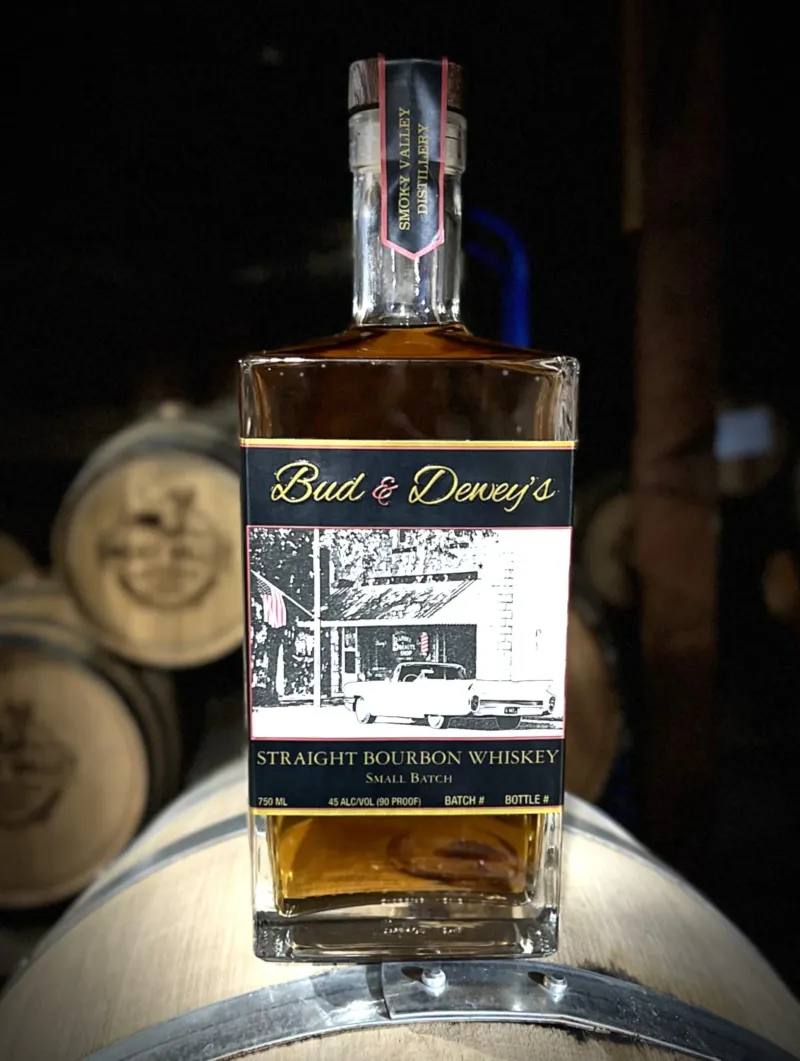
| Bud & Dewey's | 45% | The house pick and our best seller. Wheat as the secondary grain gives vanilla custard and sweet cereal — it is already most of the way to this drink, and it reinforces the custard instead of fighting it. |
| Straight Bourbon | 45% | Rye in the mash bill brings pepper that cuts the cream. A drier, more grown-up nog. Good if you find eggnog cloying. |
| Rye Single Barrel Whiskey | 45% | Our Best of Kansas winner, and the most assertive option here. An 82 percent rye mash bill means the spice argues with the nutmeg rather than blending into it. A real choice, not a mistake. |
| Smoked Straight Bourbon | 45% | Hand-smoked with hickory. Smoke and cream is a strange combination on paper and a good one in the glass — closer to a toasted marshmallow than you would guess. See what smoked bourbon is. |
| Kernza Whiskey | 45% | The sleeper, as usual. Its nutty, lightly honeyed grain character suits a dairy drink unusually well. |
| High Rye Single Barrel | 35% | Skip it here. At 70 proof it disappears under the cream and sugar completely, and it is far too good a sipping bottle to waste that way. |
The wheat-versus-rye split behind the first two rows is explained in what wheated bourbon is, and the full head-to-head is in high rye vs wheated bourbon.
On the rum. Two ounces of dark rum alongside the bourbon is traditional and it does real work — molasses and funk that bourbon alone does not provide. It is genuinely optional. Leave it out and add an extra ounce of bourbon if you want the drink to taste purely of whiskey.
The Glass
Eggnog is served cold in a small vessel, because a 5 1/2 ounce pour of sweetened cream is exactly as much as anyone wants. A punch cup is traditional; a short, heavy tumbler is what most people actually have.
Our etched Old Fashioned glass is the right shape for it — short, weighted, cold-friendly, and wide enough at the mouth that the nutmeg does its job before you taste anything. It is the same glass we recommend for an Old Fashioned and a Whiskey Sour.
For honesty's sake, the other two pieces of glassware we sell are wrong for this one. The Logo Tasting Glass is a 1.5 oz nosing glass built for neat whiskey, which is too small. The Copper Mule Mug belongs to an ice-cold Moscow Mule and has no business near dairy.
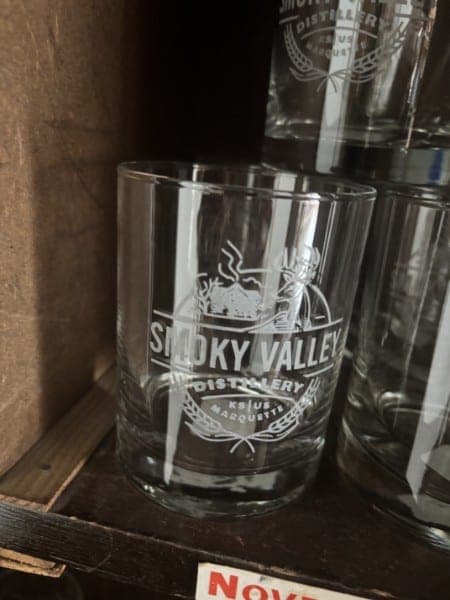
Old Fashioned Glass
$19.95A heavy-bottomed rocks glass etched with our crest — built for an Old Fashioned, a bourbon on the rocks, or a neat pour.
View in the shopMore on matching glass to drink is in our whiskey glassware guide.
Grate the Nutmeg Yourself
This is the smallest change with the biggest return in the entire recipe.
Pre-ground nutmeg is a brown powder that tastes faintly of dust. Whole nutmeg grated over the glass at the moment of serving is aromatic, slightly piney, and sweet, and it is most of what people actually recognize as "eggnog." A whole nutmeg costs about a dollar, lasts for years in a jar, and grates on the small side of a box grater or a microplane.
Grate it over the top of each glass rather than stirring it into the batch. The aroma is the point, and it sits where your nose is.
Scaling It for a Crowd
The recipe makes eight small servings, which is one party's worth for a small group and nothing at all for a real holiday gathering. It doubles and triples cleanly, with two cautions.
The custard step does not scale linearly in time. A tripled batch takes much longer to climb to 160°F and the bottom of the pan is far more likely to scorch, so drop the heat, stir constantly, and be patient. A heavy-bottomed pan matters more as the volume grows.
Make the base ahead. It is genuinely better on day two or three and the work is all front-loaded, which makes eggnog one of the best possible party drinks — nothing to build to order. Our guide to batching bourbon cocktails for a crowd covers the general scaling approach, and the same split applies here: base ahead, whites and nutmeg on the day.
For a no-alcohol version, make the custard exactly as written and leave the spirits out. Add a splash more cream for body and a little vanilla extract. It is a good drink in its own right, and it means one batch serves everybody if you pour the bourbon into individual glasses instead of the bowl — an ounce of Bud & Dewey's stirred into a cup of cold base works perfectly.
About That George Washington Recipe
Every December, a recipe circulates attributed to George Washington — an alarming one, heavy on rum, sherry, and brandy all at once. It is a good story and there is no evidence for it.
Mount Vernon's research historian, Mary Thompson, has said plainly: "We have no references to the use of eggnog at Mount Vernon." The only beverage recipe anyone has found in the president's papers is one for small beer. Thompson also points to a giveaway in the versions floating around online: one recipe attributed to Martha Washington calls for sweetened condensed milk, which was not invented until the 19th century, decades after both Washingtons were dead.
None of which means eggnog is not old — it is, and it was genuinely popular in early America. It just was not his.
Troubleshooting
It scrambled. The heat was too high or you stopped stirring. Strain it immediately through a fine sieve; a batch caught early is usually rescuable. Next time use lower heat and a thermometer rather than judgment.
It is thin and watery. Either the custard never reached 160°F and properly thickened, or it was not chilled long enough. Cold is part of the texture. Overnight is better than four hours.
It tastes mostly of alcohol. You added the spirits to a warm base, or there is simply too much. Chill the custard first; cold mutes alcohol considerably, which is also why warm eggnog tastes far stronger than the same batch cold.
It is too sweet. Pull the sugar back to a half cup total next time. Our wheated bourbon is already bringing vanilla sweetness that the recipe does not need to repeat.
It separated in the refrigerator. Normal for a scratch nog with no stabilizers. Stir or briefly whisk before serving.
How Strong Is It, Really
Six ounces of 90-proof bourbon and two ounces of rum spread across roughly 46 ounces of finished eggnog works out near 7 to 8 percent alcohol by volume — about the strength of a strong beer, and a long way below a cocktail.
Per serving, that is a little under three-quarters of a standard drink, using the NIAAA measure of 1.5 fl oz of 80-proof spirits as one. Those figures are arithmetic from the volumes above, not a lab measurement.
The thing worth knowing is that eggnog does not taste like it has anything in it. Cream, sugar, and nutmeg hide whiskey extremely well, and a drink you can finish in four swallows invites a refill. That is the entire reason eggnog has the reputation it does.
Take It Further
If you want the bourbon that built this drink in something simpler, the hot toddy is the other cold-weather build Bud & Dewey's was made for, and three easy bourbon cocktails covers the everyday rotation. Browse all our cocktail recipes for the rest.
Better still, taste the bourbon neat before it goes anywhere near a custard. We pour Thursday through Saturday in Marquette, Kansas — details on our tastings and tours page — and our bottles are stocked at retail locations across Kansas.