
What Grain to Glass Really Means
In the craft spirits world, "grain to glass" is more than a marketing phrase — it's a commitment to controlling every step of production. Not every distillery that uses the term actually does it. Some buy pre-made neutral grain spirit from industrial producers and simply redistill, flavor, or age it. That's not grain to glass. That's bottling with extra steps.
At Smoky Valley Distillery, grain to glass means exactly what it says. We start with raw grain, and we don't stop until the finished spirit is in the bottle. Every step happens here in Marquette, Kansas.
Why Local Grain Matters
Kansas: America's Breadbasket
Kansas isn't just any farming state — it's the largest wheat producer in the nation and a major grower of corn, sorghum, and rye. The quality of Kansas grain is world-class, shaped by deep prairie soils, consistent growing conditions, and generations of farming expertise.
When we source grain from Kansas farmers, we're not settling for convenience. We're choosing some of the best grain available anywhere.
Traceability
When your grain comes from a farm you can drive to, you know exactly what you're working with. We know the farmers, we know their practices, and we know the quality of every batch of grain that enters our distillery.
Large distilleries buy grain from commodity markets where origin is irrelevant. A batch of corn might come from Iowa, Indiana, or Brazil — there's no way to know, and no way to connect the finished spirit to its source.
Terroir in Spirits
The wine world has long embraced the concept of terroir — the idea that where something is grown affects how it tastes. The same principle applies to spirits, though it's less discussed.
Kansas grain grown in our prairie soil, watered by our climate, and harvested from our fields has a character that's distinct from grain grown anywhere else. That character carries through the mashing, fermentation, and distillation process and into the glass. Our spirits taste like Kansas because they're made from Kansas.
The Kiowa Aquifer: Our Hidden Ingredient
Water is the unsung hero of spirits production. It's used in mashing (to convert grain starches to sugars), in fermentation, and in proofing (bringing the spirit to bottling strength). The mineral content, pH, and purity of the water affect every step of the process.
Our water comes from the Kiowa Aquifer — a deep underground water source beneath central Kansas. This water has been naturally filtered through layers of rock and sediment over thousands of years, producing an exceptionally clean, mineral-balanced water that's ideal for distilling.
We don't need to treat, filter, or adjust our water. It comes out of the ground ready to make great spirits.
How Ingredients Shape Each Spirit
Corn: The Sweet Foundation
Corn is the base grain for our vodkas and the dominant grain in our bourbons. Its natural sweetness provides the foundation that all other flavors build upon. Kansas corn grown in our region is consistently high-quality, with the starch content and flavor profile we need.
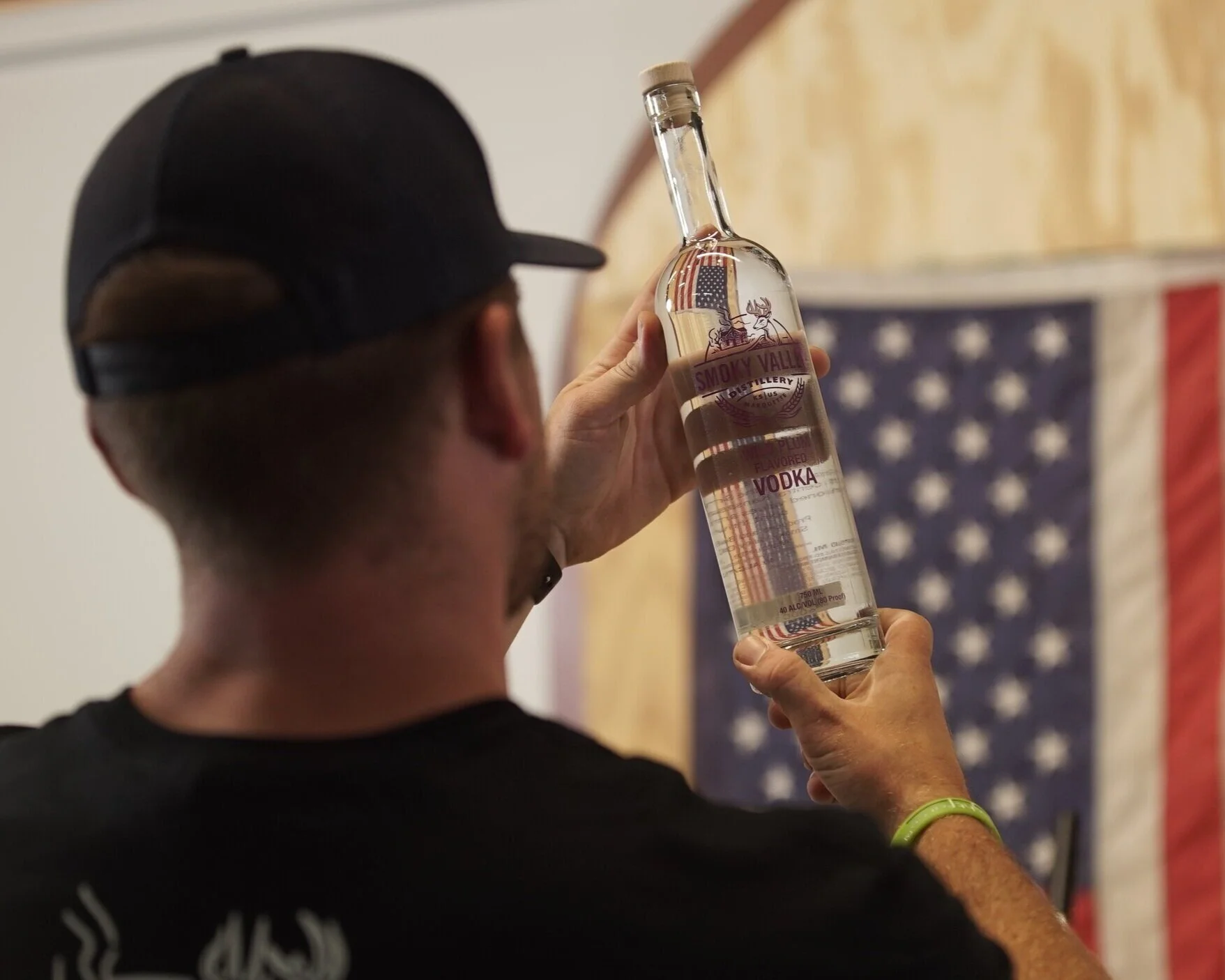
Taste the difference in our Premium Vodka — the subtle sweetness comes directly from the corn, not from added sugar.
Rye: The Spice
Rye adds complexity and spice to our Straight Bourbon and is the star of our Rye Whiskey. It's a bold grain that demands attention, contributing black pepper, cinnamon, and herbal notes.
Wheat: The Softener
Wheat is a gentler grain that creates a smoother, more approachable spirit. Our best-selling Bud & Dewey's uses wheat as the secondary grain, and the result is a bourbon that's exceptionally easy to sip.
Kernza: The Innovation
Perhaps the most remarkable grain in our lineup is Kernza — a perennial wheat developed by The Land Institute in nearby Salina. It produces a whiskey that's truly one of a kind, with earthy, herbal notes you won't find in any other spirit.
Botanicals and Infusions
Our flavored vodkas use real ingredients — wild plums, smoked jalapenos, lingonberries, and pickles. No artificial flavors, no shortcuts. The ingredient quality matters as much for flavored spirits as it does for our straight expressions.
Supporting Kansas Agriculture
Every bottle of Smoky Valley spirits represents a direct investment in Kansas farming. The grain we buy supports local farmers, the jobs we create support our community, and the visitors we attract bring tourism dollars to central Kansas.
When you buy a bottle of our bourbon or vodka, you're not just buying a spirit — you're supporting a supply chain that starts in a Kansas field and ends at a family-owned distillery in a small Kansas town.
Taste the Ingredients
The proof is in the glass. Visit our tasting room and taste all 10 of our spirits, each one a direct reflection of the grains and water that went into it. Our guided tours walk you through the grain-to-glass process so you can see exactly where quality begins.
Try our cocktail recipes at home and experience how quality ingredients elevate every drink you make.