
The Short Answer
Corn and potato vodka are both real vodka. The base material is a decision the distiller makes, not a category rule, and it changes the spirit in ways that are smaller than marketing suggests and larger than the old "vodka is flavorless" line allows.
| Corn Vodka | Potato Vodka | |
|---|---|---|
| Base material | Field corn — dry, starch-dense grain | Potato tubers — mostly water |
| Typical character | Soft, faintly sweet, creamy | Fuller-bodied, rounder, faintly earthy |
| Raw material needed | Low — corn is ~72% starch by dry weight | High — several times the weight for the same alcohol |
| Cost to produce | Lower | Higher |
| Gluten | None in the base | None in the base |
| Traditional home | United States | Poland and the Baltics |
| Best served | Chilled neat or as a cocktail base | Very cold, neat |
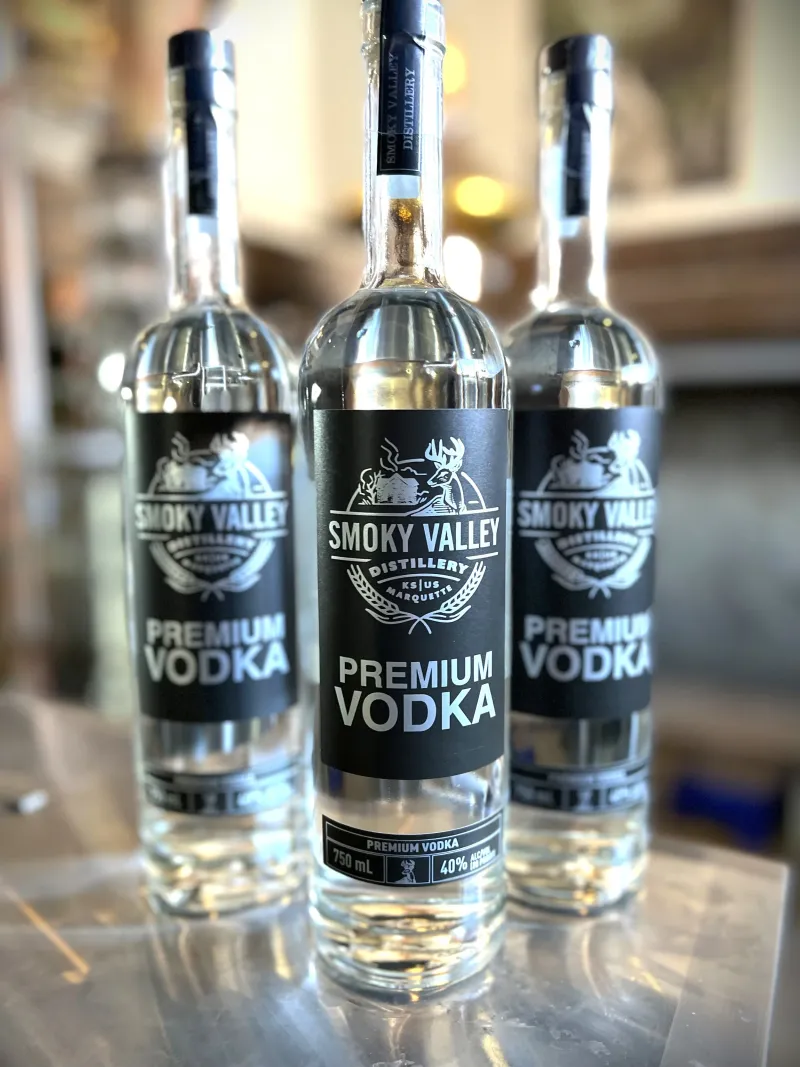
Our Premium Vodka is 100% corn. We have never made a potato vodka and have no plans to. That's a bias worth stating up front — so the rest of this is about what each base actually does, including what corn gives up.
Federal Law Doesn't Care What Vodka Is Made From
This surprises people, so it's worth getting out of the way first.
Under 27 CFR § 5.142, neutral spirits are "distilled spirits distilled from any suitable material at or above 95 percent alcohol by volume (190° proof), and, if bottled, bottled at not less than 40 percent alcohol by volume (80° proof)." Vodka is then defined as neutral spirits "which may be treated with up to two grams per liter of sugar and up to one gram per liter of citric acid."
Any suitable material. Corn, wheat, rye, potatoes, grapes, sugar beets, whey — all of it qualifies. There is no American rule reserving the word "vodka" for a particular crop.
There is also no longer a rule saying vodka has to be bland. Until the TTB's 2020 labeling modernization, the federal definition required vodka to be "without distinctive character, aroma, taste, or color." The agency removed that requirement, acknowledging that "such a restricted definition is no longer appropriate given the variety in base ingredients, flavors, and flavor profiles found in the vodka category."
Which is a regulator's way of saying the base material shows up in the glass. It took until 2020 to say so on paper.
Flavor added after distillation is governed separately, and the labels there are looser than most people assume — flavored vodka vs. infused vodka covers which of those two words is a federal class and which is marketing.
Europe Takes the Question More Seriously
The European rulebook treats base material as consumer information rather than trivia.
Under Regulation (EU) 2019/787, Annex I category 15, vodka made from anything other than potatoes or cereals must prominently carry the words "produced from …" followed by the raw material, in the same visual field as the name on the label. Grain and potato are the two assumed defaults. Everything else has to declare itself.
That rule exists because Poland, Sweden, Finland, and the Baltic states pushed hard for it. In the traditional vodka-producing countries, the base material is not a footnote — it's the thing the category was built on, and potato is the base with the deepest claim to it.
The United States has no equivalent requirement. An American vodka can be made from whatever was cheapest that month and say nothing about it on the label. When a US bottle does name its grain, that's a voluntary disclosure, and it usually means the distiller thinks the choice was worth making.
The Yield Problem, Which Is Really the Price Problem
Potato vodka costs more for an unglamorous reason: potatoes are a poor container for starch.
Field corn runs about 72% starch on a dry-matter basis, according to Purdue Extension. A potato is mostly water. Everything a distiller cares about — starch, which becomes sugar, which becomes alcohol — arrives packed tight in a corn kernel and diluted across a tuber.
That ratio drives everything downstream:
- More raw material per bottle. Several times the weight in potatoes for the same volume of finished spirit.
- Worse storage. Dried grain sits in a bin for a year. Potatoes rot, sprout, and need cold storage.
- A different cook. Potato mash is thick, sticky, and prone to scorching, which is real work in a small distillery.
- A shorter season. Grain is available year-round in a way that a potato crop is not.
None of that makes potato vodka worse. It makes it harder, and hard things cost money. When a potato vodka carries a premium price, that premium is at least partly real production cost rather than pure positioning — which is more than you can say for a lot of vodka pricing.
What Each One Actually Tastes Like
Here's the honest version, from pouring a lot of vodka across a tasting counter in Marquette.
Corn reads soft and faintly sweet. There's a creaminess to the mouthfeel and a gentle grain note underneath — our Premium Vodka shows sweet corn and a hint of vanilla on the nose, and finishes clean without the burn people brace for. It is a forgiving base. It does not fight the other ingredients in a cocktail.
Potato reads heavier. Fuller body, rounder texture, a slightly earthy or mineral note that some people love and some people read as muddiness. Well-made potato vodka has a viscosity you can feel, which is exactly why it's traditionally served very cold and neat rather than buried in citrus.
Wheat, for completeness, is the crisp, dry, neutral one — the profile most people picture when they picture vodka. Rye brings a peppery edge, the same one it brings to whiskey.
Two honest caveats. First, these differences are small compared to the difference between a careful distillation and a careless one; a sloppy corn vodka will lose to a good potato vodka every time, and the reverse is equally true. Second, temperature erases most of it. Chill any vodka to freezer temperature and you suppress aroma and dull the palate, which is precisely what a lot of drinkers want and precisely why the base material argument matters most when you're drinking it at room temperature.
Why Anything Survives at All
This is the part that trips people up. If vodka is distilled to 95% ABV or higher, how does the base material make it through?
Because 95% is not 100%. Distilling to 190 proof strips out the overwhelming majority of the congeners — the flavor compounds that make whiskey taste like whiskey — but a trace fraction rides along in the remaining few percent, and that fraction reflects what was fermented. Add water back to bottling strength and those traces sit in a much larger volume of liquid, where the palate can find them.
That's the same threshold that separates our vodka from our bourbon, and we wrote about it in detail in vodka vs. whiskey. Whiskey is legally required to come off the still below 160 proof so that grain character survives into the barrel. Vodka is required to go above 190. What's left over at 190 is subtle — but it's not nothing, and the TTB's 2020 rule change was an acknowledgment of exactly that.
Filtration is the other lever. Aggressive charcoal filtration removes character along with any flaws, which is how you get vodkas that genuinely are interchangeable. We filter lightly, because the corn character is the reason we chose corn. The full process, mash tun to bottle, is in how vodka is made.
The Gluten Question, Settled
Corn and potato are both naturally gluten-free, so vodka from either base is gluten-free at the source. That much has never been in dispute.
What changed is the rest of the shelf. Under TTB Ruling 2020-2, issued October 13, 2020, distilled spirits made from wheat, rye, or barley may also be labeled gluten-free, without a qualifying statement, because distillation removes the gluten protein. The earlier policy had barred those labels outright.
So gluten is no longer a reason to choose corn or potato over a grain vodka. It's a reason to read the label if a producer adds something back after distillation. If you have celiac disease, that's a conversation for your physician rather than a marketing claim to shop by.
Flavored vodkas, cross-contact, mixers, and how to read the label are covered in full in is vodka gluten-free?
So Which Should You Buy?
Buy potato if you drink vodka cold and neat, want weight and texture in the glass, and don't mind paying for it. It is the more interesting spirit on its own.
Buy corn if you want a clean, slightly sweet base that carries a cocktail without competing with it, or if you like vodka neat but prefer softness to body.
Buy wheat if what you actually want is the crisp, dry, familiar profile — and be honest that this is what most vodka drinkers are reaching for.
And in every case, buy from someone who will tell you what's in the mash. The absence of that information on an American label is legal, common, and rarely a good sign.
Ours Is Corn, and Here's Why
We're in Marquette, Kansas. Corn grows here, in fields we can drive to, farmed by people we buy from directly. Choosing a base that has to be trucked in from somewhere else would have been a strange decision for a distillery that puts its county on the label.
But local availability is the reason we started with corn, not the reason we stayed. The Kiowa Aquifer water we mash with is sandstone-filtered and soft, and it pairs with corn to produce a vodka that customers have preferred over well-known handmade brands in 8 out of 10 blind tastings in our own tasting room. That's a small sample from a small distillery, and we'd say the same thing about it that we said about the flavor notes above: taste it yourself before you take anyone's word for it.
The same 100% corn base runs underneath every flavored bottle we make — the Wild Plum, the Smoked Jalapeno, the Lingonberry, and the Pickle Vodka — which is part of why the infusions read as fruit and pepper rather than as flavoring stacked on alcohol. The whole lineup is on the vodka page.
Taste It Against Whatever's on Your Shelf
The base material argument is settled fastest with two glasses at room temperature and five minutes.
A tasting and tour in Marquette is $10 per person, runs 30 to 45 minutes, and is available Thursday through Saturday by appointment. We'll pour the Premium Vodka neat, walk you past the still where the cuts get made, and let you decide whether corn tastes like anything. Our bottles are also stocked at retail locations across Kansas if you'd rather run the comparison at home against a potato bottle of your choosing.