
The Short Answer
Both terms point at the same shelf: vodka that tastes like something other than vodka. Only one of them means anything on a federal label.
Flavored vodka is a legal class with written requirements. Infused vodka is a description of how the flavor got in, and no federal regulation defines it. A bottle can say infused and contain flavor concentrate. A bottle can say flavored and contain fruit that sat in a tank for three weeks. The word on the front of the label tells you less than the proof and the ingredient list do.
| Flavored Vodka | Infused Vodka | |
|---|---|---|
| Federal status | A defined class, 27 CFR 5.151 | No federal definition exists |
| What the term tells you | Label class, base spirit, predominant flavor | The producer's description of its process |
| Minimum bottling strength | 30% ABV (60 proof) | Whatever the underlying class requires |
| Usual flavor source | Natural flavoring material added after distillation | Maceration — steeping in finished spirit |
| Added sugar allowed | Yes | Yes |
| Where the class changes | At 2.5% sugar by weight it becomes a liqueur | Same rule applies |
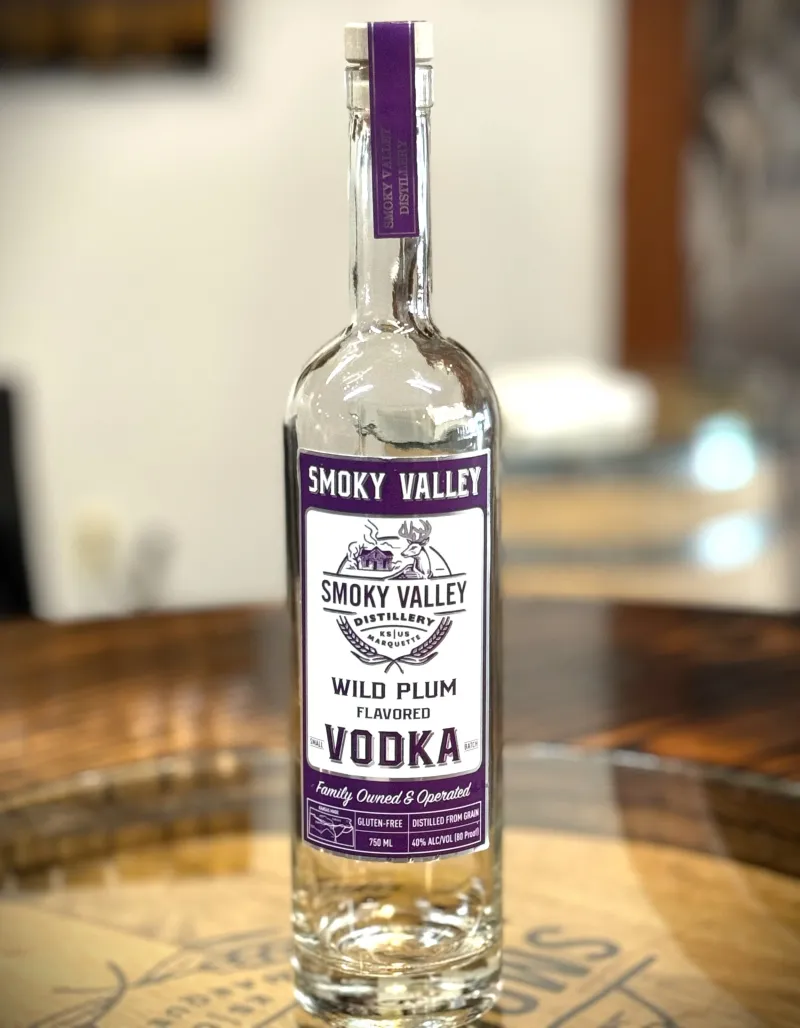
We make four flavored vodkas and one unflavored one, all on the same corn base, so we have a stake in this. Our federal labels say flavored, because that is the class. Our own website says infused, because that is the process. Both are accurate, and that overlap is exactly why the question keeps coming up at the tasting counter.
"Infused" Is Not a Legal Category
Standards of identity for American spirits live in 27 CFR Part 5. Flavored spirits get their own section at 5.151: distilled spirits that already conform to one of the standards of identity in 5.142 through 5.148 — vodka among them — "to which have been added nonbeverage natural flavors, wine, or nonalcoholic natural flavoring materials, with or without the addition of sugar."
Four requirements follow from that one sentence.
- It has to be real vodka first. The base spirit must meet its own standard of identity before anything is added. You cannot flavor your way out of a spirit that failed on its own.
- It has to be bottled at 30% ABV or higher. That is the 60-proof floor in the rule — and it is lower than the floor for plain vodka, which 27 CFR 5.142 requires to be bottled at not less than 40% ABV (80 proof). Adding flavor buys a producer 20 proof points of headroom. A sweet, low-strength bottle in the same flavor family is legally something else again.
- It has to be named for the base and the flavor. The rule requires designation "by the single base spirit and one or more of the most predominant flavors." TTB's own examples are "Pineapple Flavored Tequila" and "Cherry Vanilla Flavored Bourbon Whisky." Ours would be Wild Plum Flavored Vodka.
- Wine has to be declared past a point. More than 2.5% wine by volume in the finished product, and the kinds and percentages go on the label.
Now search Part 5 for a class called infused spirits. There isn't one. The word infusion does appear, in one place that matters, inside the definition of cordials and liqueurs at 5.150: spirits made "by mixing or redistilling distilled spirits with or over fruits, flowers, plants, or pure juices therefrom, or other natural flavoring materials, or with extracts derived from infusions, percolation, or maceration of such materials."
So federal law knows what an infusion is. It treats it as a technique, never as a category. When a label says infused, the producer is describing the back of the house — often useful, but not a regulated claim, and not checked the way the class designation and the proof are.
Where the Real Dividing Line Sits: Sugar
Read the rest of that cordial definition and you find the boundary that actually matters. A cordial or liqueur must contain sugar "in an amount of not less than 2.5 percent by weight of the finished product."
That number is the fence between two very different drinking experiences sold in bottles that look alike. Under 2.5% sugar by weight you have a flavored vodka — dry or nearly dry, flavor carried by the spirit. At or above it you have a cordial or liqueur, where sweetness is a structural ingredient rather than a seasoning.
No front label prints the percentage, so you read it indirectly. A flavored vodka at 40% ABV that tastes like candy is carrying sugar near the top of its allowance. One that has dropped to 20% ABV and pours with a faint viscosity is almost certainly in the liqueur class, whatever the marketing calls it.
Even unflavored vodka gets a small sugar allowance. 27 CFR 5.142 defines vodka as neutral spirits — distilled at or above 95% alcohol by volume, or 190 proof — "which may be treated with up to two grams per liter of sugar and up to one gram per liter of citric acid." Two grams per liter works out to about a gram and a half in a 750 ml bottle, roughly a third of a teaspoon spread across the whole thing. Small, but not zero, and it is why a plain vodka can read softer than the label suggests.
Vodka Is Allowed to Taste Like Something Now
That definition used to say more. For decades, federal rules required vodka to be "without distinctive character, aroma, taste, or color" — a standard that asked distillers to strip out the very thing a craft producer is trying to keep.
TTB removed it. In the labeling modernization final rule published in the Federal Register on April 2, 2020, the agency agreed the requirement no longer reflected consumer expectations and eliminated it. What still separates vodka from other neutral spirits is production, not blandness: the 190-proof distillation floor, the sugar and citric acid limits above, and a prohibition on labeling vodka as aged.
Once a category is permitted to have character, the words used to describe that character start doing commercial work — and the regulations govern only some of them.
The Three Ways Flavor Actually Gets In
Behind both words there are only a few real techniques.
Maceration. Fruit, peppers, or botanicals steep in finished spirit for days or weeks, and the alcohol pulls flavor, color, and tannin out of the solids. This is what most people picture when they read infused, and it is the least predictable of the three: fruit changes between harvests, extraction depends on temperature and cut size, and a macerated spirit can keep evolving in the bottle.
Redistillation. The spirit is run through the still again with the flavoring material in the pot or suspended in the vapor path. This is the gin method, and the cordial rule names it explicitly. It gives a cleaner, more aromatic result than maceration and leaves the heavy, color-bearing compounds behind.
Compounding. Natural flavoring material is blended into the finished spirit. FDA defines natural flavor at 21 CFR 101.22(a)(3) as "the essential oil, oleoresin, essence or extractive, protein hydrolysate, distillate, or any product of roasting, heating or enzymolysis, which contains the flavoring constituents derived from a spice, fruit or fruit juice, vegetable or vegetable juice, edible yeast, herb, bark, bud, root, leaf or similar plant material." Artificial flavor, under the same section, is anything imparting flavor that is not derived from those sources. That distinction — natural against artificial — is a real, checkable one, and it matters far more than infused against flavored.
The honest trade-off looks like this:
| Maceration | Redistillation | Compounding | |
|---|---|---|---|
| Batch consistency | Low | High | Very high |
| Color and sediment | Often present | Minimal | Minimal |
| Cost per bottle | High — raw material and tank time | High — a second still run | Lower |
| Shelf stability | Can shift over years | Stable | Stable |
None of those columns is a quality ranking. A careless maceration is worse than a compounded vodka made with a good natural extract and a light hand on the sugar, and the reverse is just as true.
How to Read the Label
Skip the adjectives on the front and check four things.
- The class designation. "Flavored Vodka" points at a specific federal standard. It is one of the few phrases on the bottle with a regulation behind it.
- The proof. At or above 60 proof it can be flavored vodka. Well below that, you are holding a different class regardless of what the brand name suggests.
- Natural or artificial. If flavoring is disclosed, the FDA definitions above are what those words mean. If nothing is disclosed, that is a fair question to put to the producer.
- Everything else. Infused, small batch, real fruit, handcrafted, and craft carry no federal definition for spirits. We use some of those words ourselves. They describe intent, not a standard anyone audits.
For the rest of what a spirits label is legally obligated to tell you, we walked through it line by line in how to read a whiskey label — a good share of those rules apply to a vodka bottle too.
What You Can Actually Taste
Nobody can reliably identify maceration against compounding blind. Anyone who says otherwise is guessing. What a careful taster can pick out is more useful anyway.
- Sweetness level. The clearest signal in the glass, and the one that tells you whether you are near the liqueur boundary.
- Whether the flavor reads like the ingredient or like a candy version of it. Real plum is tart and slightly astringent on the back end. Plum candy is round and stops there.
- Whether the vodka is still underneath. A good flavored vodka lets you find the base spirit's texture behind the flavor. A flat one buries it.
Try it this way. Pour an ounce at room temperature and nose it before you taste — warm spirit gives up far more aroma than cold. Then pour a second ounce over ice and come back to it. Cold suppresses both sweetness and volatile aroma, which is why a bottle that seems cloying neat can be well balanced in a cocktail. Our full tasting method is written for whiskey, but the nose-first sequence works identically here.
A tulip-shaped nosing glass makes that first step easier, and a chilled copper mug is the fastest way to see what cold does to a flavored spirit:
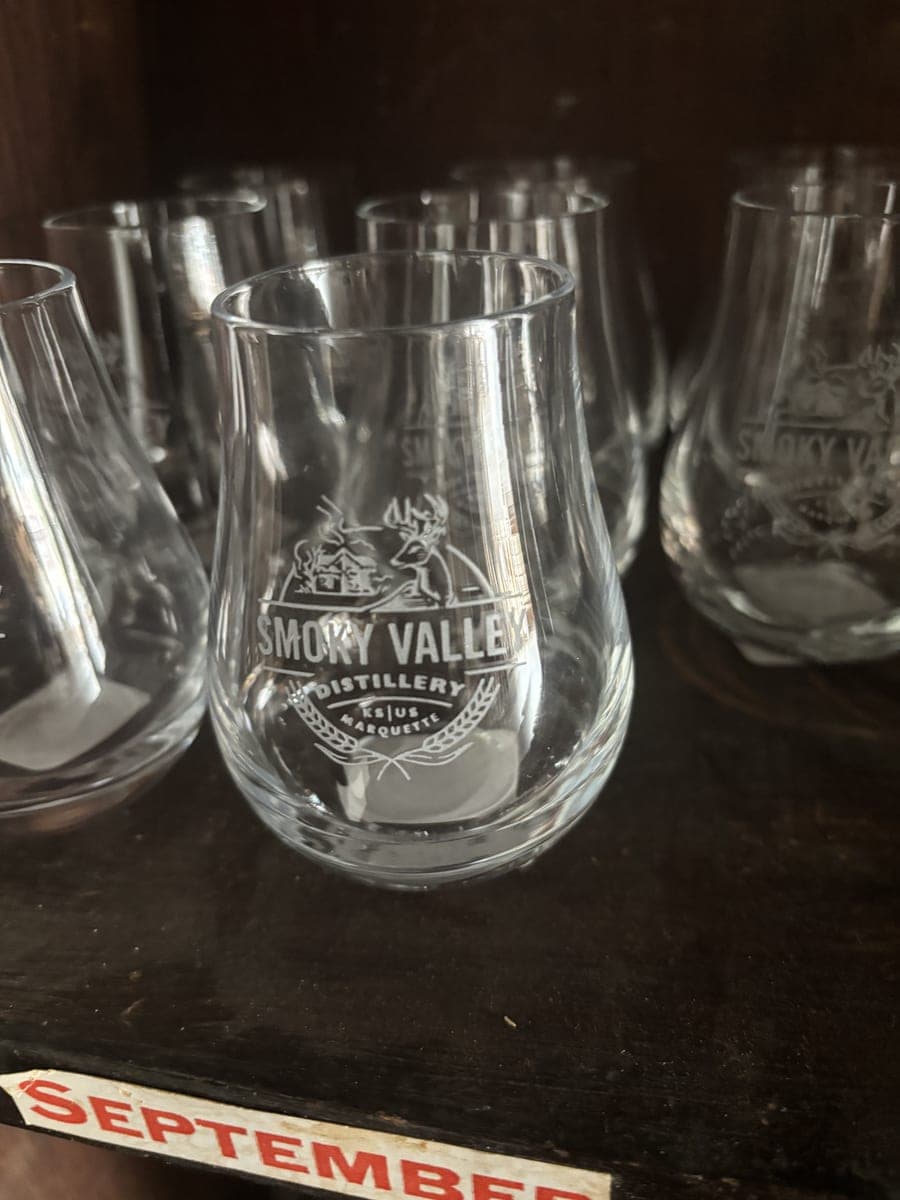
Logo Tasting Glass
$16.95A tulip-shaped nosing glass etched with the Smoky Valley Distillery crest — shaped to concentrate aroma for tasting our bourbon and whiskey neat.
View in the shop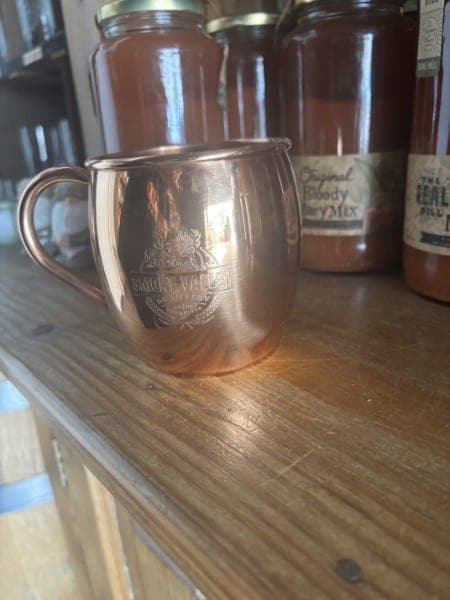
Copper Mule Mug
$19.95A classic copper mug engraved with the Smoky Valley crest — the traditional way to serve a Moscow or Smoky Mule ice-cold.
View in the shopHow Our Five Are Made
All five of our vodkas start the same way: 100% corn grown on central Kansas farms, mashed with sandstone-filtered water from the Kiowa Aquifer, distilled in our copper pot still in Marquette and proofed down to 40% ABV. That is 80 proof — the four flavored bottles could legally have come in 20 proof points lower, and none of them do. The full sequence from grain to bottle is in how vodka is made.
- Premium Vodka is unflavored. It is the base the other four are built on, and it is the bottle where the 2020 rule change is most visible — it tastes faintly of sweet corn, which the old definition would have held against it.
- Wild Plum, Lingonberry, and Pickle Vodka take natural flavoring material after the spirit is finished. Never artificial flavor. The plum and the lingonberry both land tart rather than sweet, which is deliberate — it is why they hold up against tonic and ginger beer instead of disappearing into them.
- Smoked Jalapeno Vodka adds a step nobody expects. Every bottle is hand-smoked with hickory in a culinary smoker before it is filled with the jalapeno-flavored spirit. The smoke goes on the vessel, not the liquid.
What the base material itself contributes — and what corn gives up against the potato vodkas next to it on the shelf — is in corn vodka vs. potato vodka. And if you drink gluten-free, flavored vodka is the one case that needs its own answer, which we covered in is vodka gluten-free?.
Which Bottle to Reach For
If you want the technique, buy macerated — color, sediment, and batch variation are honest signs of fruit sitting in spirit.
If you want the drink, ignore both words and buy on sweetness and proof. A dry flavored vodka at full strength leaves you room to build a cocktail; a sweet one at low strength has already made those decisions for you. Our vodka cocktail recipes assume the first kind. And when a label leans hard on infused, small batch, and handcrafted without stating the proof, the class, or whether the flavor is natural, notice that. The regulated facts are the cheap ones to print.
Taste Them Side by Side
The fastest way to settle any of this is four glasses on a counter. A tasting and tour in Marquette runs $10 per person and 30 to 45 minutes, Thursday through Saturday by appointment, and we will pour all five vodkas and tell you plainly what went into each one. The whole lineup is on the vodka page, and our bottles are stocked at retail locations across Kansas.