
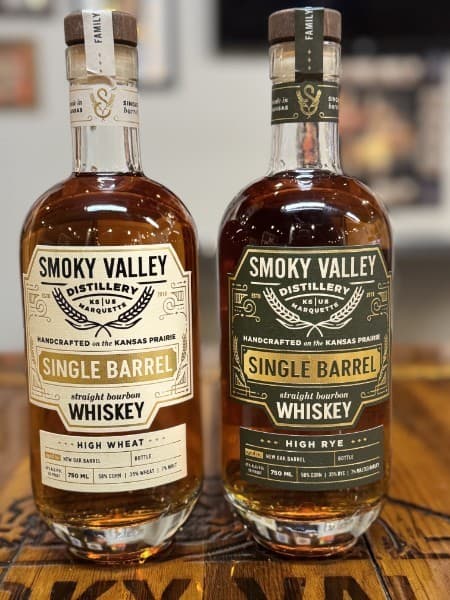
Most whiskey tasting advice is written for the person tasting. Almost none of it is written for the person hosting, who has a different set of questions entirely: how many bottles do I buy, how many glasses do I have to wash, is the cheese board helping or hurting, and what do I hand the two people who do not like whiskey.
We run tastings three days a week in Marquette, and the answers below are the ones we give when somebody asks how to do it at their own house. The method of tasting is a separate subject — our step-by-step guide to tasting whiskey covers the glass, the nose, the sip, and the water. This is the shopping list and the running order.
How Much Whiskey to Actually Buy
Start here, because this is the thing hosts get most wrong, and it is wrong in the expensive direction.
A 750 mL bottle holds about 25.4 fluid ounces. A tasting pour is three-quarters of an ounce — half an ounce if you are running six whiskeys — which means a single bottle is somewhere between 33 and 50 tasting pours. That is a large number and worth sitting with for a second.
Eight guests. Four whiskeys. Three-quarters of an ounce each. That is 24 ounces of whiskey total, drawn from four separate bottles, so you use about six ounces from each. Less than a quarter of every bottle.
So the real math is simple: buy one bottle of each whiskey in your lineup, regardless of guest count, up to about twelve guests. Above twelve, the bottles are still fine but the room stops working — people cannot hear the person talking, pours get sloppy, and the tasting turns into a party with whiskey at it. Both are good evenings. They are not the same evening.
Pick Four Bottles With Something in Common
Four is the right number. Six is the ceiling, and the sixth pour is already being judged by a tired palate.
What matters more than the count is that the bottles share a frame. A lineup of four unrelated whiskeys produces four unrelated opinions. A lineup where one variable changes produces an actual discovery, because your guests can hear what that variable is doing. Some frames that work:
- One grain at a time. A wheated bourbon, a standard bourbon, a high-rye bourbon, a rye. The corn stays, the second grain moves. If that distinction is new, what is a mash bill explains what you are actually changing.
- One distillery, top to bottom. Everything from one producer, lightest to heaviest. This is what we pour here.
- Same category, different houses. Four straight bourbons from four distilleries, which turns into a conversation about water, barrels, and proof rather than grain.
- The oddity at the end. Three familiar whiskeys and one nobody at the table has had — a Kernza whiskey, a single barrel, something at an unusual proof.
Pour light to heavy, sweet to spicy, and put anything smoked last, because smoke stays on the palate and colors everything after it. Our tasting guide sequences our own lineup in full and explains what to do when proof order and intensity order disagree.
If you are building the lineup from our shelf, the whiskey and bourbon pages list what is in each bottle and at what proof. Kansas law does not let a distillery ship spirits, so bottles come from the tasting room here or from one of our retail partners across Kansas.
Water Is the Most Important Thing on the Table
Two kinds, and they do different jobs.
Drinking water, in a glass, for every guest, refilled without being asked. This is the single biggest difference between a tasting people enjoy and a tasting that gets away from everybody.
Tasting water, in a small pitcher or a dropper, room temperature and still. A few drops in a high-proof pour genuinely changes what you can smell — it is not just weakening the whiskey — and our tasting guide walks through the molecular study behind why. Still water only. Sparkling water carries carbonic acid and its own mineral character into the glass, and a cold pitcher drops the pour's temperature at exactly the wrong moment.
Skip the ice during the flight. Ice chills as much as it dilutes, and cold suppresses the aromatic volatility the whole exercise depends on. Bring the ice bucket out when the tasting ends and people switch from evaluating to drinking.
Glassware: How Many, and What Shape
One nosing glass per guest, plus one water glass. You do not need four glasses per person.
Shape matters more than count. You want a wide bowl tapering to a narrower rim, which collects aroma in the headspace and funnels it toward your nose instead of letting it drift off an open surface. A white wine glass is a perfectly good substitute, a straight-sided rocks glass lets aroma escape in every direction, and a shot glass is the worst option on the table because it puts your nose into concentrated ethanol vapor before you have smelled anything underneath it. Our whiskey glassware guide goes through the shapes, the crystal question, and ice size in full.
Between pours, a splash of water in the glass, a swirl, and a dump is enough. Nobody needs a clean glass per whiskey.
Two things worth having if you can: a couple of extra nosing glasses so you can run a true side-by-side on two whiskeys at once, which teaches faster than tasting in sequence, and a set of rocks glasses for after the flight. These are the two shapes we pour from here and the two we sell:
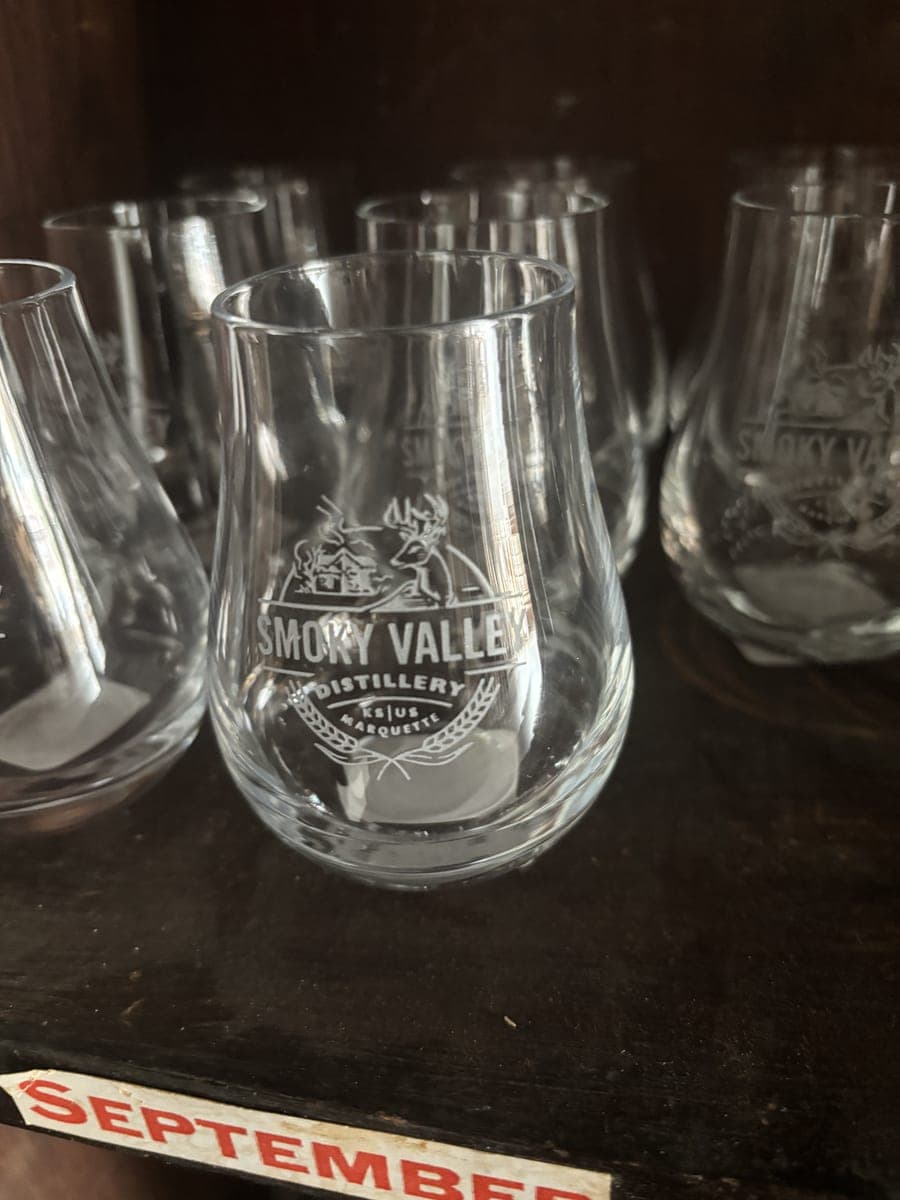
Logo Tasting Glass
$16.95A tulip-shaped nosing glass etched with the Smoky Valley Distillery crest — shaped to concentrate aroma for tasting our bourbon and whiskey neat.
View in the shop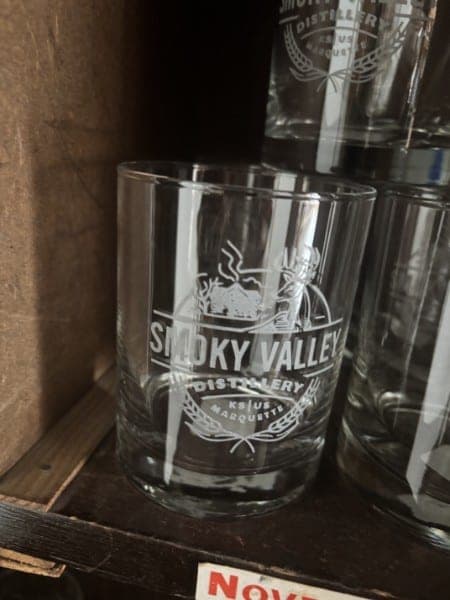
Old Fashioned Glass
$19.95A heavy-bottomed rocks glass etched with our crest — built for an Old Fashioned, a bourbon on the rocks, or a neat pour.
View in the shopGlassware ships anywhere in the US, or you can pick it up free at the tasting room Thursday through Saturday. If you are stocking the whole bar rather than one evening, home bar essentials is the longer list.
Food: Serve It, But Serve It Around the Tasting
This is where good hosts do the most damage, with the best intentions.
During the flight, serve almost nothing. Room-temperature water and plain unsalted crackers, or a torn piece of plain bread. That is the entire list. Skip coffee, citrus, mints, chocolate, anything salty, and anything with a strong personality — those overwrite the palate rather than resetting it, and a palate that has just met a mint cannot evaluate a wheated bourbon.
After the flight, serve the real food. This is the moment the cheese board, the charcuterie, the grilled meat, and the chocolate all become useful, because now you are pairing rather than interfering. People will also want something solid in them, and that is a feature. Our guide to bourbon and food pairing covers the three rules that do the work — match weight before flavor, decide whether you are echoing or cutting, and keep the food less sweet than the glass.
One practical note on the board itself: cheese and cured meat sitting out are perishable food, and FoodSafety.gov's guidance is to refrigerate perishables within two hours. If the tasting runs long before the food portion starts, put the board out when you are ready for it rather than at the beginning of the night.
Plan for the People Who Don't Drink Whiskey
Every tasting has at least one, and they should not have to raise a hand.
A clean vodka is the easiest answer, because it tastes nothing like the lineup and gives a non-whiskey drinker something to compare rather than nothing to do. One batched cocktail made before anyone arrives covers whoever would rather have a mixed drink than a neat pour — our guide to batch cocktails for a crowd has the dilution math, and the single most common mistake there is forgetting that a stirred drink is already part water.
Put a genuine non-alcoholic option on the table at the same time as everything else. Sparkling water with a real citrus twist, or a good ginger beer in a proper glass. An option that has to be requested is not really an option.
A Two-Hour Running Order
A tasting with a shape beats a tasting with more whiskey in it.
- First 20 minutes. Water glasses filled, nosing glasses set, one sentence about the frame of the lineup — what the four bottles have in common and what is changing. No pours yet.
- Next 50 minutes. Four pours, roughly ten minutes each. Pour, let it rest five minutes, nose, taste, talk. Resist pouring the next one while people are still on the last.
- Next 20 minutes. The side-by-side. Re-pour the two whiskeys the room disagreed about most and taste them together. This is usually the best part of the evening.
- The rest. Food out, ice out, rocks glasses out. The tasting is over and the party starts.
Ask everyone to write three words per whiskey — one for the nose, one for the palate, one for the finish. Personal references beat borrowed vocabulary, and "smells like my grandmother's pantry" will bring a whiskey back in six months when "notes of baking spice" will not.
The Arithmetic Nobody Does
Four pours of three-quarters of an ounce is three ounces of whiskey. At 45% ABV — where most of ours bottle — that is about 1.35 fluid ounces of pure alcohol, and the NIAAA counts 0.6 fl oz of pure alcohol as one standard drink. So a modest four-whiskey flight is already a bit over two drinks per guest before anyone pours anything for pleasure afterward. Six pours at an ounce each is closer to four and a half.
None of that is an argument against hosting one. It is an argument for small pours, real food, and deciding who is driving before the first bottle opens. A tasting is the one format where restraint makes the evening better rather than worse, because the whole point is what you can still smell by the fourth glass. If proof is doing more work in that math than you expected, what proof actually measures explains why a 90-proof pour is not the same drink as an 80-proof one.
Or Let Us Pour It
If the dishes are the part you would rather skip, we will do it. A tasting and tour in Marquette is $10 per person, runs 30 to 45 minutes, takes up to ten people by appointment, and covers the full range — five vodkas, five bourbons, and both whiskeys — with the production floor right behind you while you drink them.
For a group bigger than ten, the private parties side of the building seats 140 with its own bar, and Preston House sleeps eleven within walking distance, which solves the driving question for a whole group at once. That last part is the thing a home tasting cannot do, and it is the reason most of the big ones end up here.